

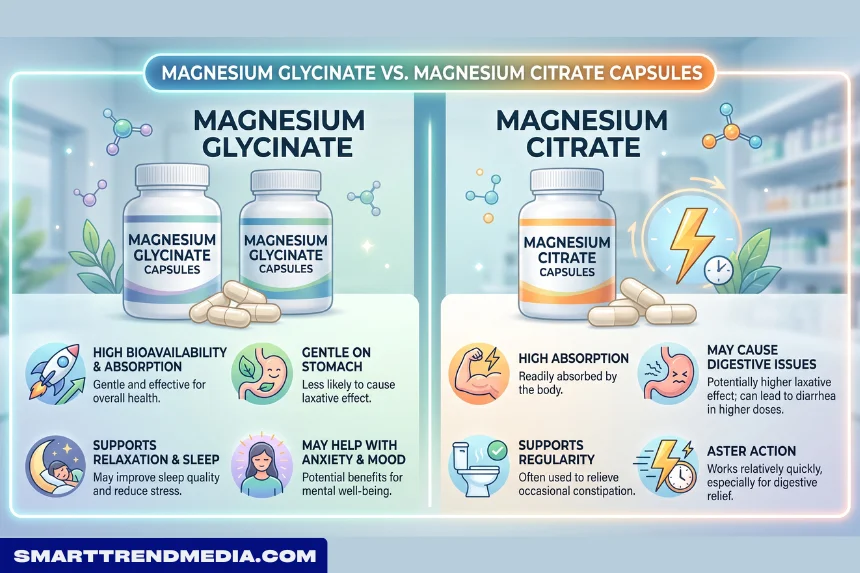
Magnesium glycinate and magnesium citrate both provide magnesium, but they suit different needs. Magnesium glycinate is commonly chosen for routine supplementation, especially when someone wants to avoid a noticeable laxative effect. Magnesium citrate is more likely to loosen stools and is also used as a short-term treatment for occasional constipation.
For sleep, magnesium glycinate may be the more practical choice, although research does not prove that it works better than citrate for everyone. For constipation, citrate has the clearer purpose because it draws water into the intestines and softens stool.
The right option also depends on the amount of elemental magnesium, other medications, kidney function, digestive tolerance, and the reason for taking it. This magnesium glycinate vs. magnesium citrate comparison explains those differences without treating either form as universally superior.
Medical note: Supplements can cause side effects and interact with medications. Speak with a healthcare professional before taking magnesium when you have kidney disease, take prescription medicine, are pregnant, or need treatment for ongoing symptoms.
Magnesium Glycinate vs. Magnesium Citrate at a Glance
| Feature | Magnesium glycinate | Magnesium citrate |
|---|---|---|
| What it contains | Magnesium bound to glycine | Magnesium combined with citric acid |
| Common reason for use | Routine supplementation or possible sleep support | Routine supplementation or short-term constipation relief |
| Effect on bowel movements | Usually chosen when a laxative effect is unwanted | More likely to loosen stools |
| Evidence for sleep | Limited but developing | Limited and not clearly superior |
| Use for constipation | Not a standard laxative | Used as a saline laxative |
| Absorption | Considered an absorbable chelated form, but evidence is limited | Generally well absorbed compared with less soluble forms |
| Common side effects | Nausea, stomach discomfort, or diarrhea at higher doses | Loose stools, diarrhea, cramping, or nausea |
| Best fit | People seeking magnesium without intentional bowel stimulation | People who also need short-term relief from occasional constipation |
Both forms can raise magnesium intake. However, there is not enough direct research comparing glycinate with citrate to declare one form consistently better absorbed or more effective for every health goal. A systematic review found that organic magnesium formulations generally appear more bioavailable than inorganic forms, but absorption also varies with dose, product formulation, magnesium status, and individual health.
What Is Magnesium Glycinate?
Magnesium glycinate is magnesium attached to the amino acid glycine. Product labels may also use the terms magnesium bisglycinate or magnesium diglycinate.
The chelated structure is intended to help carry magnesium through the digestive system. A small randomized trial involving 12 people who had undergone ileal resection found that magnesium diglycinate was better tolerated than magnesium oxide. However, overall absorption did not differ significantly between the two forms across the entire study group. The trial involved a specific medical population, so its results cannot establish that glycinate is the most absorbable form for everyone.
Magnesium glycinate is often selected for ongoing supplementation because it is not used primarily as a laxative. Still, it can cause nausea, loose stools, or abdominal discomfort, especially at higher supplemental doses.

What Is Magnesium Citrate?
Magnesium citrate combines magnesium with citric acid. The National Institutes of Health lists citrate among the magnesium forms that tend to dissolve well and have greater bioavailability than poorly soluble forms such as magnesium oxide and magnesium sulfate.
Magnesium citrate also has an established medical use as a saline laxative. It retains water with the stool, which softens the stool and promotes bowel movements. The laxative product usually produces a bowel movement within 30 minutes to six hours and should not be used for longer than one week unless a doctor gives different instructions.
This distinction matters when comparing products. A low-dose magnesium citrate capsule sold as a dietary supplement is not necessarily equivalent to a bottle of liquid magnesium citrate sold for constipation or bowel preparation. The dose, serving instructions, and intended use may differ considerably.

Which Is Better: Magnesium Glycinate or Magnesium Citrate?
Neither form is better for every person. The choice depends mainly on the desired result.
Magnesium glycinate may be the better fit when:
- You want to increase magnesium intake without intentionally stimulating a bowel movement.
- You already have loose stools or a sensitive digestive system.
- You want to try magnesium as part of a sleep routine after discussing persistent sleep problems with a healthcare professional.
- You plan to use the supplement regularly and tolerate glycinate well.
Magnesium citrate may be the better fit when:
- Occasional constipation is the main concern.
- A doctor or pharmacist recommends it for short-term laxative use.
- You want an absorbable magnesium form and do not mind softer stools.
- You have previously tolerated citrate without troublesome diarrhea.
A supplement should not replace an evaluation for persistent constipation, severe cramps, recurring insomnia, weakness, or suspected magnesium deficiency. These symptoms can have causes that additional magnesium will not correct.
Magnesium Glycinate vs. Magnesium Citrate for Sleep
Magnesium glycinate is widely marketed for relaxation and sleep because it supplies magnesium together with glycine. However, marketing claims have historically been stronger than the clinical evidence.
A 2025 randomized, double-blind trial studied 155 adults with self-reported poor sleep. Participants received either 250 milligrams of elemental magnesium as magnesium bisglycinate or a placebo daily for four weeks. The glycinate group experienced a statistically greater reduction in insomnia severity, but the effect was small. The researchers described the improvement as modest and called for longer studies with objective sleep measurements.
A broader systematic review found that observational studies linked magnesium status with aspects of sleep, while randomized trials produced uncertain results. Therefore, magnesium may help certain people, particularly those with low magnesium intake, but it is not a proven treatment for every form of insomnia.
Is Magnesium Glycinate Better Than Citrate for Sleep?
There is no strong head-to-head trial proving that magnesium glycinate improves sleep more effectively than magnesium citrate.
Glycinate may still be the more convenient bedtime option because citrate can cause an urgent bowel movement or diarrhea. That practical difference does not prove that glycinate has a stronger neurological effect.
Sleep problems may result from sleep apnea, restless legs syndrome, anxiety, depression, pain, medication effects, caffeine, alcohol, hormonal changes, or an inconsistent schedule. Magnesium will not address all of these causes.
Magnesium Glycinate vs. Magnesium Citrate for Constipation
Magnesium citrate is the clear choice when the intended purpose is short-term relief from occasional constipation. It acts as a saline laxative by retaining water with the stool, increasing bowel movements, and making stool easier to pass.
Magnesium glycinate is not commonly used as a constipation medicine. Although any magnesium supplement can cause loose stools at a sufficiently high dose, that side effect does not make glycinate a predictable or appropriate laxative.
Do not repeatedly use magnesium citrate to manage ongoing constipation without medical advice. MedlinePlus advises against taking it for more than one week unless directed by a doctor. Abdominal pain, vomiting, blood in the stool, an inability to pass stool after use, or a major change in bowel habits requires medical attention.
Which Form Has Better Absorption?
Magnesium citrate has clearer evidence of good absorption than many older, less soluble magnesium salts. NIH guidance states that citrate, aspartate, lactate, and chloride tend to have greater bioavailability than magnesium oxide and magnesium sulfate.
Studies have also found that magnesium citrate is more soluble and bioavailable than magnesium oxide. However, these findings do not establish that citrate absorbs better than glycinate.
Evidence concerning magnesium glycinate includes smaller studies, specialized patient groups, laboratory work, and newer clinical trials. The existing research supports glycinate as a reasonable supplemental form, but there is not enough high-quality comparative evidence to rank it above citrate for the general population.
Absorption also depends on:
- The amount taken at one time
- The amount of elemental magnesium
- Whether the person already has low magnesium intake
- Digestive conditions or intestinal surgery
- Kidney function
- Other ingredients in the product
- Medication use
- Individual digestive tolerance
Therefore, the form printed on the front label tells only part of the story.
Elemental Magnesium Matters More Than Compound Weight
The Supplement Facts panel lists the amount of elemental magnesium, not the total weight of magnesium glycinate or magnesium citrate in the serving. This is the number consumers should use when comparing products.
For example, two bottles may both advertise “magnesium glycinate” prominently, yet one serving may provide 100 milligrams of elemental magnesium while the other provides 240 milligrams. Capsule counts can also differ.
Check these details before buying:
- Elemental magnesium per serving
- Number of capsules or tablets in one serving
- Magnesium form listed in the ingredients
- Other active ingredients
- Added sweeteners or sugar alcohols
- Recommended serving frequency
- Whether the product contains magnesium oxide as part of a buffered blend
A large compound weight on the front of the bottle does not necessarily mean the product delivers that full amount as usable magnesium.
How Much Magnesium Do Adults Need?
Recommended magnesium intake from all sources ranges from 310 to 420 milligrams per day for adults, depending on age, sex, and life stage. That total includes magnesium from food, beverages, supplements, and medications.
The adult upper limit for magnesium from supplements and medications is 350 milligrams per day unless a healthcare professional recommends a different amount. This limit does not include magnesium naturally present in food.
The upper limit is not a universal recommended dose. Someone who already receives adequate magnesium from food may not need a large supplement.
Foods that provide magnesium include:
- Pumpkin seeds and other seeds
- Almonds and other nuts
- Beans and lentils
- Spinach and other leafy greens
- Whole grains
- Fortified cereals
- Soy foods
NIH guidance recommends meeting nutritional needs primarily through food when possible, with supplements used when dietary intake does not meet a specific need.
When Should You Take Magnesium?
The best time depends on why you are taking it and how your stomach responds.
Taking Magnesium Glycinate
People who use glycinate as part of a nighttime routine often take it in the evening. However, the time of day is less important than taking an appropriate amount consistently and tolerating it well.
Taking it with food may reduce nausea or stomach discomfort. Follow the product label unless a healthcare professional recommends another schedule.
Taking Magnesium Citrate
A citrate supplement used for general magnesium intake may be taken with food. Liquid magnesium citrate used as a laxative requires different instructions, including adequate fluid intake. MedlinePlus advises taking liquid magnesium citrate with a full eight-ounce glass of liquid.
Do not take a laxative dose shortly before driving, traveling, exercising, or going somewhere without easy restroom access.
Side Effects of Magnesium Glycinate and Citrate
Both forms can cause digestive side effects. High supplemental magnesium intake commonly causes diarrhea, nausea, and abdominal cramping.
Possible Magnesium Glycinate Side Effects
- Nausea
- Mild stomach discomfort
- Soft stools
- Diarrhea at higher doses
Possible Magnesium Citrate Side Effects
- Loose or watery stools
- Abdominal cramping
- Nausea
- Urgency
- Dehydration when diarrhea becomes excessive
Reducing the dose may improve mild digestive effects. Stop the product and seek medical guidance when symptoms are severe, persistent, or accompanied by weakness, confusion, blood in the stool, trouble breathing, or an irregular heartbeat.
Who Should Avoid Magnesium Supplements?
People with impaired kidney function face a greater risk of magnesium toxicity because the kidneys may not remove excess magnesium effectively. Very high magnesium levels can cause low blood pressure, vomiting, lethargy, muscle weakness, breathing problems, abnormal heart rhythm, and cardiac arrest.
Ask a doctor or pharmacist before taking magnesium when you:
- Have kidney disease or reduced kidney function
- Are pregnant or breastfeeding
- Have persistent abdominal pain, nausea, or vomiting
- Have a sudden change in bowel habits
- Need a sodium- or magnesium-restricted diet
- Take several medications
- Plan to give the supplement to a child
- Have an abnormal heart rhythm
- Have an intestinal blockage or another serious digestive condition
Children should not receive adult magnesium products or laxative doses unless a pediatric healthcare professional recommends them.
Medication Interactions
Magnesium can reduce the absorption of certain medications by binding to them in the digestive tract.
Important interactions include:
- Tetracycline antibiotics, such as doxycycline
- Quinolone antibiotics, such as ciprofloxacin and levofloxacin
- Oral bisphosphonates, such as alendronate
- Some diuretics
- Long-term proton pump inhibitors
NIH guidance advises taking tetracycline and quinolone antibiotics at least two hours before or four to six hours after a magnesium supplement. Oral bisphosphonates should generally be separated from magnesium by at least two hours. A pharmacist can provide instructions for a specific prescription.
MedlinePlus also advises separating other medicines from laxative magnesium citrate by at least two hours.
Can You Take Magnesium Glycinate and Citrate Together?
Taking both forms is possible, but it is often unnecessary. They both contribute to the same daily total of elemental magnesium.
Using two products can make it easier to exceed the supplemental upper limit or develop diarrhea. A citrate laxative may also contain far more magnesium than a routine supplement.
Before combining them, add the elemental magnesium from:
- Magnesium glycinate
- Magnesium citrate
- Multivitamins
- Electrolyte powders
- Antacids
- Laxatives
- Sleep products
A doctor may recommend a higher amount for a diagnosed deficiency or another medical reason. Such dosing should remain supervised because it may exceed the general limit for self-directed supplementation.
How to Choose a Magnesium Supplement
Start with the reason you are considering magnesium.
Choose Glycinate When Digestive Tolerance Matters
Glycinate may suit someone who wants routine supplementation but does not want a deliberate laxative effect. It may also be a reasonable form to discuss with a healthcare professional when poor sleep is the concern, although the benefit found in research has been modest.
Choose Citrate for Occasional Constipation
Citrate has the clearer role when short-term constipation relief is needed. Follow the laxative product’s instructions rather than treating it like an ordinary daily supplement.
Compare Elemental Magnesium
Do not compare products based only on capsule size or the compound weight advertised on the front. Use the elemental magnesium amount on the Supplement Facts panel.
Be Careful With Marketing Claims
The FDA does not approve dietary supplements for safety and effectiveness before they reach the market. Manufacturers are responsible for product safety and truthful labeling.
Look for clear ingredient information, realistic claims, accessible manufacturer contact details, and independent quality certification when available.
Frequently Asked Questions
Is magnesium glycinate or citrate better for daily use?
Magnesium glycinate may be easier to use daily when you do not want a laxative effect. Citrate can also serve as a daily supplement, but it may cause softer stools or diarrhea in some people.
Which magnesium is better for sleep?
Glycinate may be the more practical option because it is less closely associated with laxative use. A 2025 trial found a modest improvement in insomnia symptoms, but research has not proved that glycinate is the best magnesium form for sleep.
Which magnesium is best for constipation?
Magnesium citrate is used as a short-term saline laxative for occasional constipation. It draws water into the stool and generally causes a bowel movement within 30 minutes to six hours.
Is magnesium glycinate more absorbable than citrate?
Current evidence does not clearly establish that glycinate is better absorbed than citrate. Both are considered reasonable supplemental forms, while citrate has well-established absorption compared with less soluble forms such as magnesium oxide.
Does magnesium citrate make you sleepy?
Magnesium citrate supplies magnesium, which supports normal nerve and muscle function. However, citrate is not proven to act as a fast or reliable sleep medicine, and its laxative effect may disrupt sleep in some people.
Can magnesium glycinate cause diarrhea?
Yes. Although glycinate is commonly chosen when someone wants to avoid a strong laxative effect, any magnesium supplement may cause loose stools, nausea, or cramping at a high enough dose.
Can you take magnesium every night?
Some adults can take an appropriate supplemental amount regularly. However, nightly use should remain within a suitable elemental magnesium dose and account for other supplements and medicines. People with kidney disease or medication interactions need professional guidance.
How quickly does magnesium glycinate work?
There is no single timeline. Digestive absorption begins after a dose, but effects on a deficiency, sleep, or other symptoms may take longer and may not occur when magnesium is not the underlying issue.
Conclusion
The difference between magnesium glycinate and magnesium citrate comes down mainly to purpose and digestive effects. Glycinate may be more suitable for routine supplementation or a bedtime routine when you want to avoid intentional bowel stimulation. Citrate is the more appropriate choice for short-term constipation relief and can also provide absorbable magnesium.
Neither form is a universal solution for sleep, cramps, fatigue, or other symptoms. Compare elemental magnesium amounts, consider medication interactions, and seek professional advice when symptoms continue or you have kidney disease.
Read more about How Long Does Flu B Last in Kids