

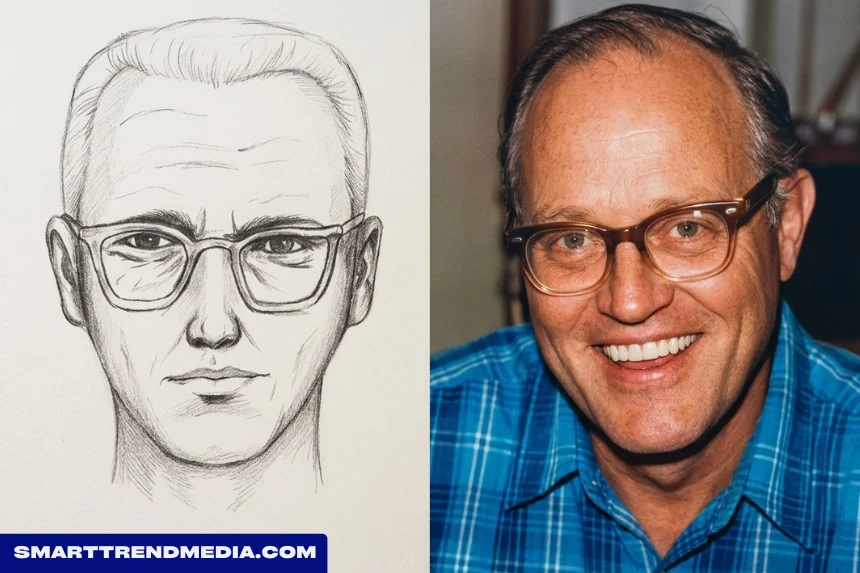
Gary Francis Poste became one of the most discussed Zodiac Killer suspects decades after the infamous Northern California murders occurred. However, the reason for that attention is often misunderstood. Poste was not officially identified by the FBI or another law-enforcement agency as the Zodiac Killer. Instead, a private investigative group called The Case Breakers publicly named him as its leading suspect in 2021.
Poste was an Air Force veteran and house painter who lived for years in Groveland, California. He died in 2018 at age 80, several years before the Case Breakers announcement brought his name to an international audience.
The private investigators cited a combination of physical resemblance, alleged witness accounts, cipher interpretations and purported forensic leads. Nevertheless, those claims have not produced an official finding that Gary Francis Poste committed the Zodiac murders.
The FBI’s historical account describes five confirmed Zodiac murders in the San Francisco Bay Area during 1968 and 1969 and states that the killer’s identity remained a mystery.
Therefore, the central question is not simply whether Poste was accused. It is whether the evidence presented against him is strong enough to establish his identity as the Zodiac Killer.
Who Was Gary Francis Poste? Quick Answer
Gary Francis Poste was a U.S. Air Force veteran and house painter from California who became widely known after The Case Breakers named him as a Zodiac Killer suspect in 2021. The private investigative group cited physical characteristics, witness claims, cryptic writings and other alleged evidence. However, Poste has not been officially established by law enforcement as the Zodiac Killer, and the Case Breakers theory remains disputed.
Quick Facts About Gary Francis Poste
| Detail | Information |
|---|---|
| Full name | Gary Francis Poste |
| Born | 1937 |
| Died | 2018 |
| Age at death | 80 |
| Military background | U.S. Air Force veteran |
| Occupation | House painter |
| California connection | Lived in Groveland |
| Known for | Being named as a Zodiac Killer suspect |
| Group that named him | The Case Breakers |
| Public identification announced | 2021 |
| Officially confirmed as Zodiac? | No |
| Zodiac case status | No public law-enforcement identification of Poste as the killer |
HowStuffWorks describes Poste as an Air Force veteran and house painter who lived in Groveland, California, and died in 2018 at age 80. Meanwhile, KQED documents that The Case Breakers publicly identified him as their suspect in October 2021.
Importantly, the final two rows must remain separate. Being named as a suspect by private investigators is not equivalent to being officially identified as a murderer.
Who Was Gary Francis Poste Before the Zodiac Claims?
Before his name became associated with one of America’s most famous unsolved crime mysteries, Gary Francis Poste lived a comparatively obscure life.
Available reporting describes him as a U.S. Air Force veteran who later worked as a professional house painter. Eventually, he lived in Groveland, California, a small community in the Sierra Nevada foothills.
His occupation later became part of the Case Breakers theory because investigators attempted to connect details from Poste’s life with evidence associated with various crimes.
However, the mere fact that Poste worked as a painter or served in the military does not independently connect him to the Zodiac murders.
This distinction is important throughout his biography.
Much of what became widely reported about Poste after 2021 came from people attempting to establish that he was the Zodiac Killer. Therefore, biographical details sometimes appear online mixed together with allegations, interpretations and theories.
A careful account should separate those categories.
Gary Francis Poste’s Air Force Background
Poste served in the United States Air Force as a young man.
His military background became relevant to the later Zodiac theory because the Case Breakers attempted to connect military-style footwear, locations and other details with evidence associated with crimes they believed involved the Zodiac.
Reporting associated with the Case Breakers also describes a serious automobile accident involving Poste during his military years.
An archived newspaper account cited in later reporting says that Poste was involved in a January 1959 crash near Terre Haute, Indiana. The collision reportedly killed another airman and left Poste with serious injuries.
That accident later became particularly important to the Case Breakers because Poste reportedly developed visible scars on his forehead.
Those scars eventually became one of the group’s best-known arguments for connecting him to the Zodiac police sketch.
Nevertheless, military service and physical scars remain circumstantial details. Neither establishes that Poste committed the Zodiac murders.
Gary Francis Poste’s Career as a House Painter
After his military service, Poste worked as a house painter.
Multiple accounts describe him as a professional or union painter, and his painting background reportedly stretched across many years.
At first glance, his occupation seems unrelated to the Zodiac investigation.
However, the Case Breakers later attempted to incorporate it into their theory. For example, the group highlighted a paint-marked wristwatch associated with the unsolved murder of Cheri Jo Bates and argued that Poste’s career as a painter made the detail noteworthy.
That argument requires significant caution.
The Case Breakers’ attempt to connect Poste with the Bates murder is disputed, and the Bates case itself has not been officially established as one of the Zodiac’s confirmed killings. KQED specifically noted that police disputed the group’s attempt to make Bates part of the Zodiac case.
Therefore, Poste’s occupation should be treated as a verified biographical detail, while theories involving paint evidence belong in a separate evidence-analysis section.
Gary Francis Poste in Groveland, California
Poste eventually became associated with Groveland, California, where he lived for many years.
The community is located in Tuolumne County in the Sierra Nevada foothills. Later reporting about the Zodiac theory focused heavily on Poste’s life there because witnesses and former acquaintances reportedly provided information to investigators.
After the 2021 announcement, stories emerged describing weapons, people who knew Poste and allegations concerning his behavior.
However, those later accounts need especially careful treatment.
For example, some tabloid reporting characterized Poste as the leader of a violent group of younger men. Those allegations largely depended on statements from individuals connected with the Case Breakers investigation rather than a court finding establishing that Poste operated such a group.
Therefore, this article will not turn disputed stories about Poste’s private life into established facts.
The central public significance of his Groveland years is that people who knew him there later became sources for the private investigators who accused him of being the Zodiac Killer.
When Did Gary Francis Poste Die?
Gary Francis Poste died in 2018 at age 80.
Consequently, Poste was already dead when The Case Breakers publicly announced its conclusion in October 2021.
That timing matters.
Poste could not:
- respond publicly to the allegation;
- provide a new interview;
- answer investigators’ questions;
- voluntarily provide additional evidence;
- challenge interpretations of his life directly.
Therefore, any investigation attempting to establish Poste as the Zodiac necessarily depends heavily on surviving records, physical evidence, witness testimony and retrospective interpretation.
His death also makes responsible wording particularly important. Claims about criminal conduct should not be presented as settled facts simply because the subject can no longer dispute them.
Who Was the Zodiac Killer?
To understand why Gary Francis Poste became such a significant suspect, it helps to separate the established Zodiac case from later theories about the killer’s identity.
The Zodiac Killer was the name used by an unidentified killer linked to a series of attacks in Northern California.
According to the FBI’s historical case summary, five people were murdered in California’s Bay Area during 1968 and 1969. The killer also sent newspapers cryptic letters and coded messages that generated enormous public attention.
The confirmed victims commonly associated with the Zodiac attacks include:
- David Faraday;
- Betty Lou Jensen;
- Darlene Ferrin;
- Cecelia Shepard;
- Paul Stine.
Other attacks and disappearances have been proposed as Zodiac crimes over the decades. However, proposed connections should not automatically be added to the confirmed victim count.
The FBI also explains an important jurisdictional point. Because the murders were not federal crimes under its primary jurisdiction, the Bureau did not lead a standalone Zodiac homicide investigation. Instead, it assisted local authorities with areas including handwriting analysis, cryptanalysis and fingerprint examination.
Historical Zodiac documents are also available publicly through the FBI Vault.
Is Gary Francis Poste the Zodiac Killer?
Gary Francis Poste has not been officially established as the Zodiac Killer.
This is the most important fact to understand when reading claims about him.
In October 2021, The Case Breakers—a private team of former law-enforcement personnel, journalists, military-intelligence specialists and other investigators—announced that it believed Poste was the Zodiac. KQED reported that the group consisted of approximately 40 members.
However, that announcement was not an official police identification.
Even material circulated through the Case Breakers acknowledged at the time that Poste had not been officially named by police.
Meanwhile, the FBI’s published historical account states that the Zodiac’s identity remained a mystery.
As of July 2026, no public FBI announcement reviewed for this article identifies Gary Francis Poste as the Zodiac Killer.
Therefore, the accurate description remains:
Gary Francis Poste was named by The Case Breakers as a Zodiac Killer suspect.
Not:
Gary Francis Poste was the Zodiac Killer.
That distinction is essential for accuracy.
Who Are The Case Breakers?
The Case Breakers are a private investigative group whose members include people with backgrounds in law enforcement, journalism, military intelligence and forensic investigation.
The organization has investigated several high-profile cold cases. In 2021, it turned international attention toward Gary Francis Poste by announcing that members believed they had uncovered the Zodiac Killer’s identity.
The group claimed its Poste investigation involved a combination of:
- photographs;
- witness statements;
- physical similarities;
- cryptic writings;
- alleged forensic material;
- weapons-related information;
- other circumstantial evidence.
The Case Breakers have continued to promote the Poste theory in subsequent years.
However, the group’s status must remain clear.
It is not the FBI, San Francisco Police Department or another government law-enforcement agency.
Therefore, its conclusions represent an independent investigative theory unless and until competent authorities formally establish otherwise.
Why Did The Case Breakers Suspect Gary Francis Poste?
The Case Breakers’ theory did not rest on one single piece of evidence.
Instead, the group assembled multiple alleged connections and argued that the combination pointed toward Poste.
Among the most widely reported were:
- Forehead scars that investigators believed resembled marks visible in a Zodiac composite sketch.
- Shoe-size similarities associated with crime-scene evidence.
- Witness accounts from people who reportedly knew Poste.
- Claims involving weapons and ammunition.
- Cipher and anagram interpretations involving Poste’s name.
- DNA-related claims, particularly involving the disputed Cheri Jo Bates connection.
At first glance, a collection of clues may appear stronger than any single clue.
However, evidence must also be evaluated individually.
For example:
Does the forehead-scar comparison uniquely identify Poste?
Is the shoe-size evidence sufficiently specific?
Were the cipher methods independently validated?
Does the DNA evidence actually connect Poste to a confirmed Zodiac crime?
Are witness memories reliable decades later?
These questions are crucial because circumstantial similarities are not automatically proof.
Gary Francis Poste’s Forehead Scars
Perhaps the most visually striking part of the Case Breakers theory involves Gary Francis Poste’s forehead scars.
Photographs of Poste show visible lines on his forehead. The Case Breakers argued that these scars correspond with lines visible in the well-known composite drawing created during the Zodiac investigation.
Later reporting linked the scars to the serious 1959 automobile accident Poste survived while serving in the Air Force.
The argument is easy to understand:
Poste had forehead scars → the sketch appears to show forehead markings → therefore, the resemblance may be significant.
However, this evidence has an obvious limitation.
A composite sketch is based on witness descriptions and is not equivalent to a photograph, fingerprint, DNA profile or other unique forensic identifier.
Therefore, the scars may support the Case Breakers’ theory in a circumstantial sense, but they cannot establish Poste’s identity as the Zodiac by themselves.
That same distinction—between an intriguing clue and conclusive evidence—becomes even more important when examining the claimed cipher, DNA and witness evidence surrounding Gary Francis Poste.
Gary Francis Poste and the Zodiac Cipher Claims
One of the most discussed parts of the Gary Francis Poste theory involves the Zodiac Killer’s coded messages.
The Zodiac sent several ciphers to newspapers during the late 1960s. Some were solved, while others remained difficult or incomplete for decades. The FBI’s historical account confirms that cryptanalysis became an important part of the investigation and that the killer suggested his identity might be hidden in a cipher. However, the FBI also states that the killer’s identity remained unknown.
The Case Breakers later argued that Poste’s full name could help unlock hidden messages in Zodiac material. According to reporting on the group’s theory, investigators experimented with removing or rearranging letters associated with Gary Francis Poste and claimed that this produced meaningful results.
However, those interpretations have not become an officially accepted cryptographic solution.
Therefore, readers should distinguish between:
a cipher that has been independently solved
and
a theory that a suspect’s name produces additional hidden meaning.
The two are not the same.
Did a Zodiac Cipher Reveal Gary Francis Poste’s Name?
No accepted solution to a major Zodiac cipher has identified Gary Francis Poste by name.
This is especially important when discussing the famous Z340 cipher.
The 340-character cipher remained unsolved for more than 50 years before David Oranchak, Sam Blake, and Jarl Van Eycke solved it. Their later technical paper describes how the cipher worked and how they decoded it. However, the solution does not identify Gary Francis Poste as the killer.
Instead, the cipher contains a message from the Zodiac discussing the murders and his attitudes toward capture and death.
Therefore, statements such as:
“The Zodiac cipher revealed Gary Poste’s identity”
would be misleading.
A more accurate statement is:
The Case Breakers developed their own interpretations involving Poste’s name, but the accepted Z340 solution does not name him.
This difference is one of the most important fact checks in any Gary Francis Poste biography.
Why the Cipher Theory Remains Disputed
Cipher analysis can be persuasive when a method produces a repeatable solution with clear rules.
However, name-based interpretations can create a different problem.
If investigators:
- rearrange letters;
- remove selected characters;
- test multiple combinations;
- choose only meaningful-looking outputs;
then coincidence becomes harder to rule out.
Therefore, any claim that Poste’s name “solves” Zodiac material would need independent cryptographic validation before it could be treated as strong identification evidence.
The accepted Z340 solution provides a useful comparison because the researchers documented the cipher’s structure and solution method rather than simply finding Poste’s name inside it.
For that reason, the cipher theory may remain interesting to supporters of the Case Breakers investigation, but it does not establish Poste’s identity on its own.
Gary Francis Poste and the DNA Claims
DNA is potentially much stronger evidence than a visual resemblance or cipher interpretation.
Therefore, claims about Gary Francis Poste DNA evidence have received significant attention.
However, this part of the theory is also frequently misunderstood.
The Case Breakers have said they obtained genetic material associated with Poste and later obtained DNA from one of his relatives. The group has also claimed that Poste had a partial DNA profile connected with federal records. In 2023, it further alleged that an FBI source had indicated that Poste was listed as a suspect.
Those claims came from The Case Breakers and sources cited by the group.
They are not equivalent to a public FBI announcement stating:
“Gary Francis Poste’s DNA matches DNA from a confirmed Zodiac crime scene.”
No such official public identification has been established by the sources reviewed for this article.
Did DNA Prove Gary Francis Poste Was the Zodiac Killer?
No publicly established DNA result has proved that Gary Francis Poste was the Zodiac Killer.
This needs to be stated clearly because headlines about “DNA evidence” can create a much stronger impression than the underlying claims support.
The Case Breakers said they found DNA on an old hiking mat reportedly belonging to Poste and compared it with genetic material from a relative. They claimed the profiles showed similarities. However, the group wanted law enforcement to compare that material with evidence from the unsolved murder of Cheri Jo Bates.
That creates two separate evidentiary steps:
- Does the material actually establish Poste’s DNA profile?
- Does that profile match reliable biological evidence from a confirmed Zodiac crime?
The second step is crucial.
Without a validated comparison to evidence from a confirmed Zodiac attack, DNA associated with Poste does not by itself identify him as Zodiac.
The Cheri Jo Bates Connection
The murder of Cheri Jo Bates has played a major role in the Case Breakers’ Gary Francis Poste theory.
Bates was an 18-year-old student who was killed near Riverside City College in October 1966.
Over the years, some investigators and writers speculated that her murder might be connected to the Zodiac case. However, the Riverside Police Department’s own cold-case account shows why this connection remains problematic.
Riverside police explain that letters sent after Bates’s murder helped generate speculation about a Zodiac connection. Later forensic work identified the author of one of those letters as a teenager who admitted sending it as a hoax and who was not involved in either the Bates murder or the Zodiac murders.
Moreover, Riverside investigators have continued focusing on a separate longtime person of interest in Bates’s murder.
Therefore:
Cheri Jo Bates should not simply be listed as a confirmed Zodiac victim.
Did Gary Francis Poste Kill Cheri Jo Bates?
There is no official finding establishing that Gary Francis Poste killed Cheri Jo Bates.
The Case Breakers attempted to connect Poste to the Bates homicide through circumstantial details and DNA-related theories. KQED reported that much of the group’s Poste argument relied on DNA connected to the Bates investigation. However, it also noted that police disputed the idea that Bates belonged among the confirmed Zodiac victims.
Consequently, an accurate biography should say:
The Case Breakers attempted to connect Poste to the Bates murder.
It should not say:
Gary Francis Poste killed Zodiac victim Cheri Jo Bates.
The latter statement combines two unproven conclusions into one sentence.
Why the Bates Case Weakens the DNA Argument
The Bates connection matters because a DNA match would be more powerful if it came from an undisputed Zodiac crime scene.
However, if researchers first need to prove that Bates was a Zodiac victim and then prove that Poste was connected to her murder, the argument becomes more complicated.
In other words:
Poste DNA → Bates evidence → Bates linked to Zodiac → Poste identified as Zodiac
requires several separate conclusions.
If any link in that chain is uncertain, the final conclusion becomes weaker.
That does not mean further DNA testing would be worthless. On the contrary, properly preserved biological evidence could potentially provide valuable information.
However, until authorities publicly establish a forensic match tying Poste to confirmed Zodiac evidence, the DNA theory remains an investigative claim rather than a solved identification.
What Did The Case Breakers Say About FBI DNA?
In 2023, The Case Breakers intensified their claims.
The group said that a source with FBI knowledge indicated that Gary Francis Poste had been listed as a Zodiac suspect in federal systems since 2016 and that a partial DNA profile associated with him existed at the FBI laboratory in Quantico.
The Case Breakers presented this as evidence that federal authorities had taken Poste seriously.
However, the FBI did not publicly announce that Poste had been identified as Zodiac.
Reporting quoting the FBI at the time instead said that the Zodiac investigation remained open and unsolved.
Therefore, two things can potentially be true at the same time:
- Poste may have been considered or evaluated as a suspect;
- that does not mean the FBI concluded that he was the Zodiac Killer.
Being entered into an investigative database is not equivalent to being proven guilty.
Witness Accounts About Gary Francis Poste
The Case Breakers also relied heavily on statements from people who reportedly knew Poste.
One of the most frequently cited witnesses was a man who described spending time with Poste when he was younger. According to reporting on the investigation, he described Poste as influential, intimidating, and experienced with weapons and outdoor activities.
Other stories associated Poste with:
- firearms;
- hunting;
- remote California locations;
- a group of younger men;
- buried or hidden weapons.
These accounts contributed to the image of Poste that emerged after 2021.
However, witness statements made decades after alleged events require careful evaluation.
Memory can change over time. Furthermore, once a person becomes linked publicly to a notorious unsolved case, earlier experiences can be reinterpreted through that new theory.
Therefore, witness testimony can generate leads but does not automatically prove that Poste committed the Zodiac murders.
The Alleged Weapons Evidence
The Case Breakers have also pointed to guns, ammunition, and alleged weapons-related information in their investigation.
However, owning firearms or being familiar with weapons would not uniquely identify Poste as Zodiac.
To become strong forensic evidence, a weapon would ideally need to be connected to a confirmed crime through factors such as:
- ballistics;
- serial or ownership records;
- trace evidence;
- fingerprints;
- DNA;
- credible chain of custody.
Without that type of forensic connection, weapon ownership remains circumstantial.
Therefore, headlines describing a “goldmine” of Poste evidence should be evaluated according to what the evidence actually proves rather than how dramatic the description sounds.
Gary Francis Poste and the Shoe-Print Theory
The Case Breakers also cited footwear similarities.
At one Zodiac attack site, investigators documented distinctive shoe impressions that were associated with military-style footwear.
Supporters of the Poste theory argued that his military background and alleged shoe size strengthened the case against him.
However, this connection has limitations.
A shoe size alone does not uniquely identify an individual.
Millions of people can share:
- the same shoe size;
- similar footwear;
- military experience.
Therefore, shoe evidence becomes much stronger only when the tread pattern, wear characteristics, size, provenance, and other details create a highly specific match.
No publicly established forensic shoe comparison has confirmed Gary Francis Poste as the person who left Zodiac crime-scene impressions.
Gary Francis Poste Evidence: Claim vs. Limitation
The strongest way to evaluate the theory is to separate what investigators claimed from what each claim actually demonstrates.
| Claimed Evidence | What It May Suggest | Important Limitation |
|---|---|---|
| Forehead scars | Physical resemblance to composite | Composite sketch is not a unique identifier |
| Air Force background | Possible familiarity with military environments | Many Americans served in the military |
| Shoe-size theory | Possible similarity with crime-scene footwear | Size alone does not identify a person |
| House-painting career | Used in Bates-related theory | Occupation is not forensic proof |
| Witness accounts | People associated Poste with weapons/behavior | Memories came decades later |
| Cipher interpretation | Supporters say Poste’s name produces clues | Not an accepted major-cipher solution |
| Poste-related DNA | Could establish his genetic profile | Public match to confirmed Zodiac evidence has not been established |
| Bates DNA theory | Potential forensic avenue | Bates is not established as a confirmed Zodiac victim |
| Weapons claims | Could justify further investigation | No public ballistic identification tying Poste to Zodiac |
| FBI-suspect allegation | Could indicate authorities evaluated him | Being a suspect is not the same as being identified as the killer |
This table illustrates why the Case Breakers theory attracted attention while still falling short of a publicly established identification.
What Evidence Would Be More Convincing?
To move the Poste theory from speculation toward strong forensic identification, investigators would ideally need evidence such as:
A Confirmed DNA Match
A reliable Poste DNA profile matched to biological material conclusively linked to a confirmed Zodiac crime would be highly significant.
Fingerprint Evidence
The FBI historically assisted with latent fingerprint analysis in the Zodiac investigation.
A reliable fingerprint match between Poste and authenticated Zodiac evidence could therefore carry substantial weight.
Ballistic Evidence
A weapon tied through reliable ballistics to a confirmed Zodiac shooting could substantially strengthen an identification.
Authenticated Handwriting Evidence
Zodiac mailed numerous handwritten letters.
However, handwriting evidence would need expert evaluation and should ideally support, rather than replace, stronger forensic evidence.
Corroborated Records
Travel, employment, military, residence, or other records could help establish whether Poste was physically able to be at confirmed crime scenes.
The strongest identification would come from several independent categories of evidence pointing to the same person.
Alternative Zodiac Suspects Matter
Another reason to avoid declaring Gary Francis Poste the Zodiac is that he is far from the first person accused.
Over the decades, investigators, authors, journalists, relatives, and amateur sleuths have proposed numerous suspects.
KQED noted that Poste entered an already long list of people who have been publicly suggested as Zodiac candidates.
Perhaps the best-known historical suspect is Arthur Leigh Allen, who attracted significant law-enforcement attention.
Other names have also appeared repeatedly in books, documentaries, and private investigations.
However, none has produced a universally accepted identification.
Therefore, the existence of a detailed theory against Poste should be evaluated in the context of a case where many earlier suspects also appeared compelling to their supporters.
Why Has the Zodiac Killer Been So Difficult to Identify?
Several factors help explain why the case has remained controversial for so long.
Different Crime Scenes
The confirmed Zodiac attacks occurred in multiple jurisdictions.
Consequently, different local police agencies handled parts of the investigation.
The FBI’s own historical account explains that the Bureau did not open the murder case as a federal investigation because the killings were under local jurisdiction. Instead, it provided forensic assistance to local authorities.
Old Forensic Evidence
The murders occurred before modern DNA technology existed.
Therefore, investigators today must work with materials collected and stored decades ago.
Numerous Letters and Hoaxes
The Zodiac’s communication strategy encouraged public fascination.
Meanwhile, unrelated people also sent hoax letters, creating additional uncertainty.
The Riverside Police Department’s identification of a false Bates-letter author illustrates this problem clearly.
Many Suspects
Dozens of theories emerged over the decades.
As a result, investigators must distinguish genuinely probative evidence from coincidences and retrospective interpretations.
What Does the FBI Actually Say About the Zodiac Killer?
The FBI’s historical Zodiac page remains one of the most useful authoritative sources for understanding the federal role.
It states that:
- five people were murdered in confirmed Bay Area Zodiac attacks in 1968 and 1969;
- the killer sent coded messages;
- the FBI assisted local agencies with handwriting, fingerprints, and cryptanalysis;
- the killer’s identity remained a mystery.
The FBI also maintains historical Zodiac records through its public Vault.
Importantly, the FBI page does not identify Gary Francis Poste as the killer.
In 2023, when renewed Poste claims appeared, an FBI spokesperson told Newsweek that the Zodiac investigation remained open and unsolved.
Therefore, the strongest publicly supportable conclusion remains:
The Case Breakers believe Gary Francis Poste was the Zodiac Killer, but that conclusion has not been officially established by law enforcement.
Why “Suspect” Is the Correct Word for Gary Francis Poste
The difference between suspect and identified killer may appear small, but it changes the factual meaning of the entire article.
Calling Poste a suspect communicates that:
- investigators developed a theory;
- evidence was presented;
- questions remain;
- no final official conclusion has been established.
Calling him the Zodiac Killer as a fact would remove that uncertainty.
Therefore, throughout a responsible Gary Francis Poste biography, wording should remain consistent:
Appropriate
- Zodiac Killer suspect
- man identified by The Case Breakers
- person the group believed was Zodiac
- alleged connection
- claimed evidence
- disputed theory
Avoid as factual statements
- Zodiac Killer Gary Francis Poste
- Poste committed the five murders
- DNA proved Poste was Zodiac
- Poste murdered Cheri Jo Bates
- FBI confirmed Poste as Zodiac
This approach does not weaken the story.
Instead, it makes the evidence easier to evaluate because readers can clearly distinguish established facts from investigative claims.
Ultimately, the unresolved gap between The Case Breakers’ confidence and official law-enforcement confirmation is what makes Gary Francis Poste such a controversial figure in the continuing Zodiac mystery.
Is the Zodiac Killer Case Solved Today?
Despite decades of investigations, books, documentaries, private theories, and proposed suspects, Gary Francis Poste has not been officially identified as the Zodiac Killer.
That distinction remains crucial.
When The Case Breakers announced Poste as their suspect in 2021, the FBI responded that its Zodiac investigation remained open and unsolved. The Bureau repeated that position in reporting published in 2023 after The Case Breakers made additional DNA-related claims concerning Poste.
Therefore, the available public record does not support writing:
Gary Francis Poste was definitively the Zodiac Killer.
A more accurate conclusion is:
Gary Francis Poste remains one of many publicly proposed Zodiac Killer suspects, with The Case Breakers continuing to argue that he was responsible.
That wording preserves the difference between an investigative theory and an officially established identification.
Did the FBI Confirm Gary Francis Poste?
No public FBI statement reviewed for this article confirms Gary Francis Poste as the Zodiac Killer.
In fact, the FBI told Fox News in 2023 that its investigation remained open and unsolved after The Case Breakers claimed that an FBI source had said Poste was listed internally as a suspect and that a partial DNA sample existed.
Those are two different propositions.
A person can:
- be considered a suspect;
- appear in an investigative database;
- have evidence collected or reviewed;
without being officially identified as the perpetrator.
Therefore, even if the Case Breakers’ account of Poste’s suspect status were accurate, that alone would not prove he was Zodiac.
Why Gary Francis Poste Remains a Controversial Suspect
The Gary Francis Poste theory attracts attention because it combines several intriguing details.
Supporters point to:
- his forehead scars;
- his Air Force background;
- witness statements;
- alleged weapons evidence;
- shoe-size similarities;
- cipher interpretations;
- DNA-related claims.
However, critics can point to a problem with nearly every category: none has publicly produced a unique forensic identification tying Poste to a confirmed Zodiac crime.
That creates a familiar cold-case dilemma.
A collection of circumstantial clues can appear compelling when viewed together. Nevertheless, each clue must still survive independent scrutiny.
For example, a physical resemblance becomes much stronger if fingerprints agree.
A witness statement becomes stronger if contemporary records corroborate it.
A DNA theory becomes much stronger if authorities establish a match to authenticated evidence from a confirmed Zodiac crime.
Without those additional steps, the overall theory remains disputed.
What Supports the Gary Francis Poste Theory?
Several elements explain why The Case Breakers became convinced.
Physical Resemblance
Poste had visible forehead scars that the group compared with markings visible in the Zodiac composite sketch.
This is visually striking. However, a composite sketch is not a forensic identification.
Geographic Connection
Poste spent much of his life in California.
Therefore, supporters argue that his movements could be consistent with the broader geographic setting of the case.
However, California residence alone is far too broad to identify a killer.
Military Background
His Air Force service was incorporated into theories involving military-style footwear and other details.
Again, though, thousands of Americans shared similar military backgrounds.
Witness Accounts
People who reportedly knew Poste later described weapons, outdoor activity, and behavior that investigators considered suspicious.
Nevertheless, much of this information surfaced decades after the Zodiac crimes.
DNA Claims
The Case Breakers have argued that genetic evidence could eventually support their theory.
However, the group has publicly sought further comparisons rather than presenting an officially verified DNA match to a confirmed Zodiac crime.
Therefore, the DNA question remains unresolved publicly.
What Weakens the Gary Francis Poste Theory?
Several major limitations prevent the theory from becoming an established identification.
No Official Identification
This is the largest problem.
Neither the FBI nor another publicly cited law-enforcement authority has formally declared Poste the Zodiac Killer.
No Publicly Established DNA Match
The Case Breakers have made substantial DNA-related claims, but no publicly established forensic result has shown Poste’s DNA matching authenticated biological evidence from a confirmed Zodiac attack.
The Cheri Jo Bates Problem
The Case Breakers’ DNA argument has relied partly on their attempt to connect Poste to the 1966 Cheri Jo Bates homicide.
However, Riverside police have disputed the idea that Bates was a confirmed Zodiac victim.
Therefore, even proving a Poste-Bates connection would not automatically prove a Poste-Zodiac connection.
No Accepted Cipher Identification
The accepted solution of the famous Z340 cipher does not identify Gary Francis Poste.
Consequently, theories involving his name are separate interpretive approaches rather than part of the established Z340 solution.
Circumstantial Evidence Is Not Unique
Scars, military service, occupation, geography, shoe size, and firearms experience can narrow theories, but none uniquely identifies Poste.
Gary Francis Poste: Evidence vs. Proof
The difference between evidence and proof is particularly useful in understanding this case.
| Poste Theory Element | Evidence or Claim? | Does It Prove He Was Zodiac? |
|---|---|---|
| Forehead scars | Circumstantial similarity | No |
| California residence | Biographical fact | No |
| Air Force service | Biographical fact | No |
| House-painting career | Biographical fact | No |
| Witness stories | Investigative testimony | No |
| Weapons claims | Alleged supporting evidence | No |
| Shoe-size similarity | Circumstantial claim | No |
| Cipher interpretation | Case Breakers theory | No |
| Poste-related DNA | Potential investigative evidence | Not without confirmed crime-scene match |
| Bates connection | Disputed theory | No |
| FBI suspect-status allegation | Case Breakers claim | Suspect status would not equal guilt |
Therefore, the responsible conclusion is not that every clue is meaningless.
Instead:
The publicly discussed evidence has not crossed the threshold from investigative theory to officially established identification.
Could Gary Francis Poste Still Be Proven to Be the Zodiac?
In theory, yes.
Cold cases can change when new forensic techniques or previously unavailable evidence emerge.
For example, future developments could include:
- improved DNA testing;
- forensic genealogy;
- authenticated fingerprints;
- newly discovered records;
- verified handwriting evidence;
- ballistic evidence;
- previously unknown correspondence;
- credible contemporary witness documentation.
However, such evidence would need careful validation.
A scientifically reliable DNA match to authenticated Zodiac evidence could dramatically change the status of a suspect.
Similarly, multiple independent forms of forensic evidence pointing toward the same person would be much stronger than circumstantial resemblance alone.
Therefore, saying Poste has not been proven to be Zodiac is different from saying he could never be proven to be Zodiac.
The evidence determines that question.
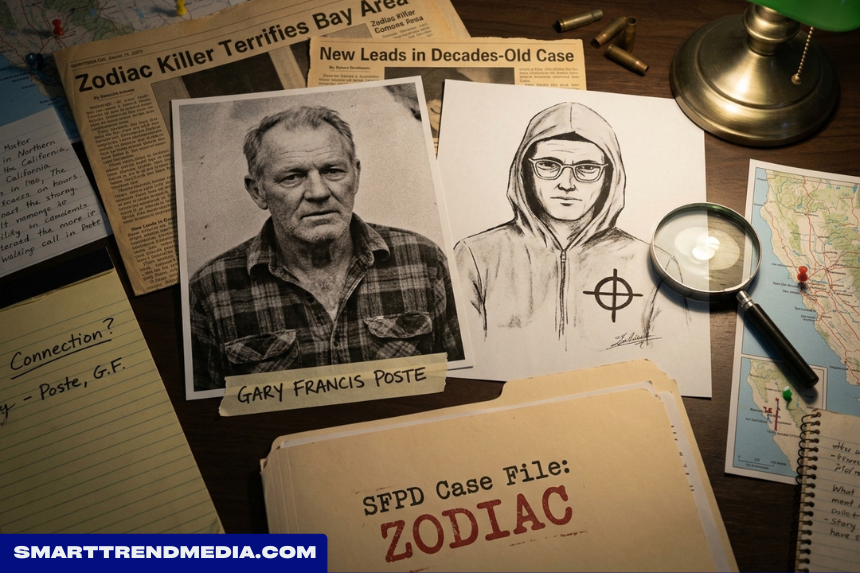
Why the Zodiac Mystery Continues to Attract New Suspects
The Zodiac case creates unusually fertile ground for competing theories.
Several factors contribute to that.
First, the killer deliberately created mystery by sending letters and ciphers.
Second, the crimes took place across multiple jurisdictions.
Third, the events occurred before modern DNA profiling.
Moreover, some letters attributed to Zodiac have uncertain authenticity.
Finally, many original witnesses, investigators, and suspects have died.
As a result, modern investigators often work backward through decades-old evidence.
That creates opportunities for genuine breakthroughs—but also for coincidences to appear more significant than they actually are.
Gary Francis Poste Compared With Other Zodiac Suspects
Poste is only one of many men proposed over the decades.
Perhaps the most famous historical suspect is Arthur Leigh Allen.
Allen attracted serious law-enforcement interest and remained central to popular Zodiac discussions for decades. However, authorities never established him as the killer.
Other suspects have emerged through:
- police investigations;
- books;
- relatives;
- documentaries;
- private investigators;
- amateur research.
Consequently, the existence of a detailed theory against Poste should not automatically be interpreted as proof.
The Zodiac case has produced several detailed suspect theories.
What remains missing is a publicly accepted evidentiary conclusion.
Why The Case Breakers Continue to Support Poste
The Case Breakers have not withdrawn their conclusion.
Instead, they have continued to argue that additional testing and law-enforcement review could strengthen their case against Gary Francis Poste.
In 2023, the group claimed that information from an FBI source indicated Poste had appeared in federal systems as a Zodiac suspect and that a partial DNA profile existed. The FBI nevertheless told Fox News that the investigation remained open and unsolved.
This disagreement illustrates the central tension surrounding Poste.
The Case Breakers’ position: enough evidence exists to identify him.
Public law-enforcement position reflected in the reporting: the case remains unresolved.
Until that gap closes, Poste should remain described as a suspect proposed by private investigators.
What Happened to Gary Francis Poste?
Gary Francis Poste died in 2018 at age 80, before his name became widely associated with the Zodiac case.
Consequently, the international attention surrounding him came largely after his death.
That makes the case unusual.
Unlike a living suspect, Poste could not:
- answer the allegations publicly;
- undergo interviews after the 2021 announcement;
- explain disputed events;
- voluntarily submit new evidence;
- respond to statements made by acquaintances.
Therefore, modern evaluation of the Poste theory must depend on surviving physical evidence, records, photographs, witness statements, and forensic testing.
Was Gary Francis Poste Ever Charged With the Zodiac Murders?
No.
Gary Francis Poste was never charged with the confirmed Zodiac murders.
The public identification came years after his death through The Case Breakers.
Therefore, readers should not confuse:
being accused by a private investigative organization
with:
being arrested, prosecuted, convicted, or officially identified by law enforcement.
Those are fundamentally different legal and evidentiary statuses.
Did Gary Francis Poste Confess to Being the Zodiac?
There is no publicly authenticated confession establishing that Gary Francis Poste admitted to being the Zodiac Killer.
Various people who reportedly knew Poste later made statements about his behavior and personality.
However, those accounts should not be transformed into:
“Poste confessed.”
A genuine confession would require strong authentication and context.
Therefore, unless a reliable primary record emerges, the biography should not describe him as having confessed to the Zodiac murders.
Did Gary Francis Poste Lead a Criminal Posse?
Some sensational reporting has claimed that Poste later led a group of younger men involved in weapons and violent behavior.
These stories originated largely from witness claims promoted through reporting surrounding The Case Breakers’ investigation.
Therefore, the safest wording is:
Former acquaintances made allegations about Poste’s influence over a group of younger men.
It would be inappropriate to present every alleged criminal act attributed to that group as a proven part of Poste’s biography unless supported independently.
This distinction prevents tabloid allegations from becoming “facts” simply through repetition.
Is Gary Francis Poste’s Exact Zodiac Connection Proven?
No.
A useful way to summarize his status is:
Verified
- Gary Francis Poste was a real person.
- He served in the Air Force.
- He worked as a painter.
- He lived in California.
- He had visible forehead scars.
- He died in 2018.
- The Case Breakers publicly named him as their Zodiac suspect in 2021.
Claimed or Disputed
- that his scars identify him as Zodiac;
- that his shoe characteristics match Zodiac evidence;
- that his name reveals hidden cipher messages;
- that DNA evidence proves a Zodiac connection;
- that he killed Cheri Jo Bates;
- that weapons associated with him connect to Zodiac crimes;
- that witness accounts establish him as the killer.
Not Officially Established
That Gary Francis Poste was the Zodiac Killer.
That three-level distinction is essential to an accurate article.
Frequently Asked Questions About Gary Francis Poste
Who was Gary Francis Poste?
Gary Francis Poste was a U.S. Air Force veteran and California house painter who became internationally known after The Case Breakers publicly named him as their Zodiac Killer suspect in 2021.
Was Gary Francis Poste the Zodiac Killer?
It has not been officially established. The Case Breakers believe Poste was Zodiac, but law enforcement has not publicly confirmed that conclusion.
Did the FBI identify Gary Francis Poste as Zodiac?
No public FBI statement reviewed for this article identifies Poste as the Zodiac Killer. In 2023, the FBI told Fox News that its Zodiac investigation remained open and unsolved.
Why did investigators suspect Gary Francis Poste?
The Case Breakers cited forehead scars, witness accounts, alleged weapons evidence, shoe similarities, cipher interpretations, and DNA-related claims.
However, these claims have not resulted in an official identification.
What were Gary Francis Poste’s forehead scars?
Poste had visible forehead scars that The Case Breakers argued resembled markings shown on a famous Zodiac composite sketch.
Nevertheless, resemblance to a composite drawing is not unique forensic proof.
Did DNA match Gary Francis Poste to Zodiac?
No publicly established forensic DNA match has identified Poste as the Zodiac Killer.
The Case Breakers have made DNA-related claims and sought comparisons with other evidence, but that is different from an official confirmed match.
Did a Zodiac cipher contain Gary Francis Poste’s name?
No accepted solution to the major Z340 cipher identifies Gary Francis Poste.
The Case Breakers developed separate interpretations involving his name.
Who solved the Z340 cipher?
David Oranchak, Sam Blake, and Jarl Van Eycke solved the famous 340-character Zodiac cipher in 2020.
Their solution did not reveal Poste as Zodiac.
Did Gary Francis Poste kill Cheri Jo Bates?
There is no official finding establishing that he did.
The Case Breakers attempted to connect Poste to Bates’s 1966 murder, but Riverside authorities have disputed the classification of Bates as a confirmed Zodiac victim.
Was Gary Francis Poste in the Air Force?
Yes. Public reporting describes Poste as a U.S. Air Force veteran.
What did Gary Francis Poste do for a living?
He was widely reported to have worked as a professional house painter.
Where did Gary Francis Poste live?
Poste became closely associated with Groveland, California, where he lived for many years.
When did Gary Francis Poste die?
Gary Francis Poste died in 2018 at age 80.
Was Gary Francis Poste ever charged as the Zodiac Killer?
No. He died before The Case Breakers publicly identified him in 2021 and was never charged with the confirmed Zodiac killings.
Is the Zodiac Killer case solved?
The most recent explicit public FBI position located for this article, from 2023, described the investigation as open and unsolved. No public law-enforcement identification of Gary Francis Poste as Zodiac has been established in the sources reviewed here.
Conclusion: What We Actually Know About Gary Francis Poste
Gary Francis Poste occupies a controversial place in the long history of Zodiac Killer theories.
He was an Air Force veteran and California house painter who died in 2018. Three years later, The Case Breakers publicly announced that they believed Poste was the unidentified killer responsible for the confirmed Zodiac murders.
The group cited physical similarities, witness accounts, cipher interpretations, weapons-related information, and DNA theories.
However, important gaps remain.
No accepted Zodiac cipher solution identifies Poste. No publicly established DNA match ties him conclusively to a confirmed Zodiac crime. The Cheri Jo Bates connection remains disputed. Moreover, law enforcement has not publicly established Poste as the Zodiac Killer.
The FBI explicitly described the investigation as open and unsolved when responding to renewed Poste claims in 2023.