

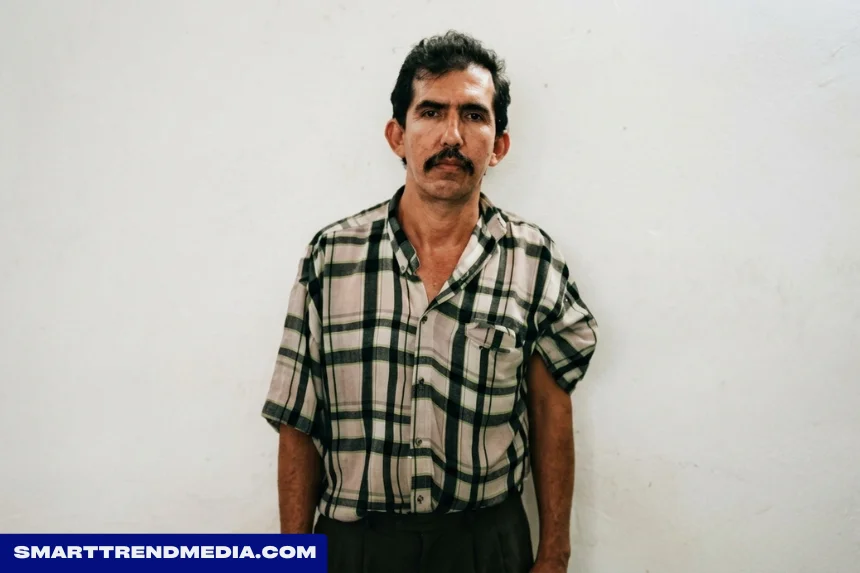
Luis Garavito, whose full name was Luis Alfredo Garavito Cubillos, was a Colombian serial murderer and sexual offender whose crimes against children made him one of the most notorious criminals in Colombia’s modern history. Known publicly by the nickname “La Bestia,” or “The Beast,” he carried out crimes across multiple parts of Colombia during the 1990s.
Garavito was arrested in April 1999, after which investigators connected him with a much larger series of unresolved cases. His subsequent statements helped authorities examine crimes spread across numerous municipalities. However, published totals vary depending on whether a source is discussing confessions, cases attributed to him, identified victims, or convictions.
He remained imprisoned for the rest of his life and died in Colombia in 2023. His case continues to attract attention because of its extraordinary scale, the challenges investigators faced in connecting crimes committed across different regions, and frequent confusion over the number of legally established cases.
Who Was Luis Garavito?
Luis Alfredo Garavito Cubillos was a Colombian serial killer who became known for a large series of crimes against children during the 1990s. Authorities arrested him in 1999, and the investigation that followed connected cases from several areas of Colombia.
Later reports stated that Garavito confessed to more than 190 killings. Nevertheless, that figure should not be confused with the number of convictions or with every case investigators may have suspected him of committing.
Therefore, understanding his case requires separating several categories:
- crimes he confessed to;
- cases investigators attributed to him;
- victims whose identities were established;
- cases that reached conviction;
- additional suspected crimes.
Those distinctions become especially important when examining claims about his victim count.

Luis Garavito Quick Facts
| Detail | Information |
|---|---|
| Full name | Luis Alfredo Garavito Cubillos |
| Born | January 25, 1957 |
| Birthplace | Génova, Quindío, Colombia |
| Nationality | Colombian |
| Known as | “La Bestia” / “The Beast” |
| Main documented crime period | Primarily the 1990s |
| Major forensic period studied | 1992–1999 |
| Arrested | April 1999 |
| Arrest location | Villavicencio, Colombia |
| Status after arrest | Imprisoned |
| Died | October 12, 2023 |
| Age at death | 66 |
| Place of death | Valledupar, Colombia |
The victim total is deliberately not reduced to a single number in this table because different historical and judicial sources count different categories.
Early Life and Background
Luis Alfredo Garavito Cubillos was born on January 25, 1957, in Génova, a municipality in Colombia’s Quindío department.
Accounts published after his arrest describe a difficult childhood. In statements attributed to Garavito himself, he reported physical mistreatment and other abuse during his early years.
Those claims require careful interpretation.
Much of the information about his childhood comes from Garavito’s own later testimony rather than from a complete independent record. Moreover, childhood trauma should not be presented as a simple explanation for violent criminal behavior.
Therefore, a responsible biography should distinguish between documented biographical facts and retrospective claims made by the offender.
As an adult, Garavito moved frequently between different parts of Colombia and worked in a variety of temporary occupations. His mobility would later complicate attempts to recognize that crimes occurring in different jurisdictions might be connected.
The Crimes Associated With Garavito in the 1990s
The main period examined in forensic literature concerning Garavito runs from 1992 through 1999.
During those years, serious crimes involving children were reported across multiple Colombian regions. Initially, individual cases were often handled locally.
That presented a major investigative problem.
Colombia contains many municipalities and departments, while Garavito traveled frequently. Consequently, incidents separated by substantial distances did not automatically appear to be the work of the same offender.
He also did not remain permanently attached to one neighborhood, workplace, or community.
As a result, investigators had to look beyond individual crime scenes and identify similarities across jurisdictions.
That process became increasingly important as authorities examined unresolved disappearances and killings in different parts of the country.
Why the Cases Were Difficult to Connect
Today, it can be easy to look at the Garavito case as one established series. Investigators working during the 1990s did not begin with that advantage.
They were dealing with separate incidents reported in different cities and departments.
Several factors complicated the investigation:
- Garavito moved frequently;
- crimes occurred across different jurisdictions;
- he used different identities;
- individual investigations were initially separated geographically;
- many victims came from vulnerable circumstances;
- law-enforcement agencies had to identify patterns across numerous cases.
Therefore, the central investigative challenge was not simply identifying a suspect in one incident. Authorities also had to determine whether cases occurring far apart were related.
Forensic research published after his arrest noted that Garavito’s repeated changes of location and identity initially made it difficult to connect the broader series.
How Investigators Began Seeing a Pattern
Authorities eventually noticed similarities among cases involving missing and murdered children in different Colombian locations.
Among the cities later mentioned in reporting about the investigation were Pereira, Armenia, and Tunja.
The similarities encouraged investigators to consider whether apparently separate crimes might share a common offender.
This was an important development.
Instead of examining every case solely within its local jurisdiction, authorities could compare information from multiple locations. Patterns involving geography, timing, victim characteristics, and evidence could then be examined together.
Garavito’s eventual arrest provided investigators with a suspect whose movements could be compared with unresolved cases across the country.
However, the arrest itself did not immediately reveal the full scope of the investigation.
That emerged afterward.
The Arrest in Villavicencio
Police arrested Garavito in April 1999 in Villavicencio, the capital of Colombia’s Meta department.
The arrest followed an attempted assault on a child. A nearby person responded to calls for help, and police were subsequently alerted.
When authorities detained Garavito, he was not initially known to them as the person responsible for the enormous series of cases later associated with his name.
Moreover, he was using another identity.
This made the arrest a turning point rather than the conclusion of an already completed nationwide investigation.
Once authorities established who they had detained, investigators began examining his possible connection with unresolved cases elsewhere.
From One Arrest to a Much Larger Investigation
After Garavito was taken into custody, investigators compared his background and movements with cases that had already raised concerns in several regions.
The investigation expanded dramatically.
Authorities questioned him about a large group of unresolved killings, while evidence collected in different jurisdictions was increasingly examined as part of a connected series.
Garavito subsequently began admitting responsibility for numerous crimes.
Those statements significantly widened the investigation because he provided information that authorities could attempt to compare against existing cases and locations.
Nevertheless, a confession alone does not automatically establish every crime in court.
Investigators still needed to:
- compare statements with existing evidence;
- identify victims where possible;
- confirm locations;
- determine which cases could be legally attributed to him;
- develop individual prosecutions.
That is why different numbers appear in credible accounts of the case.
A confession total, an investigative case total, and a conviction total answer three different questions.
Why Luis Garavito’s Victim Count Is Often Confusing
Articles about Luis Garavito frequently give different numbers for his victims.
That does not necessarily mean every source is describing the same statistic incorrectly.
Instead, reports have counted several different things.
One source may report how many killings Garavito confessed to. Another may describe how many cases prosecutors associated with him. A judicial report may count only convictions, while forensic researchers may discuss a broader group of cases they believed belonged to the series.
Consequently, statements such as:
“Garavito killed exactly X people”
can give readers more certainty than the available records justify.
The more accurate approach is to identify what each number actually represents.
The detailed comparison among confession totals, investigative figures, convictions, and later estimates belongs in the next section of this biography rather than being collapsed into one headline statistic.
Why the 1999 Arrest Was So Important
Garavito’s arrest changed the investigation in three major ways.
First, authorities had a person in custody whose identity and movements could be examined across jurisdictions.
Second, investigators could compare his statements with evidence from cases that had previously appeared unrelated.
Finally, information developed after his arrest allowed prosecutors to build numerous individual cases rather than treating the crimes as a vague nationwide estimate.
Therefore, April 1999 represents the key dividing line in the chronology.
Before the arrest, investigators were trying to understand whether multiple unresolved crimes might be connected.
Afterward, the focus shifted toward determining the true scope of the series, identifying victims, testing Garavito’s statements, and deciding which cases could support criminal convictions.
That distinction is essential for understanding what happened next—and why the numbers associated with Luis Garavito remain more complicated than they first appear.
What Happened After Luis Garavito’s Arrest?
The arrest of Luis Garavito in 1999 changed the case from a collection of apparently separate investigations into a much broader criminal inquiry.
Once authorities established his identity, investigators began comparing his movements with unresolved cases from different parts of Colombia. Garavito then admitted responsibility for numerous killings and provided information that authorities could test against existing evidence.
However, his statements did not automatically become proven criminal cases.
Investigators still had to determine whether individual admissions matched:
- known victims;
- established crime locations;
- existing forensic evidence;
- missing-person investigations;
- witness information;
- judicial records.
Consequently, the investigation developed case by case rather than through one single prosecution covering every allegation. That distinction explains why the figures associated with Garavito can appear confusing even in reputable sources.

How Many People Did Luis Garavito Kill?
There is no single figure that should be used without explaining what it represents.
Different reports count different categories, including confessions, cases linked by investigators, convictions, and broader forensic assessments.
By 2001, a report released by Colombia’s Fiscalía described 172 cases related to Garavito. Of those cases, 138 already had convictions, while others remained under investigation, appeal, or awaiting sentence. At that stage, the same report said Garavito had confessed to killing 140 children.
Later accounts gave a higher confession total. By the time of his death in 2023, widely reported figures stated that Garavito had confessed to more than 190 killings.
Meanwhile, a forensic study published in 2002 discussed the case in connection with more than 200 victims. These figures should not be treated as interchangeable.
Why the Numbers Are Different
A useful way to understand the discrepancy is to separate the categories.
| Category | What It Means |
|---|---|
| Confessed killings | Crimes Garavito said he committed |
| Cases linked to him | Investigations authorities associated with Garavito |
| Convictions | Cases in which a court entered a guilty judgment |
| Broader forensic totals | Numbers used by researchers studying the overall series |
| Suspected cases | Additional crimes potentially connected to him but not necessarily proven |
Therefore, saying that Garavito was “convicted of more than 190 murders” would be inaccurate if the figure being cited actually refers to his later confessions.
Likewise, a figure above 200 from forensic literature should not automatically be presented as a court-established victim count.
The safest conclusion is that Garavito confessed to more than 190 killings, while the number of judicially established cases was lower and changed as separate prosecutions progressed.
The 172 Cases Reported by Colombian Prosecutors
A particularly useful snapshot comes from 2001.
At that point, Colombia’s Fiscalía reported 172 cases associated with Luis Alfredo Garavito Cubillos.
The status of those cases was described as:
- 138 with guilty judgments
- 32 still under investigation
- 1 on appeal
- 1 awaiting sentence
Together, the sentences already imposed across the cases added up to 1,853 years and 9 days.
This figure is important, but it also requires context.
It represented the accumulated sentences from numerous individual criminal judgments. It did not mean Colombian law would keep Garavito imprisoned for more than eighteen centuries.
Instead, legal rules governing the accumulation and maximum execution of criminal sentences produced a much shorter effective prison term.
Confessions Versus Convictions
Confessions played a major role in the investigation, but confession and conviction are not the same thing.
After his arrest, Garavito admitted responsibility for a large number of crimes. Some of his statements reportedly contained information that investigators could compare with evidence and previously unresolved disappearances.
In certain cases, those admissions helped authorities revisit investigations that had already focused on other suspects.
Nevertheless, courts could not simply take the highest confession figure and convert it into an identical number of convictions.
Each prosecution required a legal basis.
Authorities had to determine whether sufficient evidence connected Garavito to a particular victim and whether the case could be proved under the applicable criminal procedures.
Therefore, the judicial record developed gradually.
This is also why a biography should avoid presenting all allegations, admissions, and convictions as one undifferentiated total.
His Confessions Also Reopened Other Cases
Garavito’s statements had consequences beyond the cases already attributed to him.
In some instances, people had previously been investigated or convicted for crimes that Garavito later claimed responsibility for committing.
That created a serious problem for the justice system.
His new admissions had to be compared with the evidence underlying earlier prosecutions. If investigators found his account credible and supported by other evidence, courts could reconsider judgments involving other defendants.
One particularly significant example involved Nelson Bonilla Garzón, who had been convicted in a child-murder case.
After Garavito claimed responsibility for that crime and the matter was reviewed, Colombia’s Supreme Court ultimately invalidated the earlier conviction and declared Bonilla innocent.
The episode demonstrates why Garavito’s confessions required investigation rather than automatic acceptance.
They could potentially solve unresolved crimes, but they could also affect existing convictions involving other people.
Why Investigators Had to Verify His Statements
A large confession creates its own investigative challenges.
Someone admitting dozens or hundreds of crimes may provide valuable information. However, investigators must still distinguish between statements that can be corroborated and claims that remain unsupported.
Verification can include checking:
- whether the victim existed;
- whether the disappearance or death occurred when claimed;
- whether the suspect was in the relevant region;
- whether the described location corresponded with known evidence;
- whether previously undisclosed details matched the investigation;
- whether physical or documentary evidence supported the account.
This process mattered especially in Garavito’s case because his crimes were spread across many jurisdictions.
Therefore, the investigation was not simply a matter of recording his confession total. Authorities had to reconstruct a large number of individual cases.
How Many Convictions Did Luis Garavito Receive?
The clearest documented snapshot from 2001 recorded 138 cases with guilty judgments out of 172 cases then associated with him.
That number should be presented with its date.
The investigation and judicial proceedings did not stop in 2001. Additional cases and sentencing decisions continued afterward.
For that reason, writing that Garavito had “exactly 138 convictions in total” would create another misleading fixed number.
A more accurate statement is:
By November 2001, Colombian prosecutors reported guilty judgments in 138 of 172 cases then associated with Garavito.
This wording identifies both the number and the historical point at which it was reported.
Why Was Garavito Said to Have a 1,853-Year Sentence?
One of the most widely repeated facts about the case is that Garavito received a sentence of more than 1,800 years.
That statement is only partly informative unless the legal context is explained.
By November 2001, the sentences imposed across his numerous cases totaled:
1,853 years and 9 days.
This was an accumulated total produced by adding the separate sentences from many convictions.
However, Colombian criminal law did not require him to literally serve all 1,853 years.
Later judicial action consolidated the sentences and left him with an effective maximum prison term of 40 years.
Therefore, both numbers can appear in accurate accounts while describing different legal concepts.
Cumulative Sentence vs. Effective Prison Term
| Figure | Meaning |
|---|---|
| 1,853 years and 9 days | Accumulated sentences reported across numerous cases by 2001 |
| 40 years | Effective maximum prison term after sentences were consolidated |
This distinction is essential.
Without it, readers may reasonably wonder how a person sentenced to more than a thousand years could later be discussed in connection with a possible release date.
The apparent contradiction comes from confusing the sum of individual sentences with the legally enforceable maximum term.
The 40-Year Prison Term
In 2007, a judge in Valledupar consolidated the sentences against Garavito and established a maximum term of 40 years.
This did not erase the numerous convictions.
Instead, it determined how the accumulated criminal sentences would operate as an effective period of incarceration under Colombian law.
Consequently, headlines describing Garavito as a prisoner with a 1,853-year sentence and reports describing him as serving 40 years can both originate from the same underlying judicial history.
The first refers to the sum of sentences across cases.
The second refers to the term that could actually be enforced after consolidation.
Keeping those concepts separate makes the sentencing history much easier to understand.
Crimes Outside Colombia and the Ecuador Cases
Although most of the cases associated with Garavito occurred in Colombia, judicial proceedings also addressed crimes committed in Ecuador.
In 2007, a Colombian court applied the country’s rules on extraterritorial jurisdiction to crimes involving four Ecuadorian children.
Extraterritorial jurisdiction allows a country, under specified legal conditions, to prosecute certain conduct committed by one of its nationals outside its own territory.
Therefore, Garavito did not necessarily need to be physically tried in Ecuador for Colombian courts to address those offenses.
The proceeding resulted in a conviction concerning the four victims.
This international element demonstrates that the investigation extended beyond Colombia’s borders, although Colombia remained the central location of the known case series.
Why Ecuador Later Sought Extradition
The Ecuador-related cases later created another legal issue.
Ecuador sought Garavito’s extradition in connection with killings committed there.
However, Colombia’s Supreme Court rejected the extradition request in 2012.
The reason was not that the crimes were considered unimportant.
Instead, the court concluded that the relevant conduct had already been included in criminal proceedings against Garavito in Colombia. Allowing another prosecution for the same facts raised legal concerns because the cases had already been adjudicated.
Therefore, the extradition dispute became another example of how the enormous geographic scope of the case complicated its judicial history.
Why the Garavito Case Produced So Many Separate Judgments
Readers may reasonably ask why authorities did not simply prosecute everything in one trial.
The answer lies partly in the scale and geography of the investigation.
Individual crimes had occurred:
- in different municipalities;
- under different local investigations;
- at different times;
- with varying amounts of evidence;
- sometimes outside Colombia.
As authorities connected the broader pattern, many cases were already at different stages of investigation or prosecution.
Consequently, Garavito accumulated numerous individual judgments.
That judicial structure produced the enormous cumulative sentence figure reported in 2001.
Later sentence consolidation addressed the practical question of how those separate judgments translated into one enforceable prison term.
What Can Be Stated With Confidence?
Several conclusions are well supported.
First, Garavito admitted responsibility for an extraordinarily large number of killings, with later reporting placing his confession total above 190.
Second, Colombian prosecutors had linked 172 cases to him by 2001 and reported 138 guilty judgments at that stage.
Where Was Luis Garavito Imprisoned?
After his convictions, Luis Garavito remained in Colombia’s prison system for the rest of his life.
During the later years of his incarceration, he was held at the high- and medium-security penitentiary in Valledupar, Cesar, commonly known as La Tramacúa.
His imprisonment lasted for more than two decades. However, because Colombian law limited the effective term he could serve despite the much larger cumulative sentences discussed earlier, questions eventually arose about whether he might qualify for conditional release.
That possibility generated widespread public concern.
Was Luis Garavito Going to Be Released?
The possibility of Garavito leaving prison received renewed attention in 2021.
The controversy developed after prison officials forwarded documentation concerning his sentence and time served to the judge responsible for overseeing his incarceration.
Some reports made the process sound as though prison authorities themselves were requesting or approving his release.
However, that interpretation was incorrect.
Colombia’s National Penitentiary and Prison Institute, or INPEC, publicly clarified that sending the documentation was part of a legal procedure that applies when relevant sentencing conditions are reviewed.
Most importantly, INPEC did not have the authority to grant Garavito conditional freedom.
That decision belonged to the judge responsible for the execution of his sentence.
Therefore, the existence of release-related paperwork did not mean Garavito had been ordered out of prison.
Why Was Conditional Release Denied?
A court ultimately did not grant Garavito conditional freedom.
By 2021, he had served the portion of his accumulated 40-year term required for a conditional-release request to be considered. Nevertheless, time served was only one part of the legal test.
Other requirements also applied.
Among them were conditions connected with compensation or reparation for victims. The court found that the necessary requirements had not all been satisfied.
Consequently, Garavito remained incarcerated.
This distinction corrects two common misunderstandings.
It would be inaccurate to say that he had already been approved for release. At the same time, it would also be misleading to claim that his sentence could never legally have been reviewed for conditional freedom.
A review occurred, but the request did not result in his release.
INPEC Clarified the Release Controversy
INPEC issued an official statement on November 1, 2021, specifically addressing reports about Garavito’s possible release.
The agency explained that prison legal offices routinely provide relevant sentencing documents to judicial authorities when required by Colombian criminal procedure.
INPEC’s role was administrative.
It could supply information concerning matters such as:
- time already served;
- recognised sentence reductions or credits;
- prison records;
- other documents required by the court.
However, the final decision belonged to the Judge for Execution of Sentences and Security Measures.
Therefore, the paperwork that generated headlines in 2021 was not itself a release order.
The official clarification is important because later summaries sometimes repeat the claim that Garavito was “about to walk free” without explaining what actually occurred.
Was Luis Garavito Ever Released?
No.
Luis Garavito was never released from prison.
Although conditional freedom became the subject of judicial review and extensive public discussion, he remained incarcerated.
He was still a prisoner when he died in 2023.
This matters when reading older reports about his case. Articles written before his death may discuss a potential future release, but those stories describe a possibility that ultimately never occurred.
Garavito’s Health During His Final Years
Garavito experienced serious health problems during the later years of his imprisonment.
Colombian reports discussed illnesses for which he received medical attention, and his deteriorating health became increasingly relevant before his death.
Nevertheless, sources have not always described his medical conditions in exactly the same way.
For that reason, it is better to distinguish between reported illnesses and an officially established cause of death.
What can be stated confidently is that Garavito was receiving medical care and was hospitalized shortly before he died.
When Did Luis Garavito Die?
Luis Garavito died on October 12, 2023, at the age of 66.
He died in a hospital in Valledupar, Colombia, where he had remained imprisoned.
Initial reports confirming his death stated that prison authorities had not immediately disclosed a definitive cause.
Therefore, the most careful description is that Garavito died in hospital after experiencing serious health problems while still incarcerated.
His death permanently ended speculation about whether he might eventually leave prison through conditional release.
Why the Luis Garavito Case Remains Significant
The significance of Garavito’s case goes beyond the unusually large number of crimes associated with him.
One of the central investigative problems was geography.
Cases occurred across multiple municipalities and departments, while Garavito traveled extensively. Consequently, crimes investigated in separate jurisdictions did not immediately appear to belong to the same series.
His case demonstrated why communication between investigative agencies and comparison of cases across regions can be crucial when dealing with a mobile offender.
Why the Numbers Need Context
Another lasting issue is the way Garavito’s criminal record is discussed.
Several different numbers appear in reporting about him, including totals relating to:
- confessions;
- suspected cases;
- cases investigators connected to him;
- convictions;
- cumulative prison sentences.
These numbers describe different things.
A confession is not automatically a conviction. Likewise, an investigative estimate does not automatically represent a court-established victim total.
Similarly, adding individual prison sentences together does not necessarily tell readers how long a convicted person can legally remain incarcerated under the applicable sentencing rules.
Therefore, accurate coverage of the Garavito case requires explaining the category behind each number rather than simply repeating the largest figure available.
Why His Confessions Still Required Verification
Garavito admitted responsibility for an extraordinary number of crimes.
However, investigators could not treat every statement as automatically proven.
Authorities still needed to compare his admissions with:
- victim records;
- disappearance reports;
- known locations;
- forensic evidence;
- dates;
- witness accounts;
- existing criminal investigations.
That process was particularly important because the cases were geographically dispersed.
Some statements could be strongly corroborated. Others required additional investigation.
This distinction explains why later confession totals can be much higher than the number of convictions recorded at a particular point in time.
The Importance of Focusing on the Victims
Garavito became widely known by the nickname “La Bestia,” or “The Beast.”
The nickname is historically relevant because it appears frequently in reporting about the case. However, repeatedly using sensational labels can shift attention away from the people affected by the crimes.
A responsible account should instead focus on:
- verified evidence;
- the investigative process;
- judicial outcomes;
- why historical figures differ;
- the families and communities affected;
- lessons from failures and successes in the investigation.
True-crime coverage becomes less informative when the offender’s notoriety becomes more important than the factual record.
Common Misconceptions About Luis Garavito
Several frequently repeated claims require additional context.
“He Was Convicted of More Than 190 Murders”
That wording confuses different categories.
Later reporting said Garavito confessed to more than 190 killings. However, confession totals and court convictions are not the same measure.
“He Was Sentenced to 1,853 Years and Had to Serve Them All”
Separate sentences imposed across numerous cases produced a cumulative total exceeding 1,800 years.
However, Colombian sentencing rules resulted in a much shorter enforceable maximum term, discussed earlier in Part B.
Therefore, the cumulative number should never be presented without explaining the legal limit.
“Luis Garavito Was Released Early”
No.
Conditional release was considered, but the court did not grant it. Garavito remained imprisoned until his death.
“There Is One Universally Accepted Victim Count”
No single figure represents every category used in the case.
Confessions, suspected crimes, investigative links, and convictions must be distinguished from one another.
“His Childhood Explains His Crimes”
That is an unsupported oversimplification.
Reports about Garavito’s childhood rely partly on statements he made after his arrest. Furthermore, childhood trauma cannot be treated as a straightforward explanation for later serial violence.
Frequently Asked Questions
Who was Luis Garavito?
Luis Alfredo Garavito Cubillos was a Colombian serial murderer and sexual offender whose crimes primarily targeted children during the 1990s.
He was arrested in 1999 and remained imprisoned until his death.
When was Luis Garavito born?
Garavito was born on January 25, 1957, in Génova, Quindío, Colombia.
When was Luis Garavito arrested?
He was arrested in April 1999 in Villavicencio, Colombia.
His detention led authorities to investigate his possible connection with a much larger group of crimes occurring across different regions.
How many people did Luis Garavito kill?
There is no single number that should be used without explaining the category.
Later reports said Garavito confessed to more than 190 killings. However, documented conviction totals were lower, while some forensic accounts discussed broader figures.
Therefore, confessions, suspected cases, linked investigations, and convictions should not be treated as interchangeable.
How many convictions did Luis Garavito have?
A Colombian prosecution report from 2001 documented guilty judgments in 138 of 172 cases then associated with Garavito.
Because legal proceedings continued afterward, 138 should be described as a documented figure from that specific stage rather than an unquestioned final total for every category.
How long was Luis Garavito sentenced to prison?
The individual sentences imposed across numerous cases accumulated to more than 1,800 years.
However, those sentences were later consolidated under Colombian law, leaving an effective maximum prison term of 40 years.
Was Luis Garavito released?
No. He remained incarcerated until his death in 2023.
Why was his conditional release denied?
Serving a required portion of the sentence allowed the issue to be considered, but it did not guarantee freedom.
The court found that all legal requirements had not been satisfied, including conditions concerning obligations toward victims.
Where was Luis Garavito imprisoned?
During the later period of his incarceration, he was held at the high- and medium-security penitentiary in Valledupar, commonly called La Tramacúa.
When did Luis Garavito die?
Garavito died on October 12, 2023, at age 66.
He died in a hospital in Valledupar while still incarcerated.
What was Luis Garavito’s cause of death?
Initial reporting confirming his death said that a definitive cause had not immediately been disclosed.
Although separate reports discussed serious illnesses during his final years, those reports should not automatically be turned into a definitive official cause of death.
What was Luis Garavito’s nickname?
He was widely referred to as “La Bestia,” translated as “The Beast.”
The nickname is historically relevant, although it should not be overused in factual coverage.
Why do different sources report different victim totals?
Different sources measure different categories.
One source may report confessions, another may count cases investigators connected to Garavito, while judicial reports may focus on convictions.
Conclusion
Luis Garavito remained incarcerated from his 1999 arrest until his death in 2023.
The resulting judicial history was equally complex. Confession totals differed from conviction counts, individual sentences accumulated to enormous figures, and Colombian sentencing law produced a much shorter effective prison term. Later, questions about conditional release created additional confusion.
Garavito was ultimately never released. He died in Valledupar on October 12, 2023, while still a prisoner.
An accurate account of the case should therefore avoid sensationalism and distinguish carefully between confessions, investigations, convictions, sentencing figures, and confirmed judicial outcomes. Most importantly, the historical record should remain centered on verified evidence and the people affected by the crimes rather than on the mythology surrounding the offender.
Read more at Smart Trend Media