


Pennie Lane Trumbull is the real-life woman most closely associated with Penny Lane, the character Kate Hudson played in Cameron Crowe’s Almost Famous. However, in the early 1970s, Trumbull moved through the rock world with a group of friends known as the Flying Garter Girls and became friends with the teenage Crowe while he was building his career as a music journalist. Decades later, he drew heavily on her personality, memories and group when creating the film.
The movie, however, is not a documentary. Trumbull has repeatedly made that distinction herself. Therefore, some emotional truths came from real life, while specific scenes, romances and crises were invented or combined from several sources.
Her story also did not end when she left the rock scene. She went to college and graduate school, built a marketing career, returned to Oregon, developed a Sauvie Island property, experimented with Pinot Noir, and created businesses around music, hospitality and marketing.
That fuller life is what makes Pennie Lane Trumbull more interesting than the simple label “the real Penny Lane.”
Who Is Pennie Lane Trumbull?
In addition, Pennie Lane Trumbull, born Pennie Ann Trumbull, is an American cultural figure, entrepreneur and former member of the 1970s rock scene.
She became publicly known because Cameron Crowe identified her as the principal real-life inspiration for Penny Lane in Almost Famous. Crowe’s movie follows a teenage music writer traveling with a fictional rock band and a circle of young women who call themselves “Band-Aids.”
Trumbull’s real group was the Flying Garter Girls.
Meanwhile, the women cultivated access to musicians and promoters, developed nicknames and even used promotional materials to make themselves recognizable within the scene.
However, Pennie’s adult life moved far beyond touring and backstage access. She later worked in marketing, operated businesses and developed a rural life in Oregon.
That distinction matters because search results often freeze her identity in 1973.
The Real Penny Lane Before Almost Famous
For that reason, long before Kate Hudson wore the famous coat and sunglasses, Pennie was a teenager in Portland who cared intensely about two things: horses and music.
A detailed Oregon Music News profile describes her growing up in Portland and attending Roosevelt High School.
She spent much of her time riding, competing and working around horses.
Meanwhile, the radio became a constant companion.
At the same time, rock music offered a different kind of freedom from the more conventional high-school world around her.
That combination of seriousness and restlessness helps explain why she entered the touring scene so deliberately rather than accidentally.
She did not describe herself as someone simply trying to attach herself to fame.
Instead, she has consistently framed those years as a limited experiment in music, adventure and self-discovery.
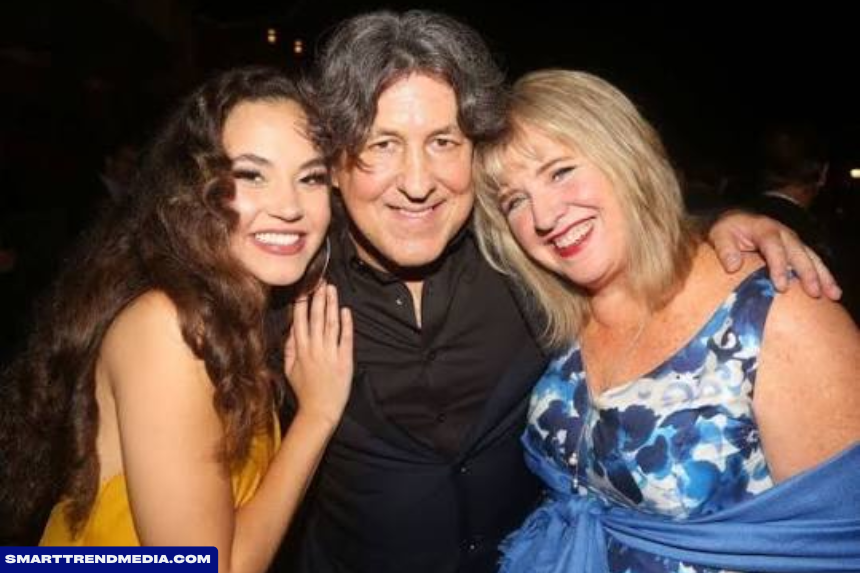
Growing Up in Portland
Likewise, Pennie grew up in Portland, Oregon, in a family environment that appears to have valued work and independence.
In later interviews, she remembered helping her parents maintain rental properties.
She learned practical tasks rather than living only inside teenage social life.
At the same time, she never felt fully at home in the standard high-school mold.
Music gave her an alternate social world.
Portland in the early 1970s also sat on the touring map for major rock acts. Concerts brought national and international musicians through the city, creating opportunities for an ambitious music fan to enter that orbit.
Pennie began attending shows young.
Therefore, her interest was not only in celebrities as personalities. She repeatedly describes the music itself as the central attraction.
That emphasis became part of how she later explained the Flying Garter Girls.
Horses, Music and Roosevelt High School
Pennie’s equestrian background is more than a colorful side note.
In addition, strong biographical sources describe her as a serious young rider who competed regularly.
The discipline required for horses contrasts with the stereotypical image of an uncontrolled teenage rock follower.
That contrast appears throughout her own version of the story.
She has portrayed herself as someone who wanted adventure but also imposed rules on herself.
Music offered emotional intensity. Horses offered structure.
By the end of high school, Pennie decided to leave Portland for Los Angeles.
She has said she moved there while involved with musician Hugh O’Sullivan, who was connected to Steppenwolf’s touring world.
For that reason, the experience exposed her to the realities of touring musicians and helped shape how she later approached the Portland concert scene.
How the Flying Garter Girls Began
When Pennie returned to Portland, she wanted to distinguish herself and her friends from other young women seeking backstage access.
The result was the Flying Garter Girls.
The group used nicknames and branding. At the same time, members included figures remembered by names such as Marvelous Meg, Sexy Sandy, the Real Camille and Caroline Can-Can.
Pennie adopted “Pennie Lane,” drawing on the Beatles title while keeping her distinctive spelling.
The group even created promotional matchbooks.
That detail matters because it shows organization and marketing instinct.
Likewise, Pennie later described approaching concert promoters with a pitch: the girls would behave professionally, stay out of the way and represent Portland well.
The language may sound playful, but the strategy was serious.
They were building a recognizable identity before the modern idea of personal branding existed.
Pennie Lane Trumbull and Cameron Crowe
Pennie met Cameron Crowe while both were very young.
However, crowe was already writing about music and would soon become one of the youngest contributors associated with Rolling Stone.
They crossed paths in Portland and became friends.
Their connection mattered because Crowe was not simply observing the rock world from a distance. He was inside it as a teenage journalist.
Therefore, Pennie and the Flying Garter Girls represented another way of being inside that world.
Years later, Crowe drew on those memories while writing Almost Famous.
A Fresh Air Archive interview captures Crowe describing Pennie as someone who explained the emotional experience of following bands and loving the atmosphere around live music.
He has also described her as a friend, not merely source material.
Was Penny Lane in Almost Famous Really Her?
Yes, but with an important qualification.
Pennie Lane Trumbull is widely described as the main or principal inspiration for Kate Hudson’s Penny Lane.
That does not mean every detail in the fictional character came from Pennie.
Cameron Crowe worked from memory, real encounters and multiple figures in the rock scene.
Meanwhile, Kate Hudson has also discussed drawing from several real women when developing the role.
Therefore, the most accurate answer is that Pennie is the clearest real-life model behind the character’s name, attitude and social world, while the final character is a composite.
That distinction protects both history and storytelling.
A fictional film can capture emotional truth without reproducing one person’s biography scene for scene.
What Cameron Crowe has said
For that reason, crowe has repeatedly identified Pennie Trumbull in discussions of the film.
In more recent interviews, he described the Flying Garter Girls as her circle and remembered Pennie’s ability to explain why fans wanted to remain in an empty arena after a powerful concert.
That detail closely resembles one of the movie’s most memorable images: Penny Lane alone in the venue after the show.
Crowe also said Pennie had once talked about creating a place in Oregon where aging musicians could find refuge.
At the same time, he later connected that idea to the Oregon life she built.
These comments strengthen the argument that Pennie contributed more than a name.
She helped shape the emotional philosophy behind the character.
Why the character is still a composite
Movies compress people and events.
Likewise, Almost Famous combines bands, relationships, tour experiences and personalities into a dramatic narrative.
Penny Lane therefore contains traits and story elements that cannot all be assigned to Pennie Trumbull.
Other women connected to 1970s rock culture have also been discussed as influences.
That does not weaken Pennie’s central connection.
However, it simply means “inspired by” is more accurate than “exactly based on.”
The same distinction applies to Stillwater, the fictional band.
Crowe created a composite rock group instead of reproducing one band exactly.
What Almost Famous Changed
The movie takes major liberties with real events.
Therefore, that is normal for autobiographical fiction, but readers often search the film as if every scene happened.
Pennie’s own version is especially useful here.
She says she deliberately limited her rock-scene years and left by age 20.
She also says she never intended to stay permanently inside that world.
In addition, the film creates a more dramatic emotional arc for Penny Lane because drama needs pressure, conflict and crisis.
The real Pennie describes something closer to a planned chapter of her youth.
That difference changes how we interpret her.
She was not simply swept away by rock celebrity.
Meanwhile, she has portrayed herself as watching, learning and eventually deciding it was time to build a different life.
The Overdose Scene Did Not Happen to Pennie
One of the most important corrections concerns the overdose sequence in Almost Famous.
Pennie’s own public account explicitly says there were no drug overdoses in her real story.
Therefore, the hotel-room sequence involving Kate Hudson’s Penny Lane should not be described as a recreation of a real Pennie Lane Trumbull event.
For that reason, the scene works dramatically because it pushes William Miller and Penny into an intimate crisis.
But it belongs to the film.
This distinction is especially important because biography sites often repeat movie scenes as real incidents.
Pennie’s own source should carry more weight than those derivative summaries.
The same caution applies to individual romances.
A fictional relationship can draw from several experiences without mapping neatly onto one real musician.
Leaving the Rock Scene at 20
Pennie has described the end of her rock years as intentional.
On her own site, she says she gave herself roughly three years to live inside that world.
Likewise, by 1974, she was 20 and ready to leave.
She returned to Portland and resumed life under her everyday identity.
That decision separates her story from the mythology of a lifelong groupie.
Pennie had seen the machinery around rock stars: managers, labels, promoters, road crews, travel and publicity.
However, she says she learned from all of it.
Then she redirected that knowledge into education and business.
The transition is one of the strongest parts of her biography because it shows that the skills behind the Flying Garter Girls did not disappear.
They became marketing skills.
Education and a Marketing Career
Therefore, after leaving the touring scene, Pennie went to college and graduate school.
Biographical records commonly list a bachelor’s degree in Business Administration from California State University, Northridge and an MBA in Marketing from Alliant International University in 1988.
Her own official story confirms the broader sequence: college, graduate school and then a successful marketing career.
The Los Angeles Times reported in 2001 that she worked as a marketing consultant with clients including the U.S. Olympic Training Center in San Diego.
That detail matters because it provides independent evidence of a serious post-rock career.
It also reveals continuity.
The teenager who branded the Flying Garter Girls later became a professional marketer.
Pennie Lane Trumbull as a Businesswoman
Pennie’s business identity extends across several areas.
Marketing remained the foundation.
An Entrepreneur profile later described ventures involving consulting, a retreat property, farming, wine and sport horses.
The businesses changed, but the underlying skill stayed similar: creating an identity around an experience.
For that reason, that is visible in the Flying Garter Girls branding, the Swallows wine name and the way she described her Oregon property.
Pennie’s career therefore challenges the idea that her only notable skill was social access to rock musicians.
The available record shows a marketer who understood image, storytelling and networks long before those abilities became formal career language.
Her later projects simply moved those instincts into more conventional business settings.
Returning to Oregon
At the same time, after years in California, Pennie returned to Oregon.
Her own site says the move followed a period of marriage, work and life away from Portland.
She wanted to be closer to family.
The return also brought her back to the landscape and music community that shaped her youth.
Likewise, instead of reentering the rock scene as a touring teenager, she built a more settled version of the music-centered life.
That included rural property, hospitality, farming and continued relationships with artists.
The Oregon chapter became less about chasing bands and more about creating a place where creative people could visit.
That shift is one reason later profiles often describe her ranch as a kind of refuge.
Life on Sauvie Island
However, Pennie developed property on Sauvie Island, near Portland.
Profiles describe the place as a farm, retreat and “Rock n Roll Ranch.”
The Oregon Wine Press visited this later chapter in detail.
At the property, Pennie raised animals, worked with horses and experimented with grapes.
Therefore, she also became involved in weddings and local community life.
Some later articles describe famous visitors.
However, the important point is not a guest list.
The ranch represented a reversal of her youth.
In addition, instead of traveling from venue to venue to enter musicians’ world, she built a place in Oregon where creative people could enter hers.
From Rock Music to Wine
Wine became another area where Pennie’s curiosity and marketing instincts met.
She told Oregon Wine Press that her serious interest began with memorable wine experiences and grew through study.
In 1994, she attended an intensive Masters of Wine course in Boston.
Meanwhile, she later concluded that understanding wine required learning more about viticulture.
So she planted a small test vineyard.
This was not a giant commercial winery project.
It was an experiment.
For that reason, the resulting small Pinot Noir vintage taught her about growing, production and branding.
Her explanation makes clear that she approached wine as both a student and marketer.
The Swallows Pinot Noir Project
Pennie named her wine project Swallows.
In the Oregon Wine Press interview, she explained the deliberately playful logic behind the name.
At the same time, the first small vintage amounted to only a limited number of cases, and she said it sold out.
She later chose not to continue personally making wine on a regular basis.
Instead, she remained interested in the possibility of branding or marketing the label with the right partner.
That distinction is important.
Likewise, some biography sites simplify the story into “Pennie owns a winery.”
The primary interview supports something more specific: she planted grapes, produced a limited Pinot Noir project and developed the Swallows brand, but did not present herself as a large-scale professional winemaker.
Why Pennie Protected Her Privacy
Pennie’s relationship with fame has always been unusual.
She was close to famous musicians but repeatedly says she did not want fame for herself.
However, when Almost Famous was being made, her own press archive says she initially pushed hard to protect her real identity.
She did not want journalists finding her or turning her private life into a public spectacle.
That concern helps explain why so many details about her are inconsistent across older websites.
Privacy was not an accident.
It was part of her strategy.
She later became more willing to discuss the historical story, appear at screenings and speak about the movie.
Even then, she avoided the classic “tell-all groupie memoir” approach.
That boundary should shape responsible modern biographies.
Rethinking the Word Groupie
In addition, the word groupie is impossible to avoid in Pennie’s story, but it deserves context.
A Wikipedia overview of groupies traces the term’s connection to fans who seek proximity to musicians or other public figures.
Historically, the label often carried a sexual and dismissive meaning, especially when applied to women.
Pennie has resisted being reduced to that definition.
Meanwhile, she describes the Flying Garter Girls as people who loved music, cultivated access, helped create atmosphere and maintained their own standards.
At the same time, no modern retelling should romanticize the entire 1970s scene.
Teenage girls, adult rock stars, celebrity power and sexual access created real imbalances.
A balanced article can recognize Pennie’s agency without pretending those broader dynamics did not exist.
Pennie Lane Trumbull Age and Birthday
For that reason, Pennie Lane Trumbull is widely reported as having been born on July 3, 1954, in Portland, Oregon.
That date would make her 72 years old in August 2026.
The timeline is consistent with her own first-person account of being 17 when she entered the rock scene and 20 when she left in 1974.
Still, her strongest primary pages focus much more on her life chronology than on an official birthday announcement.
Therefore, the date is best treated as widely reported and timeline-consistent rather than as a recently confirmed government record.
The important biographical point is that Pennie was still a teenager during much of the experience that later inspired Almost Famous.
That fact changes how modern readers should understand the era.
Does Pennie Lane Trumbull Have a Verified Net Worth?
No credible public financial record establishes Pennie Lane Trumbull’s net worth.
Likewise, online biography pages sometimes publish exact multi-million-dollar figures.
Those numbers usually lack evidence.
Pennie’s life includes real business activity: marketing consulting, property, agriculture, wine, events and licensing connected to Almost Famous.
However, none of those facts reveals total assets minus liabilities.
However, property value, debt, taxes, investment holdings, business ownership percentages and current income would all matter.
Therefore, an exact number would be speculation.
The useful conclusion is simply that Pennie built a diverse business life after the 1970s, but her personal net worth is not publicly verified.
Career and Life Timeline
| Period | Event |
|---|---|
| 1954 | Pennie Ann Trumbull is widely reported to have been born in Portland, Oregon. |
| Teen years | Attends Roosevelt High School, competes with horses and becomes deeply interested in rock music. |
| Around age 18 | Spends time in Los Angeles and gains direct exposure to touring musicians. |
| Early 1970s | Returns to Portland and helps form the Flying Garter Girls. |
| 1973 | Meets teenage rock journalist Cameron Crowe and becomes part of the world he later remembers in Almost Famous. |
| 1974 | At age 20, Pennie says she leaves the rock scene and begins the next chapter of her life. |
| Later 1970s–1980s | Pursues higher education and builds a marketing career. |
| 1988 | Biographical sources list completion of an MBA in Marketing. |
| Early 1990s | Returns to Oregon after years in California. |
| 1990s–2000s | Develops Sauvie Island property, consulting work and other ventures. |
| 2000 | Almost Famous brings the fictional Penny Lane to a global audience. |
| 2001 | Los Angeles Times profiles Pennie’s marketing and music-business work. |
| 2011 | Oregon Wine Press documents her farming, Swallows wine project and Sauvie Island life. |
| 2012 onward | Pennie appears more publicly in interviews, film discussions and Almost Famous events. |
| 2025 | Cameron Crowe again discusses Pennie and the Flying Garter Girls in a major Fresh Air interview. |
| 2026 | Her public identity remains tied to Almost Famous, but the fuller record also shows decades of marketing, entrepreneurship and Oregon community life. |
Why the Real Story Is More Interesting Than the Movie Myth
The fictional Penny Lane is unforgettable because she seems suspended inside the moment.
Therefore, the real Pennie Trumbull is interesting for the opposite reason: she left.
She recognized that the rock world could not become a permanent reality for her.
Then she converted the skills she had developed there into something else.
Branding became marketing.
Access became networking.
Travel and hospitality became retreat culture.
Music fandom became lifelong connection to artists and local music.
That arc is less cinematic than a dramatic overdose or doomed romance, but it says more about the person.
Meanwhile, Pennie did not remain frozen as a 1970s symbol.
She built another life.
Frequently Asked Questions
1. Who is Pennie Lane Trumbull?
Pennie Lane Trumbull is an American entrepreneur and cultural figure who became the principal real-life inspiration for Penny Lane in Cameron Crowe’s Almost Famous.
In the early 1970s, she was part of the Portland rock scene and helped organize the Flying Garter Girls. For that reason, she later built a career in marketing and business.
2. Is Pennie Lane Trumbull the real Penny Lane?
Yes, Pennie is the main real-life person associated with Kate Hudson’s Penny Lane character.
However, the character is still a composite. Cameron Crowe drew from Pennie, other women and his wider experiences in the 1970s rock world.
3. Did Cameron Crowe know Pennie Lane Trumbull?
Yes.
They met when Crowe was a teenage music journalist. Crowe has spoken publicly about their friendship and the influence Pennie and the Flying Garter Girls had on his memories of the period.
4. What were the Flying Garter Girls?
The Flying Garter Girls were a group of young women in the Portland rock scene who created nicknames, branding and a recognizable identity around their access to musicians and promoters.
Likewise, Pennie has described them as music lovers and ambassadors rather than simply as conventional groupies.
5. Did the Almost Famous overdose really happen?
Not to Pennie Lane Trumbull, according to her own account.
Her official “Real Story” page explicitly says there were no drug overdoses in her experience. The overdose sequence belongs to the film’s fictionalized story.
6. What did Pennie Lane Trumbull do after the 1970s?
However, she left the rock scene around age 20, pursued higher education and built a marketing career.
Later, she returned to Oregon and became involved with consulting, farming, hospitality, wine and music-related projects.
7. Did Pennie Lane Trumbull go to college?
Yes.
Biographical sources commonly list a bachelor’s degree in Business Administration from California State University, Northridge and an MBA in Marketing from Alliant International University.
8. Does Pennie Lane Trumbull make wine?
Therefore, she produced a small Pinot Noir project under the Swallows label and planted grapes on her Oregon property.
In a detailed interview, she said she did not continue making wine regularly herself but remained interested in the brand and wine marketing.
9. What is Pennie Lane Trumbull age?
Pennie is widely reported as having been born July 3, 1954.
That would make her 72 years old in August 2026.
10. What is Pennie Lane Trumbull net worth?
In addition, Pennie Lane Trumbull does not have a verified public net-worth figure.
Her marketing, property, agriculture, wine and film-related income history does not provide enough evidence to calculate personal wealth accurately.
Conclusion: More Than the Woman Behind a Movie Character
Pennie Lane Trumbull occupies an unusual place in rock history because millions of people know a fictionalized version of her before they know the real woman.
Cameron Crowe used her friendship, personality and Flying Garter Girls world as major inspiration for Penny Lane in Almost Famous. Meanwhile, Kate Hudson then turned that character into one of the most recognizable figures in modern rock cinema.
But the real story extends far past 1973.
Pennie left the scene at 20, pursued education, built a marketing career, created businesses, returned to Oregon, developed a Sauvie Island property and experimented with wine.
She also spent years protecting her privacy rather than monetizing every famous name she encountered.
For that reason, that choice may be the clearest difference between Pennie Lane Trumbull and the mythology around her. The film made Penny Lane almost famous. Pennie spent much of her real life proving that fame was never the only thing worth building.