

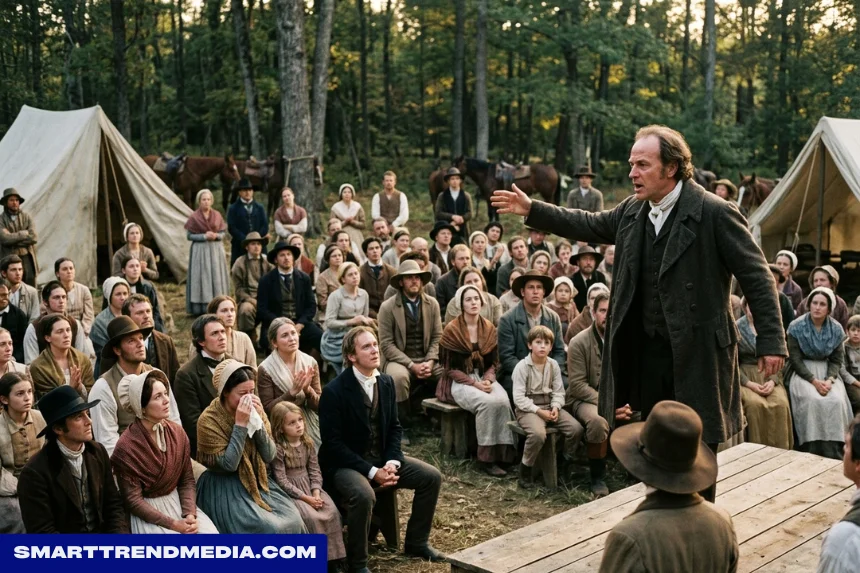
The Second Great Awakening was a major Protestant religious revival that reshaped American Christianity during the late eighteenth and early nineteenth centuries. Beginning around the turn of the nineteenth century, revival movements spread through New England, Kentucky, the expanding western frontier, and eventually other parts of the United States. Preachers emphasized personal conversion, individual responsibility, and an emotional commitment to Christian faith.
However, the movement was much more than a series of dramatic religious meetings. It changed how many Americans thought about salvation, expanded evangelical Protestantism, encouraged new forms of religious organization, and later became closely connected with several antebellum reform movements.
Although historians use the term as if it describes one event, the Second Great Awakening was actually a broad collection of revivals that developed in different regions and at different times.
Quick Answer: What Was the Second Great Awakening?
The Second Great Awakening was an evangelical Protestant revival movement that began developing in the United States during the late 1700s and became especially influential during the early nineteenth century.
It emphasized personal conversion, emotional religious experience, active evangelism, and the idea that individuals should respond personally to the Christian message. Revival preaching spread through churches, frontier settlements, camp meetings, and growing towns.
Moreover, the movement helped expand Methodist, Baptist, Presbyterian, and other Protestant communities. Its religious ideas also contributed to a broader culture of voluntary action and moral reform during the decades before the Civil War.
In short, the Second Great Awakening transformed both American religious life and the way many Christians understood their responsibilities toward society.
Second Great Awakening Quick Facts
| Topic | Key Fact |
|---|---|
| Movement | Protestant evangelical religious revival |
| Main location | United States |
| Beginning | Revival activity intensified around the 1790s and 1800 |
| Major period of influence | Early nineteenth century, especially the antebellum era |
| Famous early revival | Cane Ridge Revival, Kentucky, 1801 |
| Major religious form | Revivals and outdoor camp meetings |
| Prominent denominations | Methodists, Baptists, Presbyterians, and other Protestants |
| Central emphasis | Personal conversion and active Christian commitment |
| Important later revivalist | Charles Grandison Finney |
| Broader impact | Church growth, evangelical expansion, and increased reform activity |
The dates should be understood as an approximate historical period rather than a rigid beginning and ending. Different regions experienced revivalism at different times.
What Was the Second Great Awakening?
Historians use the Second Great Awakening to describe a wave of Protestant revivalism that transformed religious life in the early United States.
At its center was the idea of conversion. Revivalists called on listeners to turn away from sin, embrace Christian faith personally, and begin a changed religious life. Consequently, worship could become highly emotional and participatory, especially at large revival gatherings.
This emphasis differed in important ways from religious traditions that placed stronger weight on predetermined salvation. Many revival preachers stressed that people needed to respond actively to the religious message rather than simply wait to learn whether they belonged among the saved.
Nevertheless, the movement was not controlled by a single church, leader, or national organization.
Instead, different forms of revivalism developed among several Protestant denominations and in different regions. Some meetings were carefully organized and relatively restrained. Others, particularly on the frontier, became known for large crowds and intense emotional reactions.
Therefore, describing the Second Great Awakening as one nationwide event can be misleading. It is better understood as an interconnected period of revival movements that shared important ideas while differing in style, leadership, theology, and geography.
When Did the Second Great Awakening Begin?
There is no single date on which the Second Great Awakening officially began.
Religious revivals were already appearing during the 1790s, particularly in parts of the South and the expanding western territories. Then, around 1800, major revival movements developed in both New England and Kentucky.
For this reason, historians commonly place the beginning of the movement in the late eighteenth century or around 1800.
The early nineteenth century brought further expansion. Revivalism remained especially influential during the 1820s and 1830s, when new preaching techniques, evangelical organizations, and reform campaigns became increasingly visible.
As a result, broad date ranges such as 1790s to the 1840s are often used as convenient summaries. However, those dates should not be interpreted as precise boundaries.
A more historically careful description is:
The Second Great Awakening began developing in the late eighteenth century, expanded rapidly after 1800, and remained a major influence on American religious and reform culture during the first half of the nineteenth century.
This wording accounts for the fact that revivalism developed differently from one region to another.
Where Did the Second Great Awakening Start?
The Second Great Awakening did not begin in only one location.
Around 1800, significant revivals were developing at opposite ends of the young United States. New England experienced a renewed evangelical movement, while Kentucky became famous for a much more demonstrative frontier revival culture.
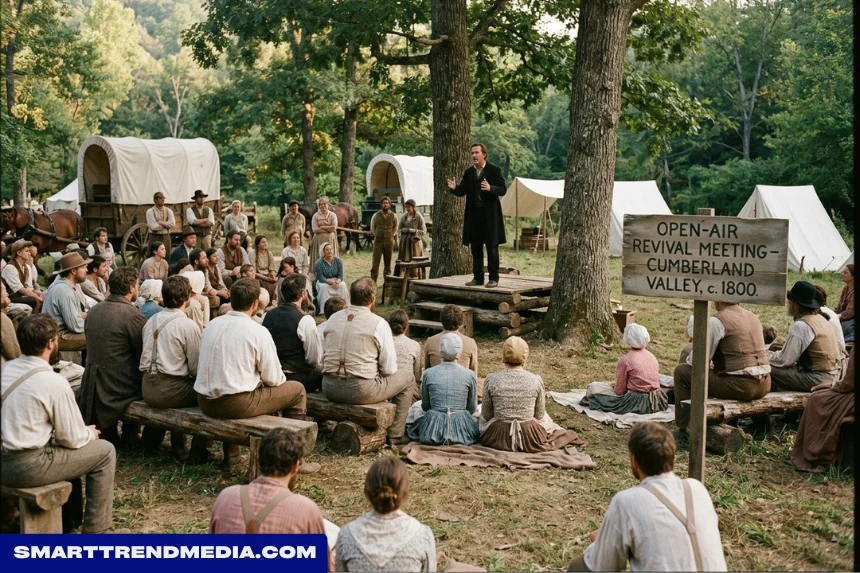
The Kentucky revivals were especially important because they helped popularize the camp meeting. Families could travel considerable distances, bring provisions, set up temporary camps, and remain for several days of preaching and worship.
Meanwhile, revivalism also expanded through:
- Tennessee
- other western settlements
- New England
- Pennsylvania
- New York
- growing towns and transportation corridors
As the population of the United States moved westward, itinerant ministers carried evangelical preaching into settlements that often lacked established churches.
Therefore, geography strongly influenced the shape of the movement. Frontier revivalism could look very different from revival campaigns in established northeastern communities.
Why Is the Movement Called an “Awakening”?
The term awakening refers to a renewed or intensified concern with religious faith.
American Protestants had already experienced an earlier wave of revivalism during the eighteenth century. Historians call that movement the First Great Awakening, which became especially influential in the American colonies during the 1730s and 1740s.
The later revival movement was consequently labeled the Second Great Awakening.
Both awakenings emphasized conversion and evangelical preaching. Nevertheless, they occurred in very different historical settings.
The First Great Awakening took place before American independence, when the future United States was still composed of British colonies. The Second developed after the American Revolution, while the new republic was expanding geographically, politically, economically, and socially.
That difference in setting became extremely important. The later awakening unfolded in a society experiencing rapid population growth, western settlement, expanding markets, new transportation networks, and changing ideas about individual opportunity.
Therefore, the Second Great Awakening became closely connected with the distinctive culture of the early United States.
The Early Revival Movement Around 1800
The year 1800 is especially important because major revivals appeared in both New England and the western regions.
In New England, revivalism often developed through established Protestant congregations. Religious leaders encouraged renewed commitment, conversion, and stronger participation in church life.
Meanwhile, western revivals frequently took place in a very different environment.
Kentucky and neighboring areas contained rapidly growing settlements where churches and ministers could be widely scattered. Outdoor gatherings made it possible for large numbers of people to travel to one location and participate in religious services over several days.
These meetings combined preaching, prayer, singing, communion, and opportunities for conversion.
Furthermore, they created a form of religious participation that suited communities separated by considerable distances.
The contrast between New England and Kentucky also demonstrates why the Second Great Awakening cannot be reduced to one style of worship. Different regions adapted revivalism to local religious traditions and social conditions.
The Cane Ridge Revival of 1801
One of the most famous events associated with the Second Great Awakening was the Cane Ridge Revival, held near Lexington, Kentucky, in 1801.
Presbyterian minister Barton W. Stone was closely associated with the gathering. Cane Ridge developed from the tradition of extended Presbyterian communion meetings, yet the scale and intensity of the event made it particularly memorable.
Thousands of people traveled to the area to hear ministers preach and participate in religious worship. Because attendees came from different locations and often remained for several days, tents and temporary camping arrangements surrounded the meeting site.
Multiple preachers could address different groups at the same time. Meanwhile, participants prayed, sang, listened to sermons, and responded emotionally to the religious messages.
Cane Ridge became famous partly because observers described unusually intense physical and emotional reactions among some worshippers.
However, Cane Ridge did not single-handedly start the Second Great Awakening.
Revivalism was already occurring elsewhere, including other parts of Kentucky and New England. Instead, Cane Ridge became one of the movement’s most visible early expressions and an enduring symbol of frontier revivalism.
That distinction matters because calling Cane Ridge the “beginning” of the entire movement oversimplifies a much broader historical development.
Why Were Camp Meetings Important?
Camp meetings helped solve a practical problem in the expanding United States: people often lived far from churches and ministers.
Instead of requiring every family to attend an established congregation each week, a revival meeting could bring large numbers of people together at one location.
Families traveled by wagon or horseback, brought food and supplies, and sometimes remained for several days.
During those gatherings, participants could hear numerous sermons, sing hymns, pray, receive religious instruction, and experience the communal atmosphere of mass worship.
Therefore, camp meetings served both a religious and logistical purpose.
They also allowed revival preaching to reach people who might otherwise have had limited access to organized religious institutions.
Although Presbyterians played an important role in some of the earliest Kentucky meetings, Methodists later became especially associated with the camp-meeting tradition and carried it into additional parts of the country.
As a result, the camp meeting became one of the most recognizable features of nineteenth-century American evangelicalism.
Was the Second Great Awakening One Unified Movement?
No. The Second Great Awakening was not a single organized campaign.
There was no national headquarters, official membership list, single founder, or one universally accepted leader.
Instead, historians group together several related revival traditions because they shared characteristics such as:
- emphasis on conversion
- evangelical preaching
- revival meetings
- active missionary work
- expansion of Protestant participation
- greater emphasis on personal religious commitment
Yet important differences remained.
A Presbyterian revival in New England might operate differently from a Methodist camp meeting on the western frontier. Likewise, individual ministers disagreed about theology, worship practices, and the proper methods for encouraging conversion.
Those differences became even more visible as the awakening developed during the 1820s and 1830s.
Therefore, understanding the movement requires looking beyond a single preacher or revival. Its historical importance came from the combined influence of many churches, ministers, voluntary organizations, local congregations, and converts across the expanding United States.
How the Revival Became a National Religious Movement
The early camp meetings described in Part A were only one part of the Second Great Awakening. As the nineteenth century progressed, revivalism moved beyond isolated gatherings and became embedded in churches, missionary networks, towns, and rapidly growing settlements.
Several factors helped the movement spread.
First, traveling ministers carried evangelical preaching to communities that had few permanent churches. In addition, expanding denominations created networks that could follow Americans as they moved west. Religious societies also distributed Bibles, tracts, and educational materials across increasingly large areas.
Most importantly, revivalism was adaptable.
A frontier camp meeting did not look exactly like a revival in Rochester, New York. Likewise, a Baptist congregation could organize itself differently from a Methodist circuit. Nevertheless, these groups shared an emphasis on conversion, evangelical preaching, and active religious commitment.
As a result, the awakening became national without becoming centrally controlled.
Which Denominations Were Important?
No single denomination owned or directed the Second Great Awakening.
Instead, several Protestant traditions participated in revivalism, although they did so in different ways. Methodists, Baptists, and Presbyterians were especially important, while Congregationalists also played a major role in parts of New England and the Northeast.
By the early nineteenth century, Methodists and Baptists had become particularly influential in the southern and western United States. The Library of Congress identifies them among the leading Protestant denominations in those regions during this period.
Their success was partly organizational. Both traditions could establish religious communities without waiting for large, wealthy, or highly developed settlements to appear first.
Consequently, evangelical Christianity could grow alongside the expanding population of the young United States.
Methodists and the Circuit-Rider System
Methodism was exceptionally well suited to a geographically expanding country.
Instead of assigning every minister to one permanent congregation, Methodist leaders used circuits. A traveling preacher could ride through a large territory and serve several communities according to a regular schedule.
These ministers became known as circuit riders.
A circuit rider might preach in:
- a small church
- a private home
- a barn
- a schoolhouse
- an outdoor gathering
- a newly settled frontier community
This flexibility allowed Methodist preaching to reach people far beyond established towns.
The National Park Service notes that circuit riders were often among the first representatives of organized religion to arrive in newly settled western communities.
Moreover, their work fit naturally with revivalism. They could preach emotionally, organize local societies, encourage conversion, and then continue to the next settlement while local members maintained the community.
That system helped turn Methodist expansion into one of the most significant religious developments of the early republic.
Francis Asbury and Methodist Expansion
One major figure behind American Methodism’s expansion was Francis Asbury.
Asbury arrived in America before independence and became a leading organizer of Methodism in the new United States. Rather than remaining primarily in large eastern cities, he spent much of his ministry traveling.
The Library of Congress records the extraordinary scale of his itinerant career, including extensive horseback travel and thousands of sermons. More importantly, he helped develop a system in which Methodist preachers could move continuously through widely scattered communities.
Therefore, Asbury’s importance was not simply that he was a successful preacher.
He helped create an organizational model that allowed Methodism to expand with the country.
As settlers moved into new areas, circuit riders could follow. In this way, Methodism did not need to wait for a community to become large enough to support a permanent minister before beginning religious work there.
This mobility became a major competitive advantage for the denomination.
Why Baptists Expanded Rapidly
Baptists also benefited from the revival atmosphere.
Their emphasis on personal conversion fit naturally with an age in which evangelical preachers repeatedly called on individuals to make a conscious religious commitment.
Baptists practiced believers’ baptism rather than infant baptism. In other words, baptism followed a person’s profession of faith rather than occurring automatically during infancy.
That emphasis placed conversion at the center of religious identity.
Furthermore, Baptist congregations generally possessed substantial local independence. They did not require the same centralized structure found in some other denominations.
This made it possible for congregations to form in new communities with relatively limited institutional infrastructure.
Consequently, Baptists became especially influential throughout many southern and western areas.
However, Methodist and Baptist success should not lead us to treat every revival as identical. Their church organization, ministry, and theology differed in important respects even when both traditions participated in evangelical expansion.
What Role Did Presbyterians Play?
Presbyterians were extremely important during the early stages of the awakening.
As Part A explained, Presbyterian ministers helped organize the Kentucky communion gatherings from which famous frontier camp meetings developed.
Nevertheless, the increasingly emotional character of some revivals created disagreements.
Certain Presbyterian leaders welcomed revivalism while remaining cautious about uncontrolled emotional displays or theological changes. Others became uncomfortable with particular revival methods.
Therefore, Presbyterian participation demonstrates an important feature of the Second Great Awakening: revivalism could energize a denomination while simultaneously creating internal controversy.
That pattern became even clearer during the career of Charles Grandison Finney.
Charles Grandison Finney and a New Phase of Revivalism
By the 1820s, revivalism had entered another influential phase.
One of its best-known figures was Charles Grandison Finney (1792–1875).
Finney had studied law before undergoing a dramatic religious conversion in 1821. He subsequently entered the ministry and was licensed to preach by Presbyterians in 1824.
He soon became known for revival campaigns in New York and Pennsylvania.
However, Finney should not be described as the founder of the Second Great Awakening.
Revivalism had been flourishing for decades before his career began. Cane Ridge, for example, occurred in 1801, twenty years before Finney’s conversion.
Instead, Finney became one of the most influential leaders of a later northeastern phase of the movement.
His revival campaigns demonstrated that evangelical excitement was not limited to rural frontier camp meetings. Revivalism could also thrive in expanding commercial towns and cities.
Finney’s Rochester Revival
Finney became especially influential after beginning work in Rochester, New York, in 1830.
Rochester was growing rapidly during an era of economic and transportation development connected with the Erie Canal. Finney’s preaching reached people living within this changing social environment.
His message placed strong emphasis on individual religious decision.
Rather than presenting revival as something Christians should simply wait for, Finney argued that churches and ministers could use practical means to encourage people toward conversion.
This approach was controversial.
Nevertheless, it helped make his revivals highly organized and gave his ministry a distinctive place in nineteenth-century American evangelicalism. OpenStax identifies Finney as one of the movement’s most important northeastern evangelists and connects his success particularly with Rochester and western New York.
What Were Finney’s “New Measures”?
Finney became associated with revival techniques commonly called the “New Measures.”
The name did not mean that every practice was completely invented by Finney. Some evangelical traditions had already used similar methods.
However, Finney defended and systematized techniques designed to encourage people to respond immediately to revival preaching.
One of the best-known practices was the anxious seat, sometimes called the anxious bench.
People who were deeply concerned about their spiritual condition could come forward or sit in a designated place where ministers and other Christians could focus prayer and attention on them.
Finney also supported extended or “protracted” meetings rather than restricting revival preaching to a single service.
His own discussion of revival methods identified practices such as anxious meetings, prolonged gatherings, and the anxious seat among the measures that had generated controversy.
Other revival practices associated with his campaigns included direct preaching and greater participation by laypeople.
Most significantly, these techniques assumed that human action could help create conditions favorable to revival.
That idea challenged ministers who believed revival depended more completely on divine initiative.
Therefore, debates over the New Measures were not merely arguments about seating arrangements or worship style. They reflected deeper disagreements over theology, human choice, and how religious conversion should occur.
Why Was Finney Controversial?
Finney’s success did not make his methods universally popular.
Some established ministers worried that revival techniques placed too much pressure on individuals. Others believed his approach gave human organization too much influence over something that should depend on God.
His theological emphasis on human responsibility also clashed with stricter interpretations of Calvinism.
As a result, arguments over Finney became part of a broader debate within American Protestantism.
Yet controversy did not stop his influence.
Finney’s methods helped normalize the idea that revivals could be deliberately planned, promoted, and extended over several days or weeks.
Oberlin College records that his revival techniques became known as the New Measures and that his Lectures on Revivals, published in 1835, became highly influential among American revivalists.
Finney eventually became closely associated with Oberlin College in Ohio, where he served as professor of theology and later president.
What Was the Burned-Over District?
Finney’s career is closely connected with another important term: the burned-over district.
This name referred broadly to parts of western and central New York that experienced repeated waves of revival activity and religious experimentation during the early nineteenth century.
The phrase used the image of fire metaphorically.
The region was said to have been “burned over” because revival enthusiasm had swept through it so often that religious fervor seemed to have consumed the available spiritual “fuel.”
Western New York became especially important because it combined rapid population change with expanding towns, transportation routes, and intense religious activity.
OpenStax specifically connects the burned-over district with the powerful revival culture that developed in western New York during Finney’s era.
However, the region was important for more than Finney alone.
It became a center of religious experimentation where revivalism, new religious movements, missionary activity, and reform ideas often overlapped.
Therefore, the burned-over district offers a useful example of how religious change could flourish alongside rapid social and economic transformation.

Why Did Revivalism Appeal to a Changing America?
The early nineteenth-century United States was changing quickly.
Population was expanding. New communities were appearing in western territories. Transportation improvements connected places that had previously been isolated. Towns grew, markets expanded, and older social relationships changed.
Revival religion worked effectively within this environment because it was highly portable.
A preacher did not always need a permanent church building. A congregation could gather outdoors, inside a home, or in another temporary meeting place.
Likewise, revivalists spoke directly to individuals.
Their message emphasized that personal decisions mattered. For many listeners, that emphasis fit a society increasingly interested in individual action, mobility, and opportunity.
However, historians should be careful not to reduce the awakening to economics or politics.
People attended revivals for religious reasons, and participants understood their experiences in spiritual terms.
Social change helped shape the environment in which revivalism spread, but it does not fully explain why individuals converted or remained committed to evangelical churches.
Religious Societies Extended the Revival Beyond Meetings
Revivalism eventually developed institutions that worked throughout the year.
Religious organizations distributed printed materials, supported missionaries, promoted Sunday schools, and encouraged Bible reading.
Among the important national organizations formed during this period were:
- American Bible Society — 1816
- American Sunday School Union — 1824
- American Tract Society — 1825
OpenStax identifies these organizations as part of the institutional expansion that accompanied the evangelical revival.
Their work mattered because a revival meeting might last only a few days, while an organization could operate continuously.
Printed tracts could travel where famous ministers could not.
Sunday schools could teach children long after a revival preacher had left town.
Missionary societies could send religious workers into communities without established congregations.
Consequently, the awakening became more than a collection of dramatic conversion events. It produced durable networks capable of sustaining evangelical culture between revivals.
African American Christianity and the Awakening
The Second Great Awakening also had major consequences for African American Christianity.
Black Americans participated in evangelical religion during a period when slavery remained deeply entrenched and racial discrimination existed inside many churches.
Baptist and Methodist revivals attracted significant numbers of Black converts. However, Christian language about spiritual equality often existed alongside discriminatory treatment within predominantly White institutions.
That contradiction contributed to demands for independent Black religious spaces.
The Library of Congress describes the awakening as a defining development in the growth of African American Christianity and notes the large number of Black converts among Baptists and Methodists.
Therefore, the history of the movement cannot be told only through White revivalists.
Black Christians adapted evangelical religion to their own communities and increasingly built institutions under Black leadership.
Richard Allen and the African Methodist Episcopal Church
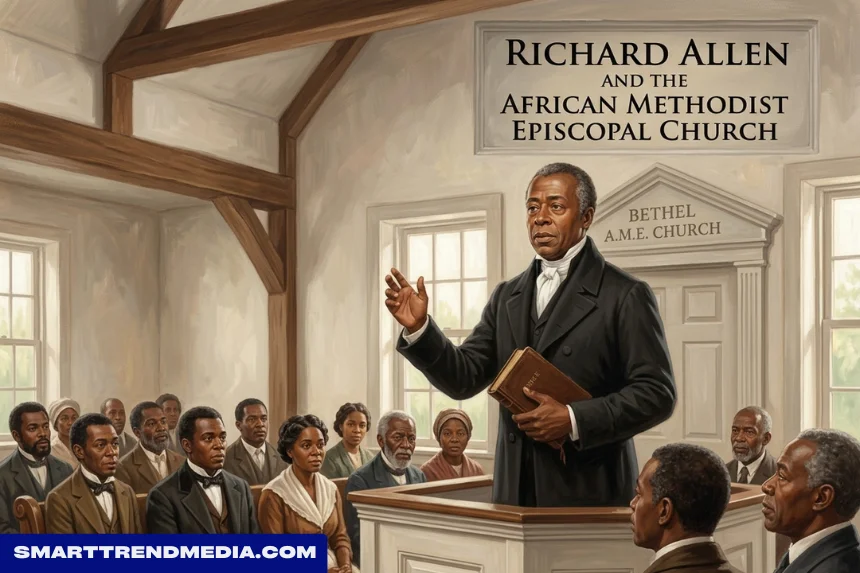
One of the most important religious leaders in this development was Richard Allen (1760–1831).
Allen had been born enslaved and later became a Methodist preacher. In Philadelphia, he and other Black Methodists encountered racial discrimination within predominantly White Methodist institutions.
Allen helped establish an independent congregation that became Mother Bethel African Methodist Episcopal Church.
Then, in 1816, representatives from several Black Methodist congregations organized the African Methodist Episcopal Church, or AME Church, with Allen as its first bishop.
The Library of Congress identifies the 1816 organization of the AME Church as a major development in independent African American Christianity.
This institution was significant for several reasons.
It provided Black Christians with greater control over:
- worship
- clergy
- church leadership
- religious education
- community institutions
In addition, independent churches provided organizational spaces that could serve broader community needs.
The AME Church therefore illustrates another side of the evangelical expansion.
The awakening did not simply increase participation in existing White-led denominations. It also contributed to an environment in which African Americans built stronger independent religious institutions.
Revivalism Was Diverse, Not Uniform
By the 1820s and 1830s, the Second Great Awakening included several overlapping forms of religious life.
A Methodist circuit rider on the frontier, a Baptist congregation in the South, a Presbyterian revival, a Finney meeting in New York, and an independent Black church could all belong to the broader evangelical world while operating very differently.
What connected them was not one organization or identical theology.
Instead, common themes included:
- conversion
- personal commitment
- evangelical preaching
- active religious participation
- missionary expansion
- efforts to reach new audiences
At the same time, disagreements remained over predestination, free will, worship style, church authority, racial equality, and revival techniques.
Those disagreements are essential to understanding the movement.
The Second Great Awakening became influential precisely because it was flexible enough to appear in many forms. Yet that same diversity produced arguments about what evangelical Christianity should mean in the rapidly changing United States.
By the 1820s and 1830s, revival religion was also increasingly turning outward. Many believers came to see personal conversion as the beginning of Christian responsibility rather than its end.
How the Second Great Awakening Influenced Social Reform
One of the most important effects of the Second Great Awakening was the belief that religious conversion should lead to action.
Revivalists often emphasized that individuals could make meaningful moral choices. Therefore, many converts concluded that people could improve not only their own lives but also the society around them.
This outlook encouraged what historians often call antebellum reform.
During the decades before the Civil War, Americans organized campaigns involving:
- temperance
- abolition
- education
- prison and asylum reform
- missionary work
- moral reform
- women’s participation in public causes
However, the relationship was not simple.
Religion influenced many reformers, yet individual movements also developed from political, intellectual, economic, humanitarian, and personal experiences. As a result, it is more accurate to say that revivalism energized and supplied networks for reform than to claim it created every reform movement.
The Idea of Improving Society
Revival preaching frequently emphasized personal responsibility.
If individuals could turn away from sin, many evangelical reformers reasoned that communities could also reject practices they considered immoral.
This connection between personal conversion and social improvement became particularly important during the 1820s and 1830s.
Religious societies already had experience organizing meetings, raising money, distributing printed material, sending speakers from town to town, and building networks across state lines. Reform organizations could use many of the same methods.
Consequently, evangelical culture supplied more than religious motivation. It also provided an organizational model.
People who learned to distribute tracts for a religious society could distribute reform literature. Those who attended revival meetings could join temperance or antislavery associations. Likewise, churches and voluntary societies provided places where reform ideas could circulate.
This did not mean that all Christians agreed about reform. In fact, some of the most bitter disagreements of the antebellum period occurred among people who shared a Protestant background.
Temperance and the Campaign Against Alcohol
The temperance movement became one of the largest reform campaigns associated with the evangelical culture of the period.
Temperance advocates argued that excessive drinking damaged:
- families
- workplaces
- personal health
- finances
- public morality
- community order
Initially, some reformers encouraged moderation rather than complete abstinence. Over time, however, many activists began demanding that people avoid alcoholic beverages entirely.
Evangelical ministers played an important role in spreading the campaign during the 1820s and 1830s. Temperance organizations used lectures, pamphlets, pledges, local societies, and moral appeals to persuade individuals to change their behavior.
The logic resembled revivalism.
A revival preacher called on a listener to abandon sin and begin a transformed religious life. Similarly, a temperance reformer could ask a drinker to reject alcohol, sign a pledge, and begin a different way of living.
Therefore, temperance became a clear example of how the language and methods of evangelical conversion could move into social reform.
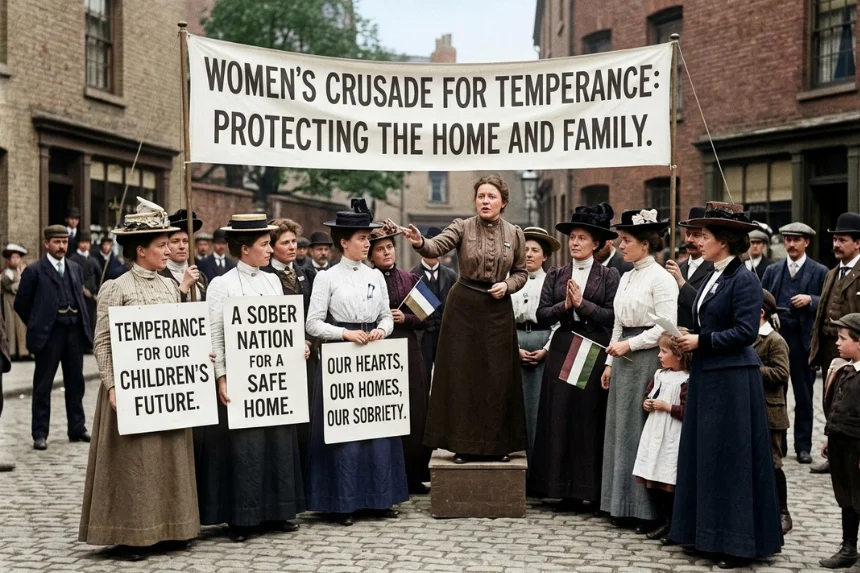
Why Women Became Important to Temperance Reform
Women played an increasingly visible role in reform activity.
Alcohol abuse could have severe consequences for nineteenth-century households. Married women possessed limited legal and economic independence in many circumstances, so a husband’s heavy drinking could endanger an entire family.
Consequently, temperance gave women a socially acceptable way to address an issue presented as a threat to the home.
Women organized associations, raised money, circulated petitions, distributed publications, and encouraged relatives and neighbors to support reform.
At first, much of this activism could be justified through conventional ideas about women’s responsibility for morality and family life.
Yet participation in reform also had an unintended consequence.
Women gained experience in:
- organizing meetings
- speaking publicly
- petitioning
- fundraising
- publishing arguments
- building political networks
Those skills would become increasingly important as some female reformers began challenging restrictions placed on women themselves.
The Second Great Awakening and Abolition
The relationship between evangelical religion and abolitionism was especially significant.
Many antislavery activists increasingly described slavery not simply as a political problem but as a moral sin.
That framing mattered.
If slavery was sinful, then gradual indifference became harder to defend. Reformers influenced by evangelical ideas could call for a change in individual conscience followed by action against the institution.
Abolitionists used methods that strongly resembled revival campaigning.
They published newspapers and pamphlets, formed societies, sent lecturers across the country, circulated petitions, and appealed directly to the moral conscience of their audiences.
The National Humanities Center notes that evangelical ideas and the language of conversion became deeply connected with important parts of American abolitionism.
Nevertheless, an essential qualification is necessary.
Not every evangelical Christian became an abolitionist.
Many northern Christians opposed immediate abolition, while numerous southern Christians defended slavery. Churches and denominations themselves became divided over the issue.
Therefore, the Second Great Awakening helped provide moral language and organizational networks that strengthened abolitionism, but evangelical Protestantism did not produce one unified antislavery position.
Moral Suasion and the Language of Conversion
One important abolitionist strategy was known as moral suasion.
Instead of relying only on political compromise, abolitionists attempted to convince Americans that slavery was morally wrong.
They used:
- speeches
- newspapers
- petitions
- antislavery literature
- firsthand accounts of slavery
- public meetings
The goal was to change the conscience of individuals and, ultimately, public opinion.
This method closely resembled revivalism.
A revival preacher hoped to convince a sinner to recognize wrongdoing, repent, and change. Likewise, an abolitionist using moral suasion attempted to convince listeners that accepting slavery was morally indefensible and required a change of heart.
OpenStax notes that abolitionists worked within the intense religious culture of the era and hoped for a transformation of public opinion against slavery.
However, moral suasion faced strong resistance. Abolitionists encountered hostile crowds, political opposition, censorship efforts, and sometimes violence.
Therefore, religious conviction could motivate reform without guaranteeing widespread acceptance.
Charles Finney and Antislavery Reform
Charles Finney’s later career also illustrates the relationship between revivalism and reform.
As discussed in Part B, Finney eventually became closely associated with Oberlin College in Ohio.
Oberlin developed a strong antislavery reputation, and Finney himself opposed slavery.
His theology emphasized the moral responsibility of individuals. Therefore, the idea that Christians should actively oppose sinful social practices fit naturally with his broader revival message.
Still, Finney should not be treated as the originator of American abolitionism.
Antislavery thought existed long before his ministry, while abolitionists came from a range of religious and intellectual traditions.
His importance lies instead in the way influential strands of revivalism and organized antislavery activity increasingly overlapped during the antebellum period.
Women, Abolition, and Public Activism
The abolition movement created especially important opportunities for women to become organizers and public advocates.
Both Black and White women:
- formed antislavery societies
- gathered petition signatures
- raised money
- produced written arguments
- organized meetings
- supported formerly enslaved people
- spoke publicly against slavery
Yet they often encountered sexism even within reform organizations.
Women who addressed audiences containing men could be accused of violating accepted gender roles. Likewise, women were sometimes excluded from positions of formal leadership.
These experiences produced an important question:
If women were morally capable of campaigning for the freedom and equality of others, why should they themselves remain politically and legally unequal?
The connection was not automatic, but abolition became an important training ground for early women’s-rights activism. OpenStax identifies abolition as a particularly important influence on the emergence of early American feminism.
The Grimké Sisters
Sarah and Angelina Grimké demonstrate this connection especially well.
The sisters grew up in a wealthy South Carolina slaveholding family. After leaving the South, they became committed opponents of slavery and eventually prominent public abolitionists.
Both were also influenced by the religious environment of the Second Great Awakening.
During the 1830s, the Grimké sisters spoke publicly against slavery, including before audiences containing both women and men.
That was controversial.
Critics argued that women should not occupy such a public role. Consequently, the sisters found themselves defending not only abolition but also the right of women to speak, organize, and participate in reform.
OpenStax describes their activism as an important point where antislavery campaigning and arguments for female equality increasingly intersected.
Their experience shows why the relationship between revival religion and women’s rights was indirect but important.
Religious reform created opportunities for participation. Then, discrimination encountered within those movements encouraged some women to question broader gender restrictions.
Did the Second Great Awakening Cause the Women’s Rights Movement?
It would be too simplistic to say that it directly caused the women’s-rights movement.
Instead, several developments overlapped.
The religious and reform culture of the antebellum era brought women into public campaigns in larger numbers. Abolition was especially important because women organized societies, petitioned government, wrote for publication, and sometimes spoke publicly.
At the same time, those activities exposed the legal and political limitations placed on women.
Therefore, reform participation helped build:
- organizational experience
- activist networks
- confidence in public advocacy
- arguments about equality
- frustration with unequal treatment
By the time reformers assembled at Seneca Falls in 1848, an organized women’s-rights movement was emerging from a broader environment that included abolition, evangelical reform, changing economic conditions, and long-standing arguments about women’s status.
The National Humanities Center treats the relationship between the Second Great Awakening, abolition, temperance, and the later suffrage movement as an important historical connection rather than a single direct chain of causation.
Education, Institutions, and Other Reform Efforts
Antebellum Americans also campaigned for changes beyond temperance and abolition.
Reformers advocated improvements in:
- public education
- prisons
- treatment of people with mental illness
- care for vulnerable populations
- moral instruction
- missionary activity
However, caution is especially important here.
Not every major reformer belonged to the evangelical revival tradition, and not every reform campaign developed directly from the Second Great Awakening.
Instead, revivalism formed one part of a much broader antebellum reform culture.
Religious ideas about human improvement overlapped with democratic ideals, humanitarian arguments, changing ideas about childhood, new theories about institutions, and growing confidence that organized citizens could reshape society.
Therefore, the best historical interpretation avoids turning every reformer of the period into a product of the awakening.
The Limits and Contradictions of Religious Reform
The reform impulse had significant limits.
Revival preaching could emphasize spiritual equality while churches remained racially segregated.
Some Christians denounced slavery, while others used Christianity to defend it.
Women could become essential workers within reform organizations while still being denied leadership positions.
Likewise, evangelical language about moral improvement could sometimes become coercive. Reformers did not always agree about where personal persuasion should end and legal restrictions should begin.
These contradictions are historically important.
They show that the Second Great Awakening did not move the United States smoothly toward one shared definition of equality or morality.
Instead, revival culture opened debates.
Americans then fought over what religious principles required, who should benefit from reform, and how far society should change.
First Great Awakening vs. Second Great Awakening
The First and Second Great Awakenings were both major periods of Protestant revivalism, but they occurred in different historical settings.
| Feature | First Great Awakening | Second Great Awakening |
|---|---|---|
| Main period | 1730s–1740s | Began in the late 1700s and flourished in the early 1800s |
| Political setting | British colonial America | Independent United States |
| Major figures | Jonathan Edwards, George Whitefield | Barton W. Stone, Francis Asbury, Charles Finney and others |
| Major emphasis | Conversion and emotional revival preaching | Conversion, evangelical expansion, and increasingly organized reform |
| Geography | British North American colonies and wider Atlantic world | New England, South, western frontier, New York, and expanding United States |
| Famous setting | Colonial churches and itinerant preaching | Camp meetings, churches, towns, frontier circuits, revival campaigns |
| Broader legacy | Reshaped colonial Protestantism | Expanded evangelicalism and strengthened antebellum reform networks |
The First Great Awakening became particularly influential during the 1730s and 1740s. Jonathan Edwards and itinerant Anglican preacher George Whitefield became two of its best-known figures.
The Second Great Awakening emerged decades later in a newly independent and rapidly expanding United States.
Therefore, the two movements shared revival methods but responded to different historical worlds.
What Were the Main Effects of the Second Great Awakening?
The movement produced several lasting changes.
Protestant Churches Expanded
Evangelical denominations became increasingly influential as ministers, circuit riders, and missionaries reached expanding populations.
Revivalism Became a Lasting American Tradition
Organized revival campaigns did not disappear when the Second Great Awakening ended. Later evangelists continued using mass meetings, direct appeals for conversion, music, publicity, and other techniques developed or popularized during the revival era.
Voluntary Organizations Became More Important
Bible societies, missionary organizations, Sunday schools, tract societies, temperance groups, and reform associations showed that private citizens could organize nationally around religious and moral causes.
Reform Activism Expanded
Evangelical ideas helped motivate significant parts of the temperance and abolition movements, while reform organizations created opportunities for women to become increasingly active in public life.
American Christianity Became More Diverse
The era strengthened existing Protestant denominations while also producing experimentation, disagreement, new institutions, and changing patterns of religious authority.
Religion Became Closely Connected With Public Debate
Questions about slavery, alcohol, morality, individual responsibility, and social improvement increasingly became subjects of both religious and political controversy.
These effects extended well beyond individual revival meetings.
Why Was the Second Great Awakening Significant?
The historical significance of the Second Great Awakening comes from the combination of religious expansion and social consequences.
The movement transformed Protestant worship by placing greater emphasis on personal conversion and active participation.
It also fit the geography of an expanding nation. Circuit riders, itinerant ministers, camp meetings, print networks, and voluntary organizations could reach people beyond established eastern churches.
At the same time, revivalism encouraged many believers to think that moral transformation should not stop with the individual.
That conviction helped support an extraordinary period of organized reform.
Nevertheless, its legacy was contested. Americans used evangelical Christianity to argue both for and against some of the most important political and moral causes of the nineteenth century.
For this reason, the Second Great Awakening is significant not because it produced universal agreement but because it made religion a powerful force in debates over what the young United States should become.
Frequently Asked Questions
What was the Second Great Awakening?
The Second Great Awakening was a broad Protestant revival movement that developed in the United States beginning in the late eighteenth century and became especially influential during the early nineteenth century.
It emphasized personal conversion, evangelical preaching, active religious participation, and greater individual responsibility.
When was the Second Great Awakening?
The movement began developing during the 1790s, expanded substantially around and after 1800, and remained highly influential during the early decades of the nineteenth century.
There is no universally agreed exact starting and ending year because revivalism developed differently across regions.
Where did the Second Great Awakening begin?
It did not begin at one single location.
Important revival movements developed around 1800 in places including New England and Kentucky, while revivalism also spread through Tennessee and other western settlements.
The Cane Ridge Revival of 1801 became one of its most famous early events.
Who were the major leaders of the Second Great Awakening?
Important figures included Barton W. Stone, Francis Asbury, Peter Cartwright, Lyman Beecher, and Charles Grandison Finney, among many others.
No single individual founded or controlled the entire movement.
Was Charles Finney the founder of the Second Great Awakening?
No.
The movement was already underway before Finney’s religious conversion in 1821. Finney became one of the most influential revivalists of its later phase, particularly during the 1820s and 1830s.
What did the Second Great Awakening teach?
Different denominations held different theological views. However, many revivalists emphasized personal conversion, repentance, active faith, evangelism, and greater human responsibility in responding to salvation.
What was the Cane Ridge Revival?
The Cane Ridge Revival was a famous 1801 religious gathering in Kentucky associated with minister Barton W. Stone.
Large numbers of people attended extended preaching and worship meetings, helping make Cane Ridge an enduring symbol of frontier revivalism.
What was the burned-over district?
The burned-over district was a name associated with parts of western and central New York that experienced repeated waves of revivalism and religious experimentation during the early nineteenth century.
Charles Finney conducted influential revival work within this broader region.
How did the Second Great Awakening affect abolition?
Revival religion encouraged some Americans to view slavery as a moral sin that required action.
Evangelical networks, moral appeals, lectures, publications, and voluntary organizations consequently became important to parts of the abolition movement.
However, many evangelicals did not support abolition, and slavery remained deeply divisive among American Christians.
How did the Second Great Awakening affect women?
Women participated extensively in religious and reform organizations.
Through abolition, temperance, missionary work, fundraising, petition campaigns, and public advocacy, some women developed organizational experience that later contributed to the growing women’s-rights movement.
What is the difference between the First and Second Great Awakenings?
The First Great Awakening took place primarily during the 1730s and 1740s in British colonial America.
The Second developed beginning in the late eighteenth century and flourished in the independent United States. It combined revival religion with extensive denominational expansion and increasingly visible voluntary reform activity.
What reform movements were connected to the Second Great Awakening?
The closest major connections include temperance and abolition, while evangelical reform culture also overlapped with missionary activity, education, moral reform, and women’s public activism.
However, these movements had multiple causes and should not all be described as direct products of the awakening.
Conclusion
The Second Great Awakening transformed American religious life during a period when the United States itself was undergoing dramatic change.
Beginning with revivals in the late eighteenth century and expanding after 1800, the movement carried evangelical Protestantism through frontier camp meetings, traveling ministries, established churches, growing towns, print networks, and voluntary societies.
Its influence extended far beyond worship.
Revival ideas about conversion, moral responsibility, and human action helped energize campaigns against alcohol and slavery while creating new opportunities for women and other Americans to participate in organized reform.
Yet the movement was never completely unified. Protestants disagreed over theology, revival techniques, race, slavery, gender, and the meaning of social responsibility.
That combination of religious energy, organizational expansion, reform activism, and internal conflict explains why the Second Great Awakening remains one of the most important religious movements in early United States history.
READ MORE ABOUT : Plenary Authority