

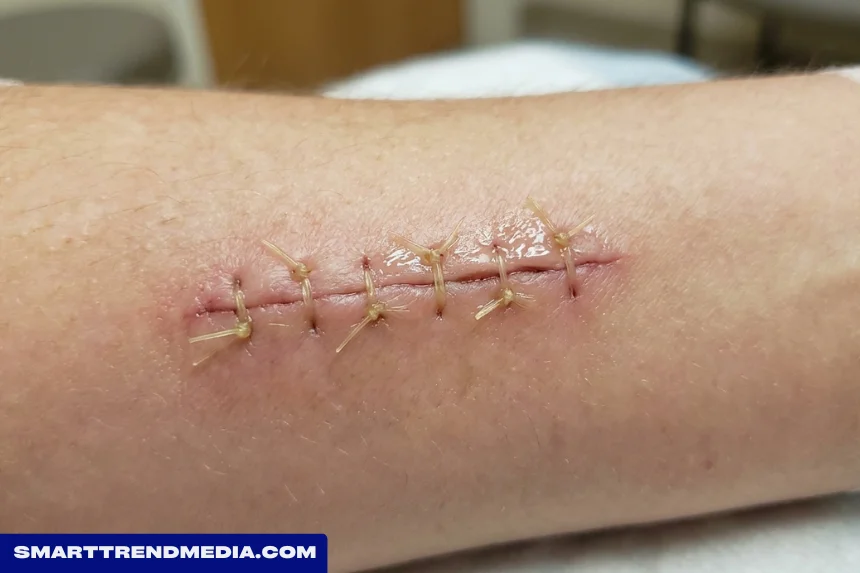
How long do dissolvable stitches last? Many absorbable stitches start softening or breaking down within one to two weeks. However, the body may need several weeks or several months to absorb the entire suture. The exact timeline depends mainly on the material, wound depth, procedure, and healing process.
For example, a rapidly absorbing surface stitch may disappear within a few weeks. In contrast, a deep internal suture may remain beneath healed skin for three to eight months. Therefore, seeing or feeling a stitch after the incision closes does not automatically mean something has gone wrong.
Most importantly, follow the instructions from the clinician who treated your wound. Your surgeon, dentist, or other healthcare professional knows which material they used and how long it should remain.
Quick answer: Dissolvable stitches often begin breaking down within one to two weeks. Nevertheless, complete absorption may take about three weeks to eight months. Fast-absorbing surgical gut can take 21–42 days, standard Vicryl 56–70 days, Monocryl 91–119 days, and PDS 182–238 days.
Medical note: This article provides general information. It cannot determine whether a specific wound is healing normally. Contact your treating healthcare provider when symptoms worsen or your recovery differs from the instructions you received.
Dissolvable Stitches Timeline at a Glance
The following timeline provides a broad overview. However, it does not predict exactly when an individual stitch will disappear.
| Approximate period | What may happen |
|---|---|
| 7–14 days | Some surface stitches may start softening, loosening, or breaking down. |
| 3–6 weeks | Rapidly absorbing materials may disappear substantially or absorb completely. |
| 6–12 weeks | Many common surgical sutures continue breaking down beneath the skin. |
| 3–4 months | Monocryl and similar materials may complete absorption. |
| 6–8 months | Long-lasting materials such as PDS may finally absorb completely. |
Cleveland Clinic gives one to two weeks as a common starting point for absorbable stitches to dissolve. However, official manufacturer information shows that full absorption varies widely. Vicryl Rapide absorbs by about 42 days, while PDS may require 182–238 days.
Therefore, several timelines can be correct at the same time. A visible stitch may loosen quickly, while a deeper section of the same closure remains under the skin.
What Are Dissolvable Stitches?
Dissolvable stitches are surgical threads that the body gradually absorbs. Healthcare professionals also call them absorbable sutures. Surgeons use them to hold wound edges or deeper tissue layers together while the body creates new tissue.
Unlike many nonabsorbable stitches, absorbable sutures usually do not require routine removal. Instead, they gradually lose strength and break down inside the body. Nevertheless, a healthcare provider may remove or trim an exposed absorbable stitch when it causes irritation. Cleveland Clinic specifically advises patients not to remove these stitches at home.
Doctors may use dissolvable stitches for:
- Surgical incisions
- Deep tissue closure
- Cuts and injuries
- Oral and dental procedures
- Childbirth-related tears
- Plastic surgery
- Abdominal surgery
- Orthopedic procedures
However, surgeons do not use the same suture for every wound. They choose a material according to how quickly the tissue heals and how long it needs support. Official product information shows that different absorbable sutures provide useful wound support for approximately 10–42 days, even though complete absorption may take much longer.
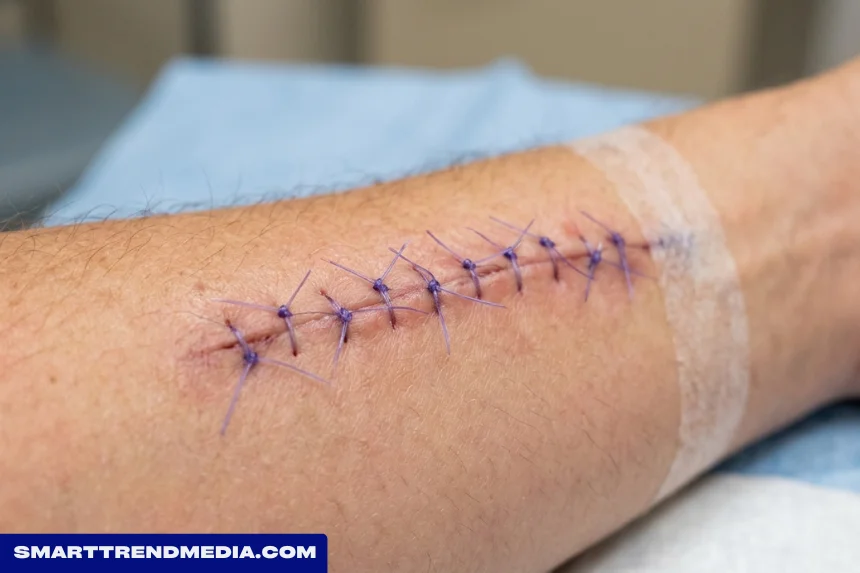
Are Dissolvable and Absorbable Stitches the Same?
Yes. People commonly say dissolvable stitches, while healthcare professionals often use the term absorbable sutures.
The word “dissolvable” can create confusion because the thread does not melt or disappear instantly. Instead, the body gradually breaks the material down. Consequently, the stitch becomes weaker over time before the body fully absorbs it.
The process also differs from one product to another. For example, Vicryl, Monocryl, and PDS are synthetic materials that break down through hydrolysis, which involves a gradual interaction with water in body tissues.
How Do Dissolvable Stitches Work?
First, the stitch holds the wound edges or deeper tissues in the correct position. Meanwhile, the body produces collagen and other tissue that strengthen the healing area.
Next, the suture gradually loses tensile strength. In other words, it provides less physical support as the wound becomes stronger. Finally, the body absorbs the remaining material.
This process explains why wound-support time and complete absorption time are different. For example, standard Vicryl generally provides wound support for about 28 days. However, the body may need 56–70 days to absorb it fully. PDS may support tissue for about 42 days but take 182–238 days to absorb.
Therefore, the presence of internal suture material does not necessarily mean the wound still depends on it for support.
What Does “How Long Do Dissolvable Stitches Last” Mean?
The question how long do dissolvable stitches last can refer to three separate timelines:
- How long the stitch supports the wound
- How long the stitch remains visible or noticeable
- How long complete absorption takes
Understanding this distinction can prevent unnecessary concern. A stitch may stop supporting the wound before it disappears. Similarly, it may stop being visible while some material remains beneath the skin.
1. When the Stitch Stops Supporting the Wound
Absorbable sutures gradually lose their original strength. Therefore, manufacturers describe a wound-support period or strength-retention profile separately from full absorption.
For example:
| Material | Approximate wound-support period |
|---|---|
| Vicryl Rapide | About 10 days |
| Monocryl | About 21–28 days |
| Vicryl | About 28 days |
| PDS | About 42 days |
These figures come from official product-comparison information. However, they represent general product profiles rather than individual healing guarantees.
A surgeon selects the material according to the tissue’s expected healing speed. For instance, rapidly healing surface tissue may need short-term support. In contrast, fascia or other deeper structures may need a longer-lasting material.
2. When the Stitch Becomes Invisible
A surface stitch may soften, loosen, or fall away as the wound heals. Alternatively, the visible end may retract beneath the skin.
However, the disappearance of the visible section does not prove that the entire thread has already absorbed. Some of the material may remain beneath the surface.
Likewise, the skin can look closed while a person still feels a small knot. Surgeons often tie knots beneath the skin, and these areas can take longer to break down than a thin exposed thread.
Therefore, appearance alone cannot reveal the exact absorption stage.
3. When the Body Completely Absorbs the Stitch
Complete absorption means that the body has broken down essentially all the suture material. This stage often occurs well after the wound no longer needs the stitch’s full strength.
For example, official J&J MedTech information provides the following approximate full-absorption periods:
- Fast-absorbing surgical gut: 21–42 days
- Vicryl Rapide: about 42 days
- Vicryl: 56–70 days
- Monocryl: 91–119 days
- PDS: 182–238 days
Consequently, an internal stitch can remain for several months without being unusually slow.
Key point: A stitch can stop supporting the wound before it becomes invisible. Likewise, it can become invisible before the body absorbs every part of it.
How Long Do Dissolvable Stitches Last by Material?
The material provides the most useful clue about the expected timeline. Nevertheless, even stitches made from the same material can behave differently according to their size, placement, and the patient’s healing process.
| Absorbable suture material | Approximate wound support | Approximate full absorption |
|---|---|---|
| Fast-absorbing surgical gut | Short-term surface support | 21–42 days |
| Vicryl Rapide | About 10 days | By about 42 days |
| Vicryl | About 28 days | 56–70 days |
| Monocryl | About 21–28 days | 91–119 days |
| PDS | About 42 days | 182–238 days |
Official Ethicon and J&J MedTech product information supports these ranges. However, the exact product your clinician used may have a different design or absorption profile.
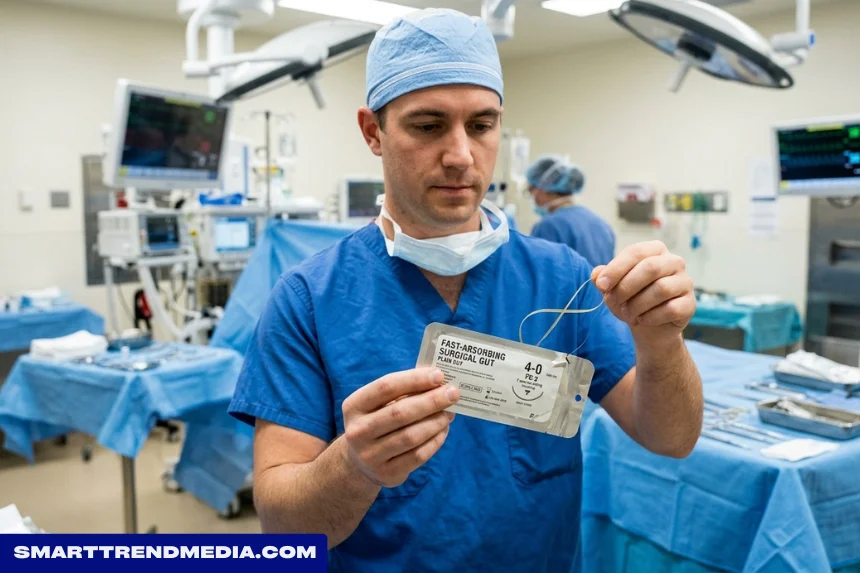
Fast-Absorbing Surgical Gut
Fast-absorbing surgical gut is a natural collagen-based suture intended for short-term skin closure. Official product information lists an absorption period of approximately 21–42 days.
Because clinicians use it for short-term support, an exposed section may loosen relatively early. Nevertheless, the full absorption process may continue after the visible thread disappears.
J&J MedTech describes this product specifically for dermal or skin suturing. Therefore, its timeline should not be applied automatically to deeper internal stitches.
Vicryl Rapide
Vicryl Rapide is a rapidly absorbing synthetic suture made from polyglactin 910. Clinicians use it when tissue needs only brief support, including selected closures involving skin or mucosa.
It provides wound support for approximately 10 days. Meanwhile, full absorption generally occurs by about 42 days.
Therefore, Vicryl Rapide and standard Vicryl should not share the same expected timeline. Although their names sound similar, standard Vicryl remains in the body longer.
Standard Vicryl
Vicryl is a braided synthetic absorbable suture made from polyglactin 910. Surgeons commonly use it for soft-tissue approximation and deeper closure.
The material generally provides useful wound support for about 28 days. However, complete absorption usually takes approximately 56–70 days.
As a result, a Vicryl knot may still be present several weeks after the surface wound looks healed. This situation does not automatically mean the material has failed to dissolve.
Monocryl
Monocryl is a synthetic monofilament suture made from poliglecaprone 25. Depending on the specific version, it may provide wound support for approximately 21–28 days. Nevertheless, complete absorption usually takes about 91–119 days.
Therefore, Monocryl can remain beneath the skin for roughly three to four months. A patient may no longer see it, but the body may still be absorbing the deeper material.
Monocryl breaks down through hydrolysis. Consequently, it weakens gradually instead of disappearing all at once.
PDS or Polydioxanone
PDS is a synthetic monofilament suture made from polydioxanone. Surgeons may choose it when tissue requires longer support.
The material may support the wound for approximately 42 days. However, complete absorption can take about 182–238 days, or roughly six to eight months.
For this reason, a deep PDS stitch may remain for several months without being abnormal. Still, increasing pain, redness, swelling, drainage, or wound opening requires medical advice regardless of the expected material timeline.
Why Do Dissolvable Stitches Take Different Amounts of Time?
Dissolvable stitches do not follow one universal schedule. Instead, several factors affect how long they provide support and how quickly the body absorbs them.
Suture Material
Material type creates the largest difference. For example, Vicryl Rapide generally absorbs by approximately 42 days. In contrast, PDS may need 182–238 days.
Therefore, asking which material the clinician used can provide a more useful answer than relying on a general online timeline.
Wound Depth
Surface wounds often need less support than deep tissue layers. As a result, clinicians may use faster-absorbing stitches near the skin and longer-lasting material underneath it.
Deep sutures may also remain noticeable as small knots after the incision looks closed. However, patients should not press, pull, or attempt to remove them.
Type of Tissue
Different tissues regain strength at different rates. Skin, oral tissue, muscle, fascia, and connective tissue do not heal on identical schedules.
Consequently, clinicians match the suture’s strength-retention period to the tissue’s expected healing needs. J&J MedTech’s suture chart lists different materials for skin, mucosa, bowel, fascia, trauma, and other applications.
Stitch Size and Construction
Sutures come in different thicknesses and constructions. For example, Vicryl has a braided structure, while Monocryl and PDS are monofilaments.
However, construction alone does not determine absorption speed. The underlying material and product design play major roles as well.
Body Location
A stitch in the mouth does not necessarily follow the same timeline as one beneath an abdominal incision. Likewise, stitches used during childbirth may differ from those used for orthopedic repair.
For example, Cleveland Clinic states that stitches used to repair vaginal tears usually dissolve within six weeks. In contrast, PDS materials used for longer support may remain for six to eight months.
Individual Healing
Healing speed also varies from person to person. Cleveland Clinic notes that absorbable stitches may last for a few months, depending partly on how the body heals.
Therefore, another person’s recovery timeline cannot reliably predict yours. Age, overall health, wound tension, circulation, and other clinical factors may influence follow-up needs.
Inflammation or Wound Problems
Local irritation, inflammation, infection, or wound separation can change how the area looks and feels. However, a slowly dissolving stitch alone does not prove that an infection exists.
Instead, pay attention to worsening symptoms. Increasing redness, warmth, pain, swelling, pus, fever, or wound opening needs medical assessment rather than continued waiting.
Main Takeaway From the Dissolvable-Stitch Timeline
So, how long do dissolvable stitches last in practical terms? Some begin breaking down in one to two weeks. Meanwhile, common materials may need six weeks to four months for complete absorption. Long-lasting internal sutures can remain for approximately six to eight months.
The most important distinction is simple:
- Wound support may end first.
- The visible stitch may disappear next.
- Complete absorption may happen much later.
Therefore, do not judge healing only by whether you can still see or feel a stitch. Follow your discharge instructions and contact your treating office when the expected period has passed or the area develops worsening symptoms
How Long Do Dissolvable Stitches Last After Different Procedures?
The procedure matters because healthcare professionals select sutures according to the tissue and the support it needs. Therefore, stitches used inside the mouth may not follow the same timeline as deep abdominal or orthopedic sutures.
In addition, one operation may involve several materials. For example, a surgeon may use a long-lasting absorbable suture in a deep layer and a faster material near the skin. The following ranges provide general guidance rather than an individual recovery schedule.
Dissolvable Stitches After Oral or Dental Surgery
Dentists and oral surgeons often use absorbable sutures to close gum tissue after extractions, implants, or other procedures. However, the exact timeline depends on the product selected.
Vicryl Rapide, for example, is suitable for short-term closure in areas such as oral mucosa. It provides brief wound support and generally completes absorption by about 42 days. Nevertheless, another oral surgeon may choose a material with a different absorption profile.
Consequently, a dental stitch may:
- Loosen as the gum heals
- Feel longer after swelling decreases
- Fall away before complete absorption
- Remain noticeable for several weeks
Do not pull a loose oral stitch unless your dentist or oral surgeon specifically instructs you to do so. Instead, contact the office when it interferes with eating, repeatedly catches on your tongue, or causes increasing discomfort.
Dissolvable Stitches After Childbirth
Healthcare professionals commonly use absorbable sutures to repair an episiotomy or vaginal tear. According to Cleveland Clinic, stitches used for vaginal tears generally dissolve on their own within six weeks. MedlinePlus similarly explains that postpartum stitches do not require removal because the body absorbs them.
However, the disappearance of the thread does not necessarily mark complete recovery. The surrounding tissue may remain sore or tender while it continues to heal. In addition, larger third- or fourth-degree tears may need more time and closer follow-up.
Contact your obstetric care team if pain gets worse instead of improving. Likewise, seek advice for fever, foul-smelling discharge, increasing swelling, or concerns that the repair has opened.

Dissolvable Stitches After a C-Section
During a C-section, the obstetrician closes the uterine incision with stitches that dissolve inside the body. However, the abdominal skin may be closed with absorbable stitches, removable sutures, staples, surgical glue, or a combination of methods.
Therefore, two people who have C-sections may receive different aftercare instructions. One person may have no visible stitches, while another may need staples or external sutures removed.
The internal stitches can remain after the outer incision appears closed. Nevertheless, the skin’s appearance does not show how completely the deeper abdominal and uterine tissues have healed. For this reason, continue following lifting, exercise, bathing, and follow-up instructions from your obstetric team.
Dissolvable Stitches After Plastic Surgery
Plastic surgeons often use absorbable sutures below the skin to support deeper tissue and reduce the need for external stitch removal. However, cosmetic and reconstructive operations vary greatly in depth and complexity.
For example, official Mass General postoperative instructions for certain plastic-surgery procedures state that surgeons close the incision with dissolvable sutures. Those instructions also demonstrate why patients must follow procedure-specific rules about showering, soaking, and activity.
A deep stitch may remain for several months, especially when the surgeon uses Monocryl or PDS. Therefore, feeling a small area of firmness does not automatically indicate a problem. Still, increasing redness, warmth, pain, swelling, drainage, or wound separation requires medical advice.
Dissolvable Stitches After Orthopedic Surgery
Orthopedic procedures may involve skin, muscle, fascia, tendons, ligaments, or other tissues that heal at different rates. Consequently, the surgeon may choose a slower-absorbing material when the repair needs extended support.
PDS, for example, can provide support for about six weeks and may take approximately 182–238 days to absorb completely. Therefore, some deep orthopedic sutures can remain for six to eight months.
Nevertheless, the absorption period does not determine when a patient can return to lifting, running, sports, or full weight-bearing. Those decisions depend on the repaired tissue and the surgeon’s recovery plan.
Surface Stitches Versus Deep Internal Stitches
Surface and internal stitches can behave differently because they serve different purposes.
A surface stitch closes skin or another exposed tissue. Therefore, you may see it soften, loosen, or fall away as the area heals. In contrast, an internal stitch holds deeper layers together and may remain hidden under the skin for months.
| Type of stitch | What you may notice |
|---|---|
| Surface absorbable stitch | A visible knot or thread may loosen and eventually fall away. |
| Subcutaneous stitch | You may feel a small firm point or knot beneath the skin. |
| Deep internal stitch | The material may remain unnoticed for several months. |
| Exposed stitch end | A short thread may become visible before the rest absorbs. |
Because Vicryl can take 56–70 days and PDS can take 182–238 days to absorb, the skin may close before all internal material disappears.
Therefore, do not judge the strength of deeper tissue only by how the surface looks. Continue following your activity restrictions even when the incision appears closed.
What Is Normal While Dissolvable Stitches Are Healing?
Healing differs by procedure. However, mild symptoms that gradually improve may occur while the incision repairs itself.
Depending on the wound and the instructions you received, you may notice:
- Mild tenderness near the incision
- A pulling or tight feeling
- Minor early swelling
- A small knot beneath the skin
- A short stitch end becoming visible
- A stitch loosening after the wound closes
The key pattern is improvement. Pain, swelling, and tenderness should generally become less noticeable rather than steadily worsening. Cleveland Clinic advises contacting a healthcare provider when bleeding continues, skin color changes, drainage develops, the wound enlarges, or fever occurs.
Is It Normal to Feel a Knot Under the Skin?
A surgeon may tie an absorbable suture beneath the skin. Consequently, you may feel a small firm area even after the surface incision looks healed.
In many cases, the knot gradually becomes smaller as the material breaks down. Moreover, materials such as Monocryl or PDS can remain for several months. This makes a temporary firm area possible even after the wound no longer needs full suture support.
However, a healthcare professional should assess the area when it:
- Becomes increasingly painful
- Turns red or feels hot
- Grows larger
- Starts draining fluid
- Causes the wound to open
- Persists beyond the timeline your surgeon provided
Do not squeeze, massage, puncture, or dig at the knot.
Is It Normal for a Dissolvable Stitch to Stick Out?
An absorbable stitch end may occasionally become visible at the skin’s surface. For example, swelling may decrease and expose a thread that was previously hidden.
Cleveland Clinic notes that a healthcare provider may remove an absorbable stitch early when it causes discomfort. However, it specifically advises patients not to remove dissolvable stitches at home.
Therefore, do not pull the thread, even when it appears loose. Pulling may irritate the incision or disturb material that remains under the skin.
Instead:
- Keep the area clean according to your discharge instructions.
- Prevent the thread from catching on clothing when possible.
- Contact the treating office if it causes irritation.
- Let a clinician decide whether to leave, trim, or remove it.
What If Dissolvable Stitches Are Not Dissolving?
First, compare the stitch with the timeline your healthcare provider gave you. Many people expect all absorbable sutures to disappear within two weeks. However, official material data show that full absorption can take two to eight months, depending on the product.
A stitch may also appear unchanged even though it has already lost much of its strength. In addition, the visible part may represent only a knot or short end rather than the entire suture.
Therefore, a remaining stitch does not automatically mean:
- The material is defective
- The wound has stopped healing
- An infection is present
- The surgeon used the wrong stitch
- You need to remove it yourself
Nevertheless, contact the treating office when the stitch remains beyond the expected procedure-specific timeline. A clinician can identify the closure material, examine the wound, and decide whether the exposed portion needs trimming or removal.
When Should You Contact the Surgeon About a Remaining Stitch?
Call the treating healthcare provider when:
- The expected timeline has passed
- You do not know whether the stitch is absorbable
- The thread repeatedly catches on clothing
- It interferes with eating or oral hygiene
- Pain or tenderness increases
- Redness, warmth, or swelling worsens
- Thick or foul-smelling drainage appears
- The wound begins to separate
MedlinePlus advises patients to contact their surgeon for increasing redness, pain, swelling, bleeding, wound enlargement, or thick and foul-smelling drainage.
Can a Healthcare Provider Remove a Dissolvable Stitch?
Yes. A healthcare professional may trim or remove an absorbable stitch when it remains exposed or causes irritation. Removing an irritating portion does not necessarily indicate that the original closure failed.
However, the provider should make that decision after considering the wound’s location, depth, and healing stage. Cleveland Clinic specifically states that providers may remove bothersome dissolvable stitches before they absorb.
Should You Pull or Cut a Dissolvable Stitch?
Do not pull, cut, or remove a dissolvable stitch unless your treating healthcare provider gives you specific instructions.
Pulling a stitch can irritate the tissue. Moreover, the visible end may still connect to material beneath the skin.
MedlinePlus advises patients not to pull at stitches or attempt to remove them independently. Cleveland Clinic provides the same general warning for absorbable stitches.
A procedure-specific instruction may occasionally allow trimming after a certain recovery point. However, that advice applies only to the patients and operation covered by those instructions. It should not become a universal rule for every wound.
Therefore, contact the treating office before cutting anything. A brief clinical review is safer than guessing whether the tissue still needs support.
How to Care for Dissolvable Stitches
Good wound care protects the incision while your body heals. However, care instructions differ according to the operation and closure method.
In general:
- Wash your hands before touching the wound or dressing.
- Change the dressing as instructed.
- Avoid pulling or picking at the stitches.
- Gently clean the area only as directed.
- Pat the wound dry rather than rubbing it.
- Avoid unapproved creams, powders, or ointments.
- Protect the incision from tension.
- Follow lifting and exercise restrictions.
- Attend scheduled follow-up appointments.
MedlinePlus recommends clean hands during dressing changes and advises against applying antibiotic cream or other products unless the surgeon approves them.
Can You Shower With Dissolvable Stitches?
The stitch material alone does not determine when you can shower. Instead, the operation, dressing, wound location, skin glue, and surgeon’s preference affect the instructions.
MedlinePlus says showering is often allowed after a specific period, but it tells patients to follow their surgeon’s guidance. When showering is approved, gently rinse the wound and pat it dry rather than rubbing or scrubbing it.
Therefore:
- Check your discharge paperwork first.
- Keep waterproof dressings in place when instructed.
- Do not direct strong water pressure at the incision.
- Replace the dressing afterward when required.
- Contact the care team when the instructions are unclear.
Some surgeries allow showering within a day or two. In contrast, another procedure may require the incision to remain dry longer. The surgeon’s directions take priority over a general online timeline.
Can You Swim or Take a Bath?
A shower lets water run over the body, while a bath, pool, or hot tub keeps the wound submerged. Therefore, healthcare professionals often restrict soaking for longer than showering.
MedlinePlus explains that soaking may contribute to wound reopening or infection. In addition, official postoperative instructions from medical centers often prohibit baths and swimming until the incision heals or the surgeon approves them.
Do not assume that absorbable stitches make swimming safe. Even though the thread does not require routine removal, the wound still needs time to close and strengthen.
Should You Use Alcohol or Hydrogen Peroxide?
Do not automatically apply alcohol, hydrogen peroxide, antiseptic solutions, or other products unless your healthcare professional recommends them.
Different incisions need different cleaning plans. Moreover, a product that suits one type of wound may irritate another.
Instead, use only the cleaning method listed in your discharge instructions. When those instructions are missing or unclear, call the treating office.
Should You Apply Antibiotic Ointment?
Do not apply antibiotic ointment simply because a stitch remains visible. MedlinePlus specifically advises against using antibiotic cream or other products unless the surgeon directs you to do so.
Some clinicians recommend ointment for certain wounds. However, others prefer a clean, dry incision or a different dressing. Therefore, follow your own care plan rather than copying another patient’s routine.
Can Dissolvable Stitches Come Out Too Early?
A surface stitch may loosen as healing progresses. However, early stitch loss becomes more concerning when the wound edges separate or bleeding begins.
Wound separation is called wound dehiscence. Cleveland Clinic advises contacting the surgeon even when only a small part of a surgical incision opens.
Contact your healthcare provider promptly if:
- The incision develops a new gap
- You see deeper tissue
- Bleeding starts or increases
- A stitch breaks with a pulling or tearing feeling
- Swelling and pain suddenly worsen
- The wound begins leaking fluid
Do not try to tape, glue, or sew a reopened surgical incision at home.
Main Takeaway for Caring for Dissolvable Stitches
Dissolvable stitches require patience, but they do not require neglect. Although the thread breaks down naturally, you still need to protect the wound and monitor its progress.
Therefore:
- Follow the procedure-specific timeline.
- Do not pull an exposed stitch.
- Let a healthcare professional trim a bothersome thread.
- Avoid soaking until your provider approves it.
- Watch for symptoms that worsen rather than improve.
- Contact the surgical team when the wound begins opening.
Ultimately, the question is not only how long do dissolvable stitches last. You also need to consider how the wound looks, how symptoms change, and what your healthcare provider expected for the procedure.
Signs of an Infected Dissolvable Stitch
Dissolvable stitches do not prevent infection. More accurately, the wound around the stitch can become infected while the thread remains in place.
Some tenderness, mild swelling, and slight redness may occur during early healing. However, these symptoms should generally improve rather than become stronger. Increasing pain, warmth, swelling, redness, pus, fever, or feeling unwell may indicate a surgical wound infection.
Common Warning Signs
Contact your healthcare provider if you notice:
- Redness or skin discoloration spreading around the wound
- Pain that becomes worse instead of improving
- Increasing warmth or swelling
- Thick yellow, green, tan, or foul-smelling drainage
- Pus around the stitch
- Fever or chills
- Bleeding that continues
- Wound edges pulling apart
- Stitches coming out before the wound has closed
MedlinePlus advises contacting a provider when redness, pain, swelling, bleeding, or drainage increases. It also lists foul-smelling drainage and fever as reasons to seek medical guidance.
Does Redness Always Mean Infection?
No. Mild redness close to the wound may occur during the first stage of healing. Similarly, slight swelling, tenderness, and a small amount of clear fluid can occur early.
However, the pattern matters. Redness that spreads, becomes hotter, causes increasing pain, or appears with pus or fever needs professional assessment.
Therefore, do not diagnose an infection from one symptom alone. Instead, consider whether the area is improving or worsening.
Can a Visible Stitch Cause Irritation Without Infection?
Yes. A knot or exposed thread may rub against clothing or irritate the surrounding skin. As a result, the area may feel sore even when no infection is present.
Nevertheless, irritation and infection can look similar without an examination. Contact the treating office when discomfort increases, drainage develops, or the skin becomes warmer and more swollen.
Do not pull the exposed stitch. A healthcare professional can decide whether to leave it, trim it, or remove it.
What Is Wound Dehiscence?
Wound dehiscence occurs when a previously closed surgical incision partially or completely reopens. Possible signs include a new gap, bleeding, pain, or broken stitches.
A wound may open because the tissue has not developed enough strength or because excessive tension affects the incision. Infection can also interfere with healing.
Signs That the Wound May Be Opening
Watch for:
- A new space between the wound edges
- An incision that looks wider, longer, or deeper
- Broken stitches
- Sudden bleeding
- Increasing pain
- Visible tissue beneath the skin
- Fluid leaking from the opening
Even a small opening deserves a call to the surgical team. In addition, Cleveland Clinic advises medical assessment when a closed surgical incision reopens.
Should You Close an Open Wound at Home?
No. Do not push the wound together with household glue, remove nearby stitches, or insert anything into the opening.
Instead, protect the area with a clean dressing if your discharge instructions allow it. Then contact the surgical team promptly.
Seek emergency care when an incision opens widely, internal tissue is exposed, bleeding is heavy, or you feel seriously unwell.
When Should You Get Medical Help?
Use this table as general guidance. However, your surgeon’s instructions should take priority because procedures and wounds differ.
| Situation | Recommended action |
|---|---|
| The stitch remains, but the wound is closed and comfortable | Review the expected timeline in your discharge paperwork. |
| A small thread end sticks out without worsening symptoms | Do not pull it; contact the treating office if it causes irritation. |
| The expected absorption period has passed | Ask the treating office which material was used and whether an examination is needed. |
| Redness, pain, warmth, or swelling increases | Contact a healthcare provider promptly. |
| Thick, colored, or foul-smelling drainage appears | Contact a healthcare provider promptly. |
| You develop fever, chills, or feel increasingly unwell | Seek prompt medical advice. |
| The wound edges begin separating | Contact the surgical team urgently. |
| Stitches come out before the wound closes | Contact the treating provider promptly. |
| Bleeding does not stop with gentle pressure | Seek urgent medical help. |
| The wound opens widely or exposes deeper tissue | Seek urgent or emergency care. |
MedlinePlus specifically advises medical contact for increasing redness, swelling, pain, bleeding, abnormal drainage, fever, wound splitting, or stitches coming out too soon.
Dissolvable Stitches Healing Timeline
The following timeline combines common healing stages with the broad absorption periods discussed earlier. Nevertheless, it cannot predict an individual patient’s recovery.
| Stage | What may happen |
|---|---|
| First few days | Mild tenderness, tightness, swelling, or slight redness may occur. |
| One to two weeks | Some surface stitches may soften or loosen as the wound begins strengthening. |
| Three to six weeks | Faster absorbable materials may disappear substantially or complete absorption. |
| Six to twelve weeks | Standard absorbable surgical materials may still be breaking down beneath the skin. |
| Three to four months | Materials such as Monocryl may complete absorption. |
| Six to eight months | Longer-lasting materials such as PDS may finally absorb completely. |
Official Ethicon information lists Monocryl absorption at approximately 91–119 days. Meanwhile, its comparison materials show that some longer-lasting absorbable sutures remain much longer.
Healing and Absorption Are Not the Same
A wound can look closed before the body absorbs all the suture material. Likewise, an absorbable stitch may lose most of its supporting strength while part of the thread remains.
Therefore, avoid using the stitch’s visibility as the only measure of healing. Follow the activity restrictions and follow-up plan provided by your healthcare team.
Frequently Asked Questions About Dissolvable Stitches
How Long Do Dissolvable Stitches Last on Average?
Many dissolvable stitches begin softening or breaking down within one to two weeks. However, complete absorption may take several weeks or several months.
The material makes the biggest difference. Faster products may absorb within about three to six weeks, while longer-lasting internal sutures can remain for six months or more.
How Long Do Dissolvable Stitches Take to Dissolve Completely?
Complete absorption can range from approximately three weeks to eight months, depending on the material.
For example, fast-absorbing surgical gut may absorb within 21–42 days. Standard Vicryl commonly takes 56–70 days, while Monocryl takes approximately 91–119 days. Some PDS sutures remain for several additional months.
Can Dissolvable Stitches Take Three Months to Dissolve?
Yes. Three months can be normal for certain materials.
For example, official product information states that Monocryl becomes fully absorbed within approximately 91–119 days. Therefore, an internal Monocryl stitch may remain after the surface incision looks healed.
Can Dissolvable Stitches Last Six Months?
Yes. Some slow-absorbing internal sutures may remain for six months or longer.
Surgeons select these products when deeper tissues need extended support. Consequently, the long timeline does not automatically indicate a complication.
However, increasing pain, swelling, redness, drainage, or wound opening still requires medical advice.
Why Can I Still See My Dissolvable Stitches?
The visible portion may be a knot or short thread end that has not yet broken down. In addition, decreasing swelling can expose a section that was previously hidden.
Do not pull it. Instead, contact the treating office if it catches on clothing, interferes with eating, or irritates the skin.
What Happens if Dissolvable Stitches Do Not Dissolve?
First, confirm the expected timeline because some materials remain for months. A healthcare professional can then examine the area and identify whether the thread is absorbable.
When necessary, the provider may trim or remove an irritating exposed piece. However, you should not attempt removal yourself.
Should I Pull Out a Loose Dissolvable Stitch?
No. Do not pull out a loose stitch unless your healthcare provider gives you specific instructions.
Although the visible end may look detached, part of the suture may remain under the skin. Pulling can irritate the tissue or disturb the healing wound.
Can I Cut a Dissolvable Stitch That Is Sticking Out?
Do not cut it without approval from the treating clinician. A provider can inspect the wound and safely trim the stitch when appropriate.
This approach is especially important when you do not know the stitch material or how deeply it extends.
Is It Normal for a Dissolvable Stitch to Poke Through the Skin?
A thread end can occasionally appear at the skin’s surface while the body absorbs the remaining material. This may cause irritation without necessarily indicating infection.
However, contact a healthcare professional when the area becomes increasingly painful, hot, swollen, red, or begins draining.
Is It Normal to Feel Dissolvable Stitches Under the Skin?
Yes, some people can feel a firm knot or short ridge beneath a healing incision. Internal knots may take longer to absorb than the thinner sections of thread.
Nevertheless, the area should generally become less noticeable. A growing, painful, warm, or draining lump needs medical assessment.
Can Dissolvable Stitches Become Infected?
The absorbable thread itself does not eliminate infection risk. Therefore, the surrounding wound can still develop an infection.
Possible signs include worsening pain, spreading redness, warmth, swelling, pus, foul-smelling drainage, fever, or feeling ill.
Can You Shower With Dissolvable Stitches?
Possibly, but the correct timing depends on the procedure, dressing, wound location, and closure method.
Check your discharge instructions before getting the wound wet. When showering is approved, gently clean or rinse the area and pat it dry. Do not scrub the incision.
Can You Swim With Dissolvable Stitches?
Do not swim until your healthcare provider approves it. Pools, hot tubs, lakes, and baths keep the wound submerged and may increase the risk of irritation, infection, or reopening.
The fact that the stitches are absorbable does not mean the wound has healed enough for swimming.
How Do I Know Whether My Stitches Are Dissolvable?
Check your discharge papers or procedure notes. They may identify the closure method or state whether removal is required.
Otherwise, call the treating office. Do not assume that a stitch is absorbable because it looks clear, white, or buried beneath the skin.
Do Dissolvable Stitches Need a Follow-Up Appointment?
Sometimes. Absorbable stitches often avoid a separate removal appointment. However, the procedure itself may still require follow-up.
Therefore, attend every scheduled visit unless the treating team tells you that it is unnecessary.
Do Dissolvable Stitches Leave Scars?
Dissolvable stitches do not guarantee a scar-free result. Scarring also depends on wound depth, skin tension, infection, genetics, location, sun exposure, and aftercare.
Follow the treating provider’s scar-care instructions after the wound closes.
How Long Do Dissolvable Stitches Last After Oral Surgery?
Oral stitches may loosen or disappear within several weeks. However, different dentists and oral surgeons use different materials.
Therefore, follow the timeline given by the dental team. Contact the office when a stitch repeatedly catches on your tongue, interferes with eating, or causes increasing pain.
How Long Do Dissolvable Stitches Last After Childbirth?
Stitches used to repair a vaginal tear commonly dissolve within several weeks. However, tissue recovery may continue after the thread disappears.
Increasing pain, fever, foul-smelling discharge, worsening swelling, or concern that the repair has opened requires contact with the obstetric care team.
What Happens if a Dissolvable Stitch Comes Out Too Early?
A loose surface stitch may not cause a problem when the wound has already closed. However, early stitch loss becomes more concerning when the wound separates, bleeds, or exposes deeper tissue.
Contact the treating provider promptly when stitches come out before the wound appears healed. MedlinePlus lists early stitch loss and wound splitting as reasons to seek medical advice.
Conclusion
So, how long do dissolvable stitches last? Some surface sutures begin loosening within one to two weeks. However, complete absorption may take several weeks, three or four months, or even six to eight months.
The difference depends mainly on the suture material, wound depth, procedure, and healing process. Moreover, wound-support time is usually shorter than full absorption time.
Therefore, a visible or palpable stitch does not automatically mean something is wrong. Still, do not pull or cut an exposed thread yourself. Contact the treating office if the stitch causes irritation or remains beyond the timeline you received.
Finally, seek medical care for worsening redness, pain, warmth, swelling, abnormal drainage, fever, bleeding, or wound opening. These symptoms matter more than the stitch’s age alone.