

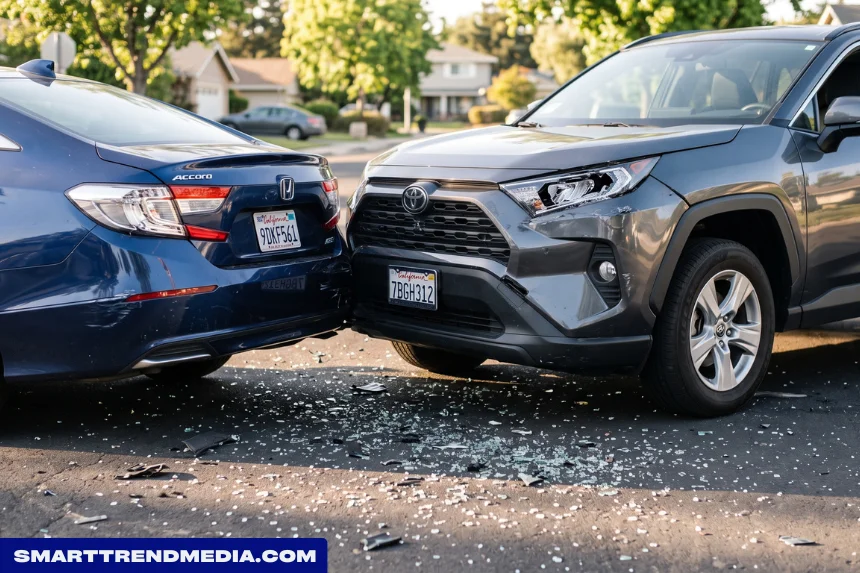
A car accident can affect more than your vehicle. It can also influence your insurance premiums for several years. As a result, many drivers ask, how long does an accident stay on your insurance and when their rates may return to normal.
In most cases, an accident affects your car insurance for three to five years. However, the exact timeline depends on several factors, including your insurance company, state regulations, whether you were at fault, the severity of the accident, and your overall driving history.
Understanding how insurers evaluate accident claims can help you prepare for future policy renewals and identify opportunities to reduce your premiums. This guide explains how long accidents typically remain on your insurance record, what affects that timeline, and how different types of accidents influence your rates.
Quick Answer
Most insurance companies consider an accident when calculating your premium for three to five years. Nevertheless, the exact period varies by insurer and state. An at-fault accident usually has a greater impact than a not-at-fault accident, while serious claims may affect your rates for a longer period.
Quick Overview
| Question | Answer |
|---|---|
| Average impact on insurance | 3–5 years |
| At-fault accident | Usually 3–5 years |
| Not-at-fault accident | Often less impact, depending on the insurer |
| Claims history database | May retain claim information for up to 7 years |
| Premium increase | Depends on fault, claim cost, insurer, and state |
| Accident forgiveness | May prevent a surcharge if you qualify |
How Long Does an Accident Stay on Your Insurance?
For most drivers, an accident remains part of an insurer’s pricing history for three to five years. During that period, the insurer may use the claim when calculating renewal premiums or evaluating a new application.
Although this timeline is common, it is not universal. Every insurance company develops its own underwriting guidelines, and state insurance regulations can also influence how claims affect future premiums.
For example, some insurers reduce the surcharge after several years of safe driving. Others gradually lessen its impact until it no longer affects your policy. Consequently, maintaining a clean driving record after an accident can help you qualify for lower rates sooner.
It is also important to understand that an accident does not automatically increase every driver’s premium. If you were not at fault or your insurer offers accident forgiveness, the financial impact may be smaller than expected.

Why Do Insurance Companies Keep Accident Records?
Insurance companies evaluate risk before determining how much to charge for coverage. Previous accidents provide insight into a driver’s claim history and help insurers estimate the likelihood of future claims.
When underwriters review your application or policy renewal, they may consider several factors, including:
- Whether you caused the accident
- The total cost of the claim
- The severity of property damage
- Whether anyone suffered injuries
- Your previous claims history
- Traffic violations on your record
- The number of years since the accident
Rather than relying on a single factor, insurers evaluate your overall risk profile.
Average Timeline by Accident Type
Although every insurer follows its own guidelines, the table below reflects common industry practices.
| Accident Type | Typical Insurance Impact |
| Minor at-fault accident | About 3–5 years |
| Major at-fault accident | Up to 5 years or longer with some insurers |
| Not-at-fault accident | Often little or no surcharge, depending on the insurer |
| Comprehensive claim (theft, hail, vandalism) | Usually less impact than an at-fault collision |
| Multiple accidents | May affect premiums for a longer period |
These timelines serve as general guidance rather than guaranteed rules. Therefore, reviewing your policy and speaking with your insurer can provide the most accurate information for your situation.
What Determines How Long an Accident Affects Insurance?
Not every accident produces the same outcome. Several factors influence both the length of time an accident remains relevant and the amount your insurance premium may increase.

Fault in the Accident
Fault plays one of the biggest roles in insurance pricing.
If you caused the accident, insurers generally consider you a higher risk. Consequently, an at-fault accident often results in a premium increase that lasts several years.
On the other hand, a not-at-fault accident may have little or no effect on your premium, depending on state laws and your insurer’s rating practices.
Severity of the Claim
The size of the claim also matters.
A minor fender bender with limited repair costs usually has a smaller impact than a collision involving major vehicle damage or bodily injuries.
Because larger claims represent greater financial risk, insurers may apply higher surcharges after expensive accidents.
Your Driving History
Insurance companies rarely evaluate an accident in isolation.
Drivers with several years of safe driving before an accident often receive more favorable treatment than drivers with multiple claims or repeated traffic violations.
For example, if you have maintained a clean record for many years, your insurer may view the accident as an isolated event rather than a pattern of risky behavior.
Insurance Company Policies
Every insurer develops its own underwriting standards.
Some companies offer accident forgiveness after several years of claim-free driving, while others apply surcharges more aggressively. Likewise, premium increases vary widely between insurance providers.
Because pricing models differ, comparing quotes after an accident may help you find more competitive coverage once your policy renews.
State Insurance Regulations
Insurance laws differ across the United States.
Some states limit how insurers use claims history when setting premiums. Others allow insurance companies greater flexibility during underwriting.
As a result, two drivers with similar accidents may receive different renewal premiums simply because they live in different states or have different insurance carriers.
At-Fault vs. Not-at-Fault Accidents
Understanding the difference between at-fault and not-at-fault accidents can help explain why insurance premiums vary after a collision.
Although both types of accidents become part of your claims history, insurers generally treat them differently when calculating future rates.
At-Fault Accidents
An at-fault accident occurs when the insurance company determines that you caused or substantially contributed to the collision.
Because the insurer expects a higher likelihood of future claims, your premium may increase at your next renewal.
Several factors can influence the size of the increase, including:
- Repair costs
- Medical expenses
- Liability payments
- Previous driving record
- Number of prior claims
- State insurance regulations
Fortunately, the financial impact usually decreases over time if you avoid additional claims and maintain safe driving habits.
Not-at-Fault Accidents
A not-at-fault accident means another driver caused the collision.
Many insurance companies apply little or no surcharge in these situations. Nevertheless, policies differ, and some insurers still consider the overall claims history when calculating future premiums.
For that reason, reviewing your insurer’s underwriting guidelines remains worthwhile after any accident.
Which Type Has the Greater Insurance Impact?
In most situations, an at-fault accident affects insurance premiums more than a not-at-fault accident.
The table below highlights the general differences.
| Factor | At-Fault Accident | Not-at-Fault Accident |
| Premium increase | More likely | Less common |
| Typical surcharge period | 3–5 years | Often minimal |
| Underwriting impact | Higher | Lower |
| Eligibility for accident forgiveness | May apply if enrolled | Usually unnecessary |
| Future risk assessment | Greater | Lower |
Although these comparisons reflect common industry practices, every insurance company follows its own rating system. Therefore, checking your policy details remains the best way to understand how an accident may affect your specific coverage.
Insurance Record vs. Driving Record
Many drivers use the terms insurance record and driving record interchangeably. However, they refer to different types of information. Understanding the distinction can help explain why an accident may affect your insurance even after it no longer appears on certain driving records.
What Is an Insurance Record?
An insurance record focuses on your claims history. Insurance companies review this information during underwriting to evaluate risk and determine your premium.
Your insurance record may include:
- At-fault accident claims
- Not-at-fault accident claims
- Comprehensive claims, such as theft or hail damage
- Collision claims
- Claim payment amounts
- Policy history
- Previous insurance providers
Even if you change insurance companies, your claims history may still be available through industry databases that participating insurers use during the quoting process.
What Is a Driving Record?
A driving record, often called a Motor Vehicle Record (MVR), is maintained by your state’s motor vehicle agency. Unlike your insurance record, it focuses on driving behavior rather than insurance claims.
A driving record may include:
- Traffic tickets
- Speeding violations
- License suspensions
- DUI or DWI convictions
- License points
- Reportable accidents, depending on state law
Because each state follows its own reporting rules, the length of time an accident remains on a driving record varies across the United States.
Key Differences
The following comparison highlights how these records differ.
| Insurance Record | Driving Record |
|---|---|
| Tracks insurance claims | Tracks driving history |
| Used by insurers during underwriting | Used by state licensing agencies |
| May include comprehensive claims | Does not include insurance claim details |
| Helps determine premiums | May affect licensing and eligibility |
| Can remain relevant even after MVR changes | Follows state-specific retention rules |
Although the two records serve different purposes, insurers often review both when assessing a driver’s overall risk.
How Insurance Companies Track Accident History
Insurance companies rely on several sources when evaluating a policy application or renewal. Rather than depending only on information you provide, they compare your application with industry databases and official records.
This process helps insurers verify claims history, identify previous losses, and calculate premiums more accurately.
Claims History Databases
Many insurance companies participate in claims reporting systems that allow them to review previous insurance claims during underwriting.
These databases may include information such as:
- Date of the accident
- Type of claim
- Vehicles involved
- Claim amount
- Loss description
- Insurance carrier
Because participating insurers contribute data, your claims history can remain available even if you purchase coverage from a different company.
Underwriting Reviews
Before issuing or renewing a policy, underwriters evaluate multiple risk factors.
Common considerations include:
- Accident history
- Traffic violations
- Years of driving experience
- Previous claims
- Vehicle type
- Annual mileage
- Location
- Coverage limits
Instead of focusing on a single incident, insurers evaluate the complete risk profile.
Policy Renewals
Insurance companies usually reassess policies at each renewal period.
If an accident occurred during the current policy term, the insurer may apply a surcharge at renewal if its underwriting guidelines allow it. However, the amount and duration of that surcharge differ among insurers.
Consequently, reviewing competing quotes before renewal may help drivers find lower premiums.
What Is a CLUE Report?
One of the most important tools used during insurance underwriting is the Comprehensive Loss Underwriting Exchange (CLUE) Report.
A CLUE Report is a claims history report that participating insurance companies use to review previous property and auto insurance claims.
Rather than serving as a credit report, it focuses specifically on insurance losses.

What Information Does a CLUE Report Include?
A typical CLUE Report may contain:
- Dates of reported claims
- Type of claim
- Claim status
- Loss amount
- Insurance company
- Policy information
- Property or vehicle involved
Claims generally remain on a CLUE Report for up to seven years, although that does not necessarily mean they affect insurance premiums for the entire period.
Why Do Insurance Companies Use CLUE Reports?
Insurance companies use CLUE Reports to verify the claims history provided by applicants.
These reports help insurers:
- Confirm previous claims
- Detect inconsistent information
- Evaluate overall insurance risk
- Calculate appropriate premiums
- Support underwriting decisions
Because the report provides historical claim information, it allows insurers to make more informed pricing decisions.
Can You Request Your Own CLUE Report?
Yes. Consumers can request a copy of their personal CLUE Report to review the information associated with their insurance history.
Checking your report periodically can help you identify potential errors. If you discover inaccurate information, you may have the opportunity to dispute it with the reporting agency according to applicable procedures.
How Much Can Insurance Increase After an Accident?
One of the biggest concerns drivers have after a collision is how much their insurance premium may increase.
Unfortunately, there is no universal percentage because every insurer uses its own rating formula. Even so, several factors consistently influence the final premium.
Factors That Affect Premium Increases
Insurance companies commonly evaluate:
- Fault determination
- Total claim cost
- Number of previous accidents
- Driving violations
- Driver age and experience
- Vehicle type
- State regulations
- Existing discounts
Because every driver’s situation differs, two people involved in similar accidents may receive different renewal premiums.
Minor vs. Major Accidents
Minor accidents generally result in smaller premium increases than serious collisions.
For example, a low-cost property damage claim may have a more limited effect than an accident involving multiple vehicles or bodily injury claims.
Likewise, repeated accidents often produce larger premium increases than a single isolated incident.
Safe Driving Can Reduce Future Costs
Although an accident may increase premiums temporarily, maintaining a clean driving record afterward often improves future insurance rates.
Drivers who avoid additional claims and traffic violations demonstrate lower long-term risk. Consequently, many insurers gradually reduce accident-related surcharges as time passes.
Accident Forgiveness Programs
Some insurance companies offer accident forgiveness, a benefit designed to protect eligible policyholders from a premium increase after a qualifying at-fault accident.
While these programs can reduce the financial impact of a first accident, eligibility rules vary considerably between insurers.
How Accident Forgiveness Works
If you qualify, your insurer may choose not to apply a surcharge after your first eligible at-fault accident.
However, accident forgiveness usually applies only when specific conditions are met. Some insurers include it automatically after several years of safe driving, while others offer it as an optional feature or reward.
Common Eligibility Requirements
Although every company sets its own rules, drivers often need to meet requirements such as:
- Maintaining a clean driving record for several years
- Remaining claim-free before the accident
- Keeping the policy active for a minimum period
- Meeting eligibility standards established by the insurer
Because program details differ, reviewing your policy documents remains the best way to understand available benefits.
Important Limitations
Accident forgiveness does not erase the accident from your claims history.
Instead, it generally prevents or reduces the premium surcharge with the insurer offering the benefit. If you later switch insurance companies, another insurer may still review the accident during underwriting.
Likewise, accident forgiveness usually applies only to qualifying accidents. Multiple at-fault collisions or particularly severe claims may fall outside the program’s protection.
Understanding these limitations can help drivers make informed decisions when comparing insurance policies after an accident.
How to Lower Insurance After an Accident
Although an accident may increase your premium, you can take several practical steps to reduce future insurance costs. Many insurers reward responsible driving over time, so improving your risk profile can lead to better rates at future renewals.
Maintain a Clean Driving Record
Safe driving remains one of the most effective ways to lower insurance costs after an accident.
Avoid speeding tickets, distracted driving, and additional claims whenever possible. Over time, many insurers reduce accident-related surcharges for drivers who demonstrate consistent, safe driving habits.
Compare Insurance Quotes
Insurance companies evaluate risk differently. As a result, one insurer may offer significantly lower rates than another after the same accident.
Before renewing your policy, request quotes from several reputable insurers. Comparing coverage, deductibles, discounts, and premium costs can help you identify a policy that fits your needs.
Ask About Available Discounts
Many insurance companies offer discounts that may offset part of a premium increase.
Depending on the insurer, you may qualify for discounts based on:
- Safe driving history
- Multi-policy bundles
- Multiple vehicles
- Defensive driving courses
- Good student status
- Low annual mileage
- Automatic payments
- Paperless billing
- Vehicle safety features
Even small discounts can add up over time, so reviewing your eligibility during each renewal is worthwhile.
Increase Your Deductible Carefully
Choosing a higher deductible often lowers your monthly premium. However, you should select a deductible you can comfortably afford if another claim becomes necessary.
Before making any changes, compare the potential premium savings with the additional out-of-pocket costs you would face after a future accident.
Improve Your Overall Risk Profile
Insurance companies evaluate more than accident history.
Maintaining continuous coverage, avoiding lapses in your policy, driving fewer miles when possible, and keeping a clean claims record can all contribute to lower premiums over time.
Do State Laws Affect How Long an Accident Stays on Your Insurance?
Yes. State laws influence how insurers evaluate claims and apply surcharges. However, insurance companies also establish their own underwriting guidelines.
For that reason, two drivers with similar accident histories may receive different premiums depending on where they live and which insurance company they choose.
At-Fault and No-Fault States
The United States includes both at-fault and no-fault insurance systems.
In at-fault states, the driver responsible for the collision generally pays for the damages through their insurance coverage. Because fault plays a central role, an at-fault accident often has a greater impact on future premiums.
In no-fault states, drivers typically rely on their own insurance for certain medical expenses regardless of who caused the accident. Even so, insurers may still consider claims history when determining premiums.
State Regulations Matter
Some states limit how insurers use accident history when calculating premiums, while others provide insurers with greater flexibility.
Because regulations change over time, reviewing guidance from your state’s insurance department or speaking with your insurance company can help you understand the rules that apply where you live.
Expert Tips for Managing Insurance After an Accident
The following strategies can help drivers make informed decisions after an accident:
- Report the accident promptly and accurately.
- Keep copies of repair estimates, claim documents, and correspondence.
- Review your policy before accepting a renewal offer.
- Compare quotes from multiple insurers before switching coverage.
- Ask whether accident forgiveness applies to your policy.
- Review your claims history periodically for accuracy.
- Continue practicing safe driving habits after the accident.
- Reevaluate your coverage needs as your circumstances change.
These steps will not remove an accident from your insurance history, but they may improve your chances of qualifying for lower premiums in the future.

Frequently Asked Questions
How long does an accident stay on your insurance?
For most drivers, an accident affects insurance premiums for three to five years. The exact timeline depends on your insurance company, state regulations, the severity of the claim, and whether you were at fault.
Does every accident increase insurance rates?
No. Not every accident results in a premium increase. Many insurers treat not-at-fault accidents differently from at-fault accidents. In addition, some policies include accident forgiveness for eligible drivers.
How long does an at-fault accident affect insurance?
An at-fault accident typically influences insurance premiums for three to five years. However, the exact period varies by insurer and state.
Does a not-at-fault accident stay on your insurance?
A not-at-fault accident may appear in your claims history, but it often has less impact on your premium than an at-fault accident. Each insurer follows its own underwriting guidelines.
Can you remove an accident from your insurance record?
Generally, no. Accurate accident information cannot simply be removed from your insurance history. However, if you discover incorrect claim information, you can contact the reporting agency or your insurer to request a review or correction.
Does switching insurance companies erase an accident?
No. Changing insurers does not erase your claims history. Many insurance companies review industry claims databases during the underwriting process.
What is a CLUE Report?
A Comprehensive Loss Underwriting Exchange (CLUE) Report contains information about previous insurance claims. Participating insurers use it when evaluating applications and calculating premiums.
When will my insurance premium go back down?
Many drivers see lower premiums after maintaining several years of safe driving without additional accidents or violations. The timing varies based on the insurer, state regulations, and your overall driving history.
Conclusion
Understanding how long does an accident stay on your insurance can help you make informed financial decisions after a collision. While most insurers consider an accident for three to five years, the exact timeline depends on factors such as fault, claim severity, state regulations, and the insurance company’s underwriting practices.
Although an accident may increase your premium temporarily, it does not define your long-term insurance costs. Safe driving, maintaining continuous coverage, comparing quotes, and taking advantage of available discounts can all improve your chances of securing lower rates over time.
If you have questions about your specific policy, review your insurance documents carefully or speak directly with your insurer. Because every company uses different rating models, personalized guidance remains the most reliable way to understand how an accident may affect your future premiums.
Read about Is Inventory a Current Asset